

Predicting the Future with Data to Support Decision-Making
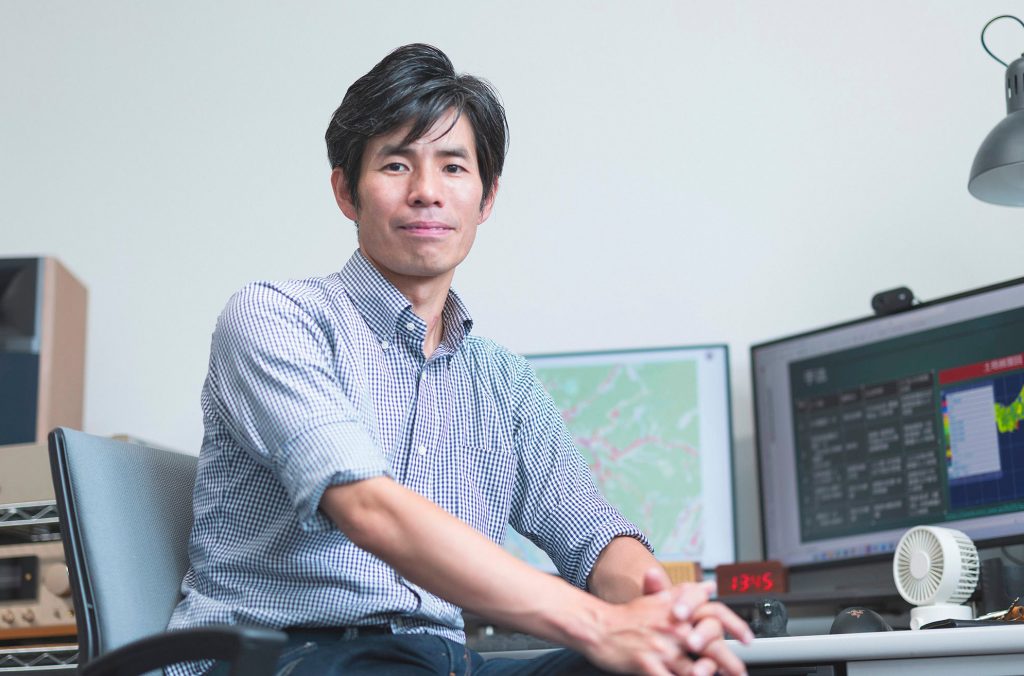
Yusuke Fukazawa
Associate Professor
Graduate Degree Program of Applied Data Science


INSIDE THE LAB
Inside the Lab, we found research that harnesses vast amounts of data to predict the future and support better decision-making. We spoke with Associate Professor Yusuke Fukazawa from the Graduate Degree Program of Applied Data Science about the possibilities of data science and its role in addressing today’s societal challenges.
What Is Data Science?
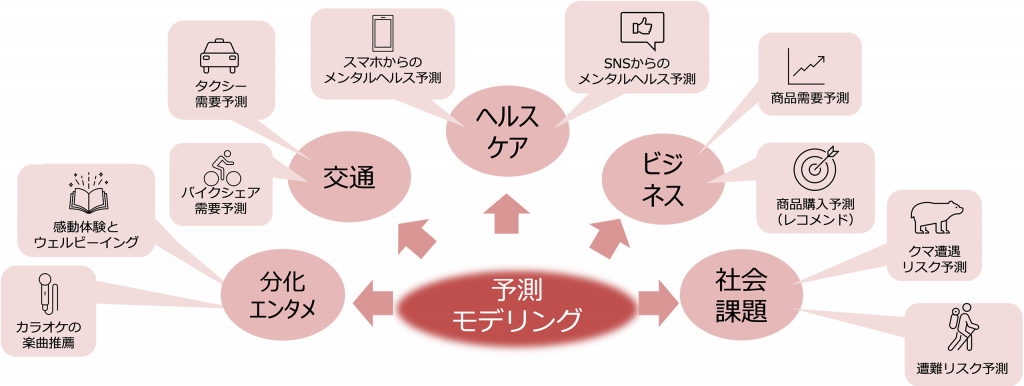
You may be wondering what data science is all about. At our Graduate Degree Program of Applied Data Sciences, we view data science as comprising three areas: data engineering, which focuses on data collection and processing; data analytics, which uses statistical analysis, machine learning, and other techniques to analyze data; and business science & management, which focuses on utilizing data to solve problems and support decision-making. My work focuses primarily on data analytics, using data to predict the future and help solve problems.
We use data every day to predict the future and make decisions accordingly. A familiar example is checking the weather forecast and deciding whether to take an umbrella. In industry, data is used in even more practical ways: in agriculture, to predict harvest times and disease outbreaks; in manufacturing, to forecast demand and equipment failures; and in healthcare, to predict disease risk. These fields share a common approach: they identify patterns in past data, use them to predict the future, and thereby help people and organizations make better decisions.
In recent years, the widespread use of the internet and smartphones, together with advances in digital technology, has made it possible to collect vast amounts of data on a scale unimaginable in the past. As the volume of data continues to grow and AI becomes more sophisticated, data science will become ever more critical as an infrastructure underpinning society. This makes the effective use of data-driven predictions in decision-making a key issue going forward.
Preventing Harm from Human–Bear Encounters
One of our key research projects, the Bear Encounter AI Prediction Map, combines data on human–bear encounters, population distribution, terrain, land use, and other factors to predict where bears are likely to appear, helping to prevent harm to people. When we presented our findings, some members of the media suggested that making the findings publicly available would benefit people. We then quickly created a prediction map and made it available online, where it drew significant public attention.
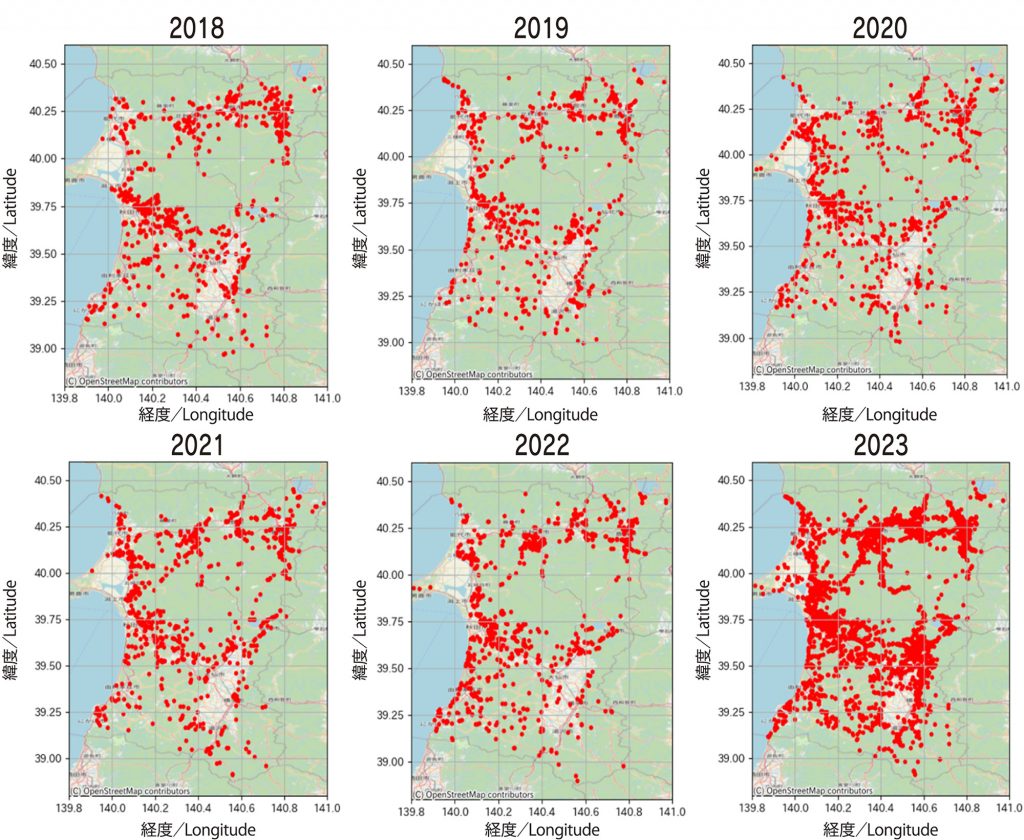
The research was prompted by a surge in bear sightings across Japan in the fall of 2023, which resulted in human casualties and became a major social issue. Wanting to understand what was happening, I obtained data from Akita Prefecture on bear sightings and visualized the locations on a map. This revealed that bears were appearing not only at the same places repeatedly, but also in new areas. With both the number of sightings and the areas with bear sightings increasing, the absence of reported encounters in a particular area does not necessarily mean that it is safe. This led me to begin research on predicting where bears are likely to appear.
Human–bear encounters occur when the areas used by people and bears overlap. We therefore began by examining where people and bears are located. We first mapped where people live using census data. Since it is difficult to directly determine where bears live, we estimated areas where they are likely to inhabit based on data related to their ecological and behavioral characteristics.
We had several clues to work with. One was their food sources, or diet. Major food sources for bears include beech nuts and acorns from oak trees. The distribution of deciduous trees can therefore provide one clue for estimating environments where bears are likely to live. Next, we looked at environments that provide hiding places for bears. Our AI-based analysis showed that the elderly population was one of the features associated with predicted bear encounter risk. At first, we found this puzzling, but experts with extensive knowledge of bear ecology suggested that areas with larger elderly populations tend to have more abandoned farmland and unharvested persimmon trees, which may be factors that attract bears. The final factor is their travel routes. According to local government officials, riversides can serve as travel routes for bears and may lead them into urban areas. In particular, when vegetation becomes dense, bears may be able to move while remaining hidden. We also conduct field visits to better understand the characteristics of human–bear encounters and work with local government officials and students in our laboratory to improve the accuracy of the Bear Encounter AI Prediction Map.
For AI to be useful in society, both high prediction accuracy and explainability are essential. Even if the map identifies areas with a high risk of bear encounters, users will find it difficult to trust the results without knowing the reasoning behind the predictions. That is why, in addition to improving prediction accuracy, we are also focusing on research into AI that can explain its predictions.
Supporting Decision-Making with Data-Driven Predictions
We also conduct research using a range of data, including prediction of the risk of mountaineering accidents. Based on the mountain destinations, number and ages of hikers listed in hiking plans, as well as weather forecasts for the hiking date, the system predicts risks such as getting lost or falling. The aim is to help hikers review and improve their plans.
We also conduct research that uses data generated by people to uncover unobservable changes and conditions, including estimating mental health state from smartphone usage data. Although these topics may seem unrelated, they share a common goal: using data to predict the future and support people’s actions and decision-making.
We also take advantage of having all our faculties on one campus to collaborate with other departments. For example, I am conducting joint research with a faculty member of the Department of Nursing to predict nurses’ stress levels from step count data. We collected step count data and responses to stress-related questions from 30 nurses. Using a small language model (SLM) that can run in a local environment and is suitable for handling sensitive medical data, we first converted the step count data into textual interpretations and then used these interpretations to predict stress levels. The results showed that using these intermediate interpretations improved prediction accuracy compared with using the step count data directly. We are now working to further improve prediction accuracy, with a view to applying this approach to the early detection of mental health problems and support for self-care.
Students Learning Predictive Modeling
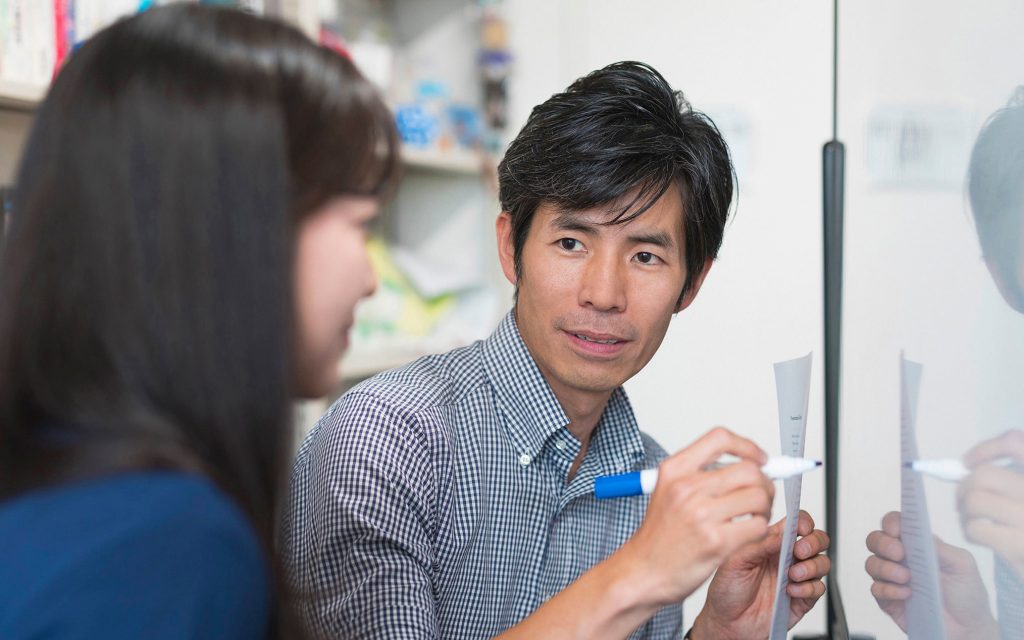
In my lectures, students gain experience in data analysis while learning about predictive models and AI that can explain the basis for its decisions and predictions. Specifically, they gain practical experience in identifying their own research questions, collecting data, developing hypotheses, and testing them. Research topics are broad and open-ended, ranging from disaster preparedness to entertainment, but they all share a common focus: using data to solve social and business challenges. When their hypotheses are supported by data or they see firsthand how their own model can help solve a problem, students can experience the excitement of research and a strong sense of accomplishment.
My research emphasizes using AI and data to address social challenges. Therefore, I value not only technical knowledge but also a clear sense of the problems one wants to solve. In fact, my research lab includes students from humanities backgrounds as well as those who are less confident in math.
After graduating, students can pursue careers not only as data scientists and AI engineers, but also in roles that promote the use of data in consulting, finance, healthcare, manufacturing, and other fields. Wherever they work, the ability to use data to inform their thinking will be a valuable strength.
The Future Shaped by Data Science
Going forward, I plan to continue focusing my research on using AI and data to address social issues. In particular, I want to address issues related to people’s health and safety, aiming to share research findings that benefit society beyond academic publication.
Data science is more than programming or AI technology. It is an academic field that helps us objectively understand social phenomena and envision a better future. Along with the ability to use data, a passion for solving social issues is also important. Once you find an issue that sparks your interest, data science can be a powerful tool for you to tackle it.
-
Yusuke Fukazawa
- Associate Professor
Graduate Degree Program of Applied Data Sciences
- Associate Professor
-
Grounded in the theoretical foundations of cutting-edge AI technologies, he conducts research that integrates and analyzes real-world data generated by a wide range of human activities to help address social issues and support decision-making.


Published in Sophialogue Vol. 1 (Autumn/Winter 2026), p.6–9
※Please note that the information in this article is current as of November 2026.


