

Faculty of Law
- Department of Law
- Department of International Legal Studies
- Department of Legal Studies of the Global Environment
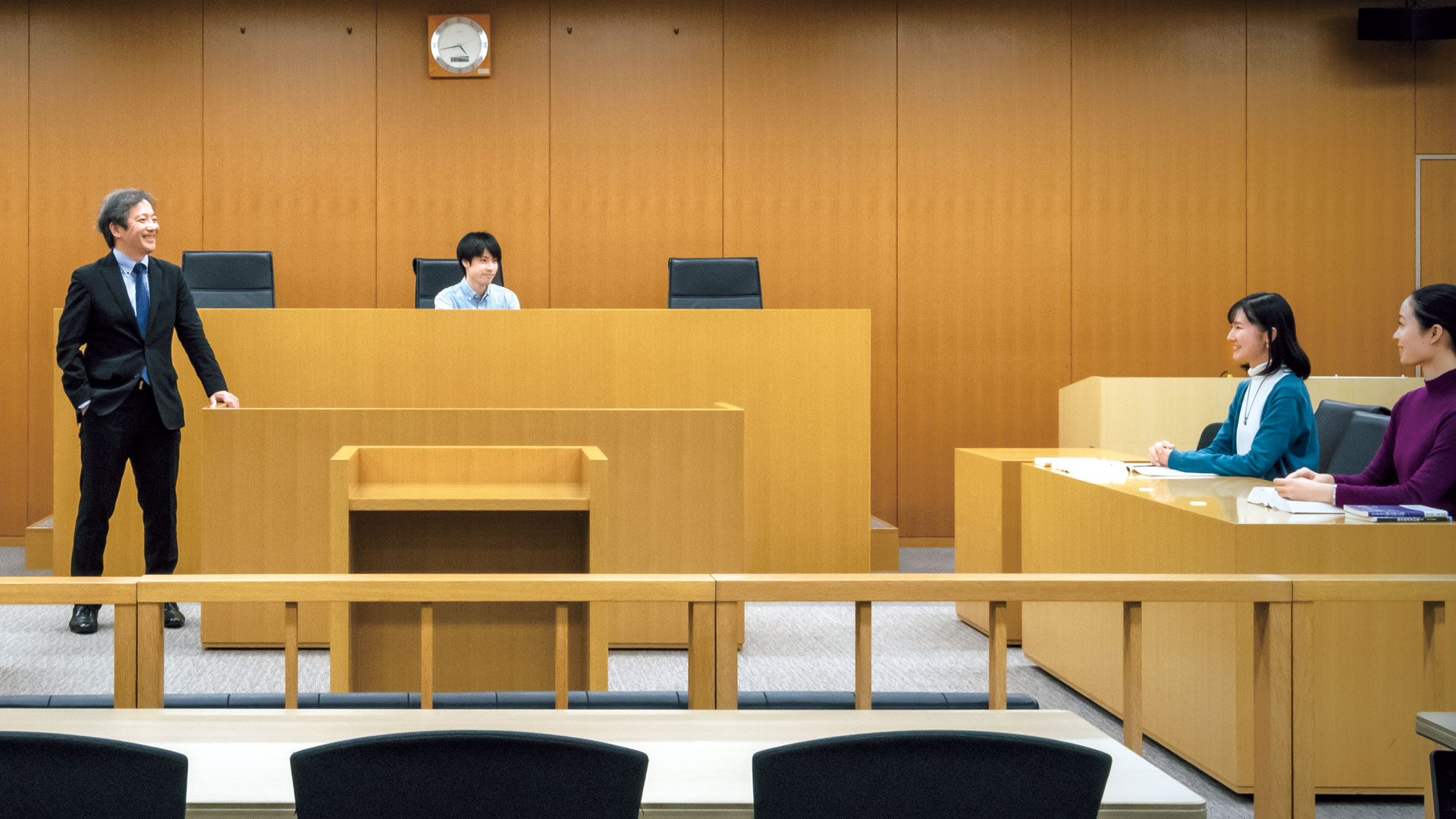
Learning at Sophia – Faculty of Law Edition |
The Legal Mind at Sophia
About the Faculty of Law
Legal Profession Course
Sophia University established the Legal Profession Course starting in the 2020 academic year. This course is an integrated five-year course for law students who aim to become legal professionals by graduating with the bachelor’s program early in three years and completing a master’s degree in two years, then taking the bar examination. This course not only offers classes under the cooperative agreement with the Graduate School of Law, but also provides support programs other than the regular course, such as seminars, self-study support, and practice sessions with about ten attorneys who have completed the course. In addition, students are entitled to a tuition waiver for the Sophia Graduate School of Law when entering through the integrated five-year course.
AQUILA, English Special Course
AQUILA, a special program established in the Department of International Legal Studies, offers classes taught in English. Through the acquisition of advanced language skills supported by a high level of academic expertise, the course strives to develop people who will contribute to a multicultural society. Students will be certified as having completed the course upon passing the prescribed number of credits and other requirements.
Short-term Study-Abroad Programs through the Faculty of Law
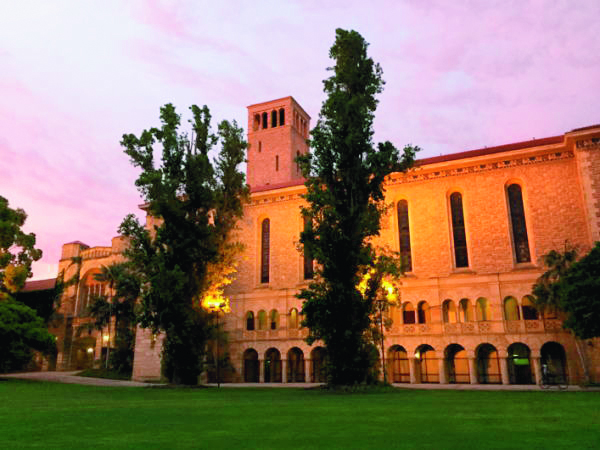
The program is designed to offer students an opportunity to participate casually during long vacations and to study local jurisprudence and legal culture in a foreign language on a short-term, intensive basis. This program can also be used as a step toward long-term study abroad.
Learning Highlights
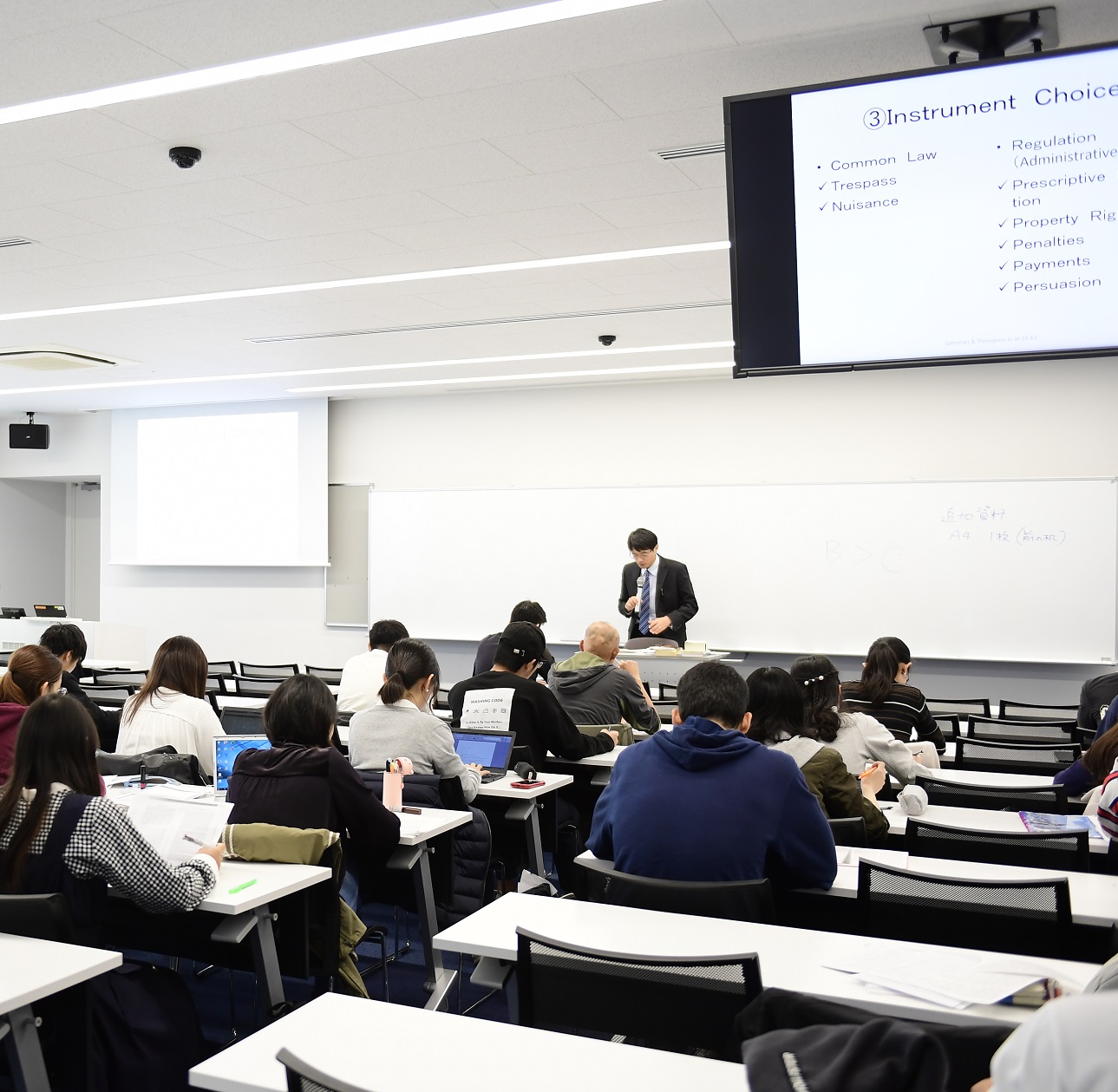
Deepening Understanding of People and Society Through the Study of Law
At the heart of legal education is the development of legal reasoning—the ability to think logically, gain insight into human behavior, and understand the institutions that shape society. Studying law is far more than reading statutes or memorizing legal rules. It also requires engaging with history, ethics, philosophy, politics, and other disciplines to develop a deeper understanding of people and society.

Expanding Knowledge Across Three Departments
The Faculty of Law attracts students with diverse interests that extend beyond the study of law to areas such as business, social inequality, global issues, and the environment. Although the Faculty comprises three departments with distinct areas of specialization, students are encouraged to take courses across departmental boundaries. This flexible curriculum broadens their academic horizons, sparks new insights, and equips them to examine issues from multiple perspectives.

Building a Strong Foundation Through Small-Group Learning
Students have the opportunity to participate in small-group seminars (zemi) as an elective in their third year and as a required component of their fourth-year studies. Regardless of their department or year of study, they may choose from a wide range of seminars offered across the Faculty, fostering intellectual exchange beyond departmental boundaries. Students also engage in lively discussions with international and returning students, exploring global issues from diverse perspectives.
Through these learning experiences, which transcend disciplinary and cultural boundaries, they develop the knowledge, skills, and global outlook needed to thrive in an increasingly interconnected world.
Educational Objectives and Policies
-
To cultivate the ability to apply legal approaches to address various problems arising society through broad-raging study of the law and related subjects.
-
To produce graduates equipped with legal acumen and problem-solving skills attuned to modern society as well as capable of playing active roles both in and out of Japan internationally.
-
With an aim to foster human resources that have acquired the ability to proactively analyze and solve problems using basic knowledge of law and a framework of legal thinking with a broad perspective and flexible mind, the Faculty of Law sets standards for the skills and knowledge students should acquire before graduation as follows. Students who fulfill the graduation requirements shall be deemed to have acquired these qualities and will be awarded diploma.
-
In accordance with Diploma Policy, the Faculty of Law constructs its curriculum with courses aligned to the following purposes:
- To have students engage in interdisciplinary learning by offering basic law Courses as a foundation for learning as well as advanced and leading law courses and related courses such as politics, economics and international relations in order to acquire basic legal knowledge and framework of thinking. This way, students will be able to analyze and solve issues with broad perspective and flexible mind.
- To engage students in more autonomous and in-depth debate with problem consciousness and academic interest by offering small-group seminar-style courses.
-
Assuming students are academically prepared for a university education, the Faculty of Law seeks students who are interested in the issues and conflicts occurring in modern society as well as in global environmental issues, can objectively and flexibly observe such issues from legal or political perspective, and present their arguments while listening carefully to the opinions of their counterparts.
Departments
Department of Law
Students will achieve legal decision-making based on foundation of legal studies and cultivate the problem-solving abilities to face various issues in modern society.
Department of International Legal Studies
Students will equip the capacity to analyze international relations from disciplinary foundation in law and political science as well as the linguistic proficiencies and broad knowledge essential for success on the international stage.
Department of Legal Studies of the Global Environment
Students will cultivate fundamental knowledge of global and Japanese legal systems for environmental problems as well as a capacity to face the global environment challenges from legal perspective.