

Many Exciting Encounters Broaden My Horizons

Reona Sako
1st-year, Department of Japanese Literature, Faculty of Humanities


FIRST-YEAR VOICE
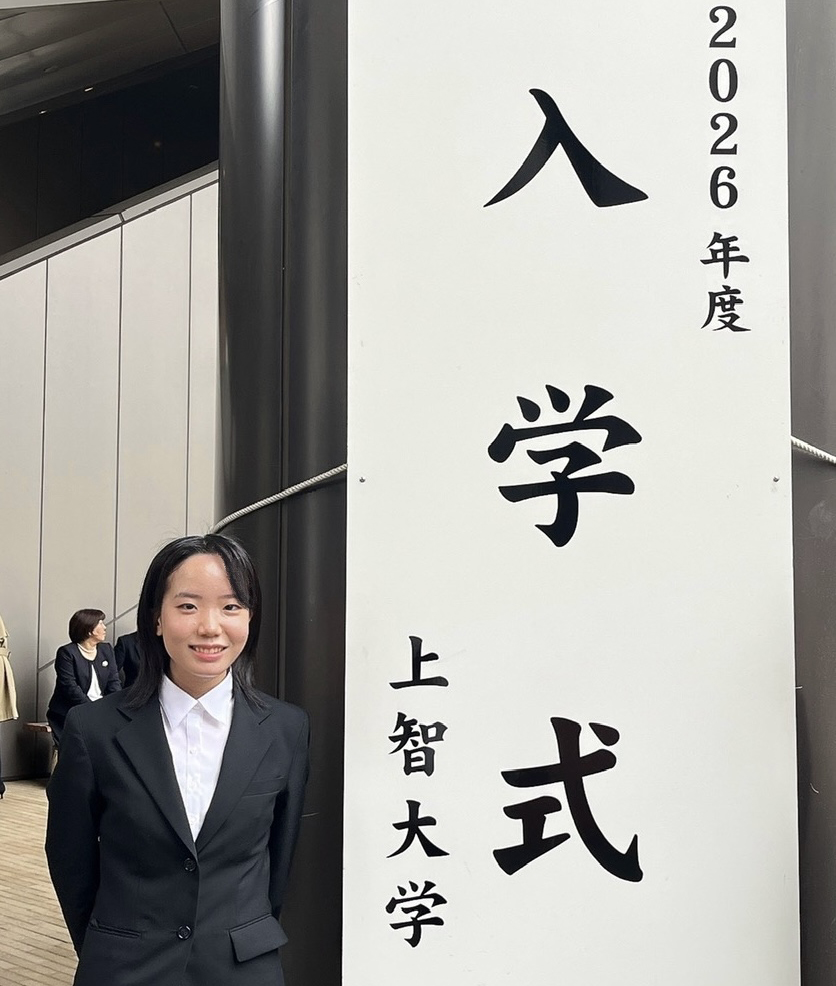
Beginning university life with both excitement and a touch of uncertainty, Reona Sako enrolled at Sophia University inspired by her long-standing love of literature. As she deepens her knowledge in her chosen field, she is also embracing the many new opportunities for learning and discovery that continue to expand before her, shaping a university experience uniquely her own.
Choosing a department was not easy. I had always loved literature and knew early on that I would study in the humanities, but history drew me as well. What decided me on Japanese Literature was meeting The Tale of the Heike in class: I found it fascinating, and it made me ask what subject could hold my interest for years to come. Hearing about the campus atmosphere and student life from a high school teacher who was a Sophia alum also pushed me toward Sophia.
My family carried me through the exam period: my mother patiently encouraged me whenever mock exam results got me down, and my father, posted away from home for work, video called almost nightly to advise me on my studies. I owe this rewarding campus life to them.
Every lecture in the Department of Japanese Literature is fascinating. Take The Tale of the Heike and Buddhism: reading the work through the lens of Buddhist thought reveals entirely new facets of the story. In high school we focused on grammar and rarely explored one work in depth. Unpacking what shapes a text, the author’s intentions, political agendas, the historical background, is learning unique to university. I often sit beside students from other departments, who bring fresh perspectives. Discussing the all-powerful Taira no Kiyomori, a friend from the Faculty of Law noted how vital legal systems are in keeping such power in check.
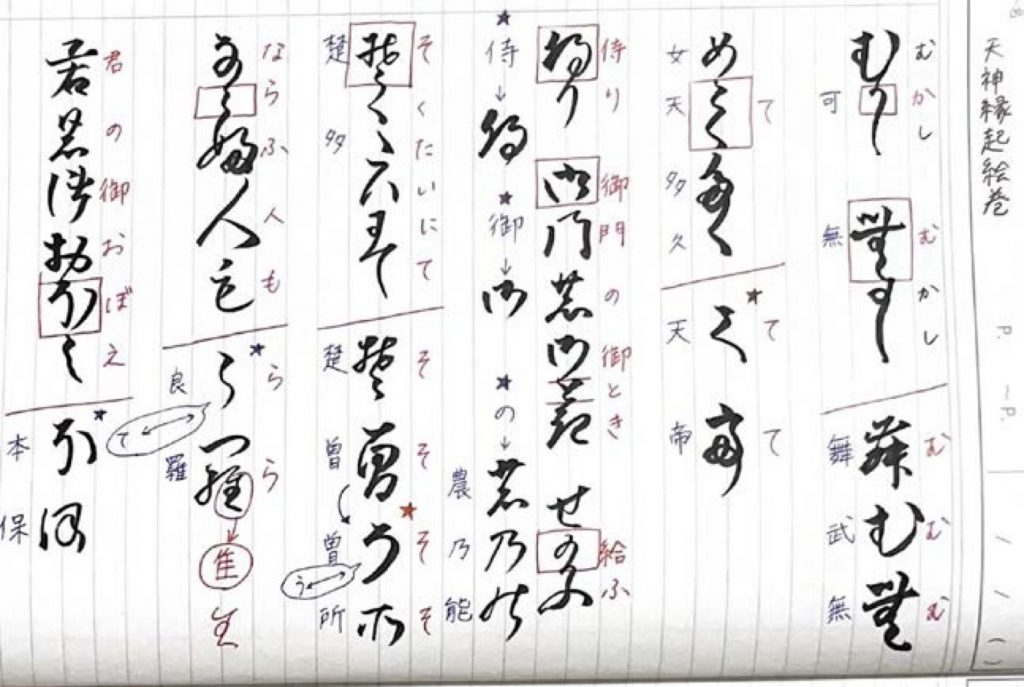
In Reading the Japanese Classics, we learn kuzushiji, an ancient cursive script. Modernized renditions of classical works carry the translator’s intentions in their wording, so engaging with a story on your own terms means reading the original in kuzushiji. In class we studied the Kitano Tenjin Engi Emaki, a scroll depicting the life of Sugawara no Michizane and his deification as Tenjin after death. We began with each character of the syllabary; as I came to read whole sentences, I could sense differences in handwriting, even the writer’s breath in the marks left as the brush lifted.
Reading script left by people who lived over a thousand years ago, I feel the romance of history woven since. Building on this class, my goal now is to read through The Tales of Ise, a Heian poem-tale famous for its opening, Mukashi, otoko arikeri (“Once there was a man”).
What surprised me after enrolling was how substantial the language education is and how often we can meet international students. Though I am not in a language department, I feel there are ample opportunities for global learning. Having spent my early childhood abroad and taken a short-term program in Australia in high school, I was already drawn to languages.
To use this environment fully, I first joined Language Buddy, a volunteer program supporting international students, over the summer break. A professor in my department said learning another language lets you see Japanese afresh, so I plan to take language courses from my second year and apply them to my major. I also aim to score well on proficiency tests and make English a skill I am proud of.

I use the university library often; with such a large collection, I found a book I had sought for years. Our campus also has many places to pass free periods as you like, which I find part of its appeal. I will keep going back, not just for materials but to read for pleasure.
Barely a term in, I already see many things I want to do: time with the classic texts I have wanted to read in the original, active language study, and the learning that only Sophia offers. I’m already looking forward to seeing where my story will take me four years from now.


Published in Sophialogue Vol. 1 (Autumn/Winter 2026), p.18–19
※Please note that the information in this article is current as of November 2026.


