
Learning and growing where no standard answers exist
Rika Noguchi, 4th year, Department of Journalism (received a job offer from Kubota Corporation)
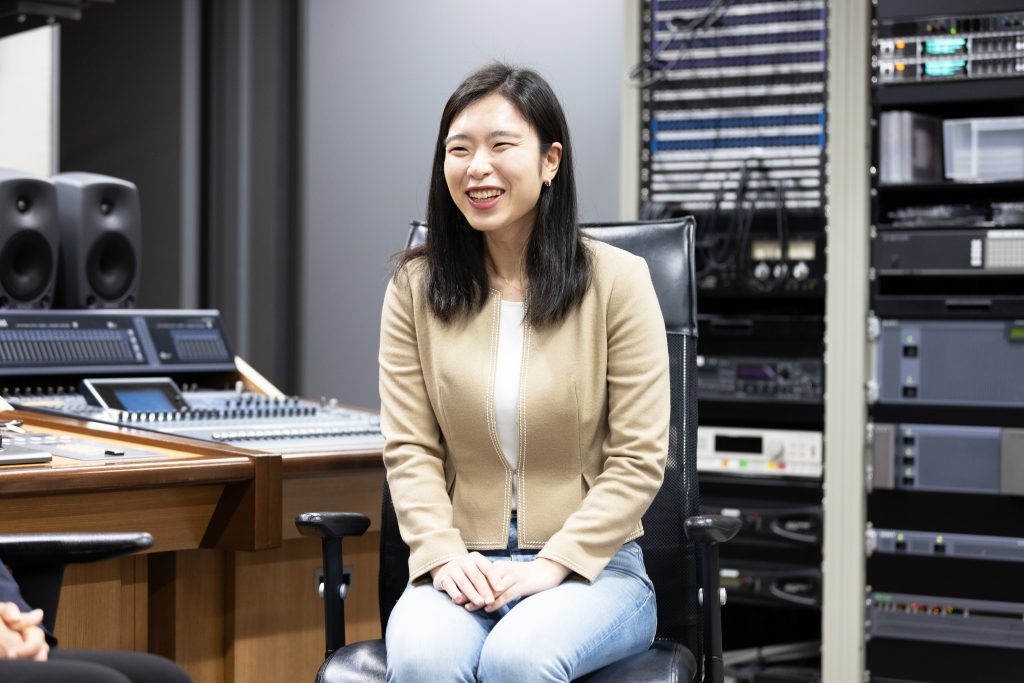
Minami Hasegawa, Judicial Affairs Correspondent, News Section, TBS Television (Department of Journalism, Class of 2020)
Professor Yoshihiro Oto, Department of Journalism



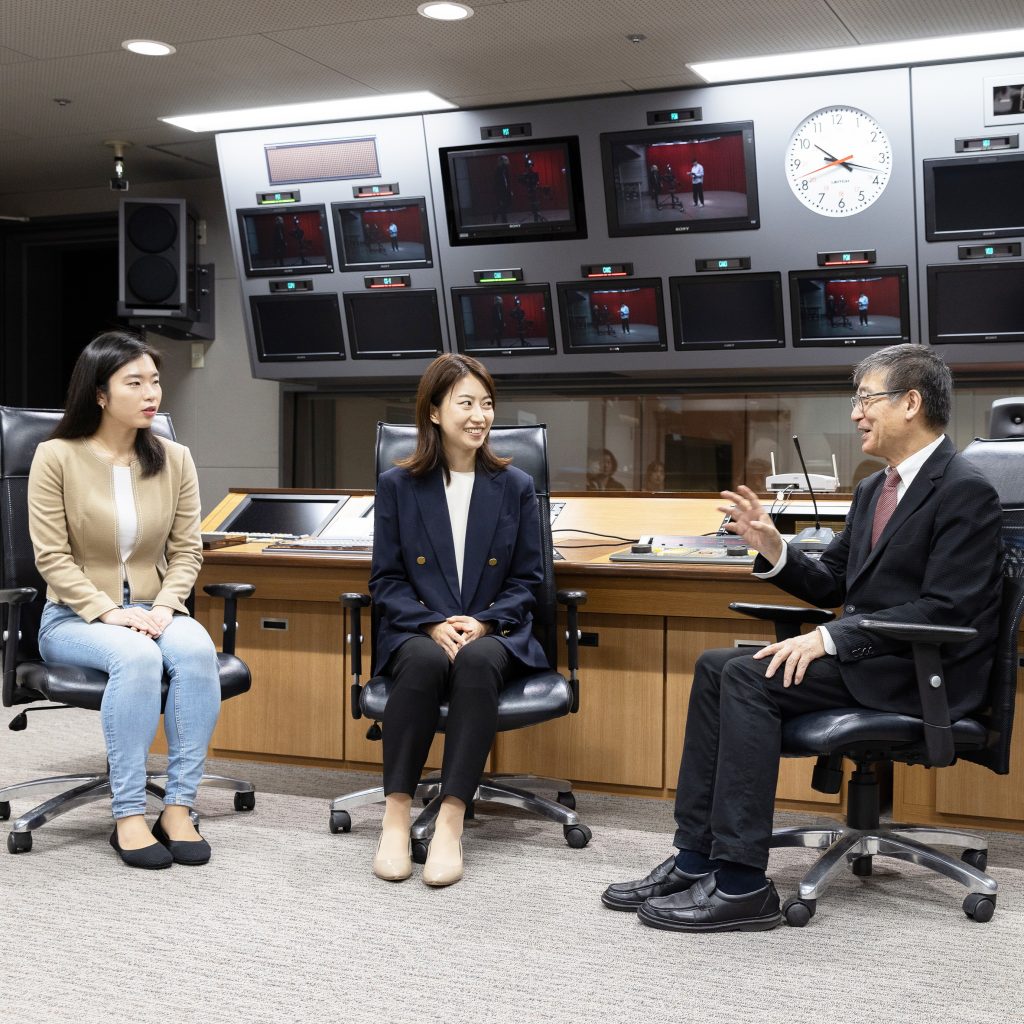
This roundtable discussion brings together Professor Yoshihiro Oto of the Department of Journalism, a current student, and a graduate. They shared insights gained through their study of journalism, as well as the invaluable experiences they acquired while studying abroad.
Reporting is a job with no right answers. I always feel the weight of pointing a camera at someone. (Hasegawa)
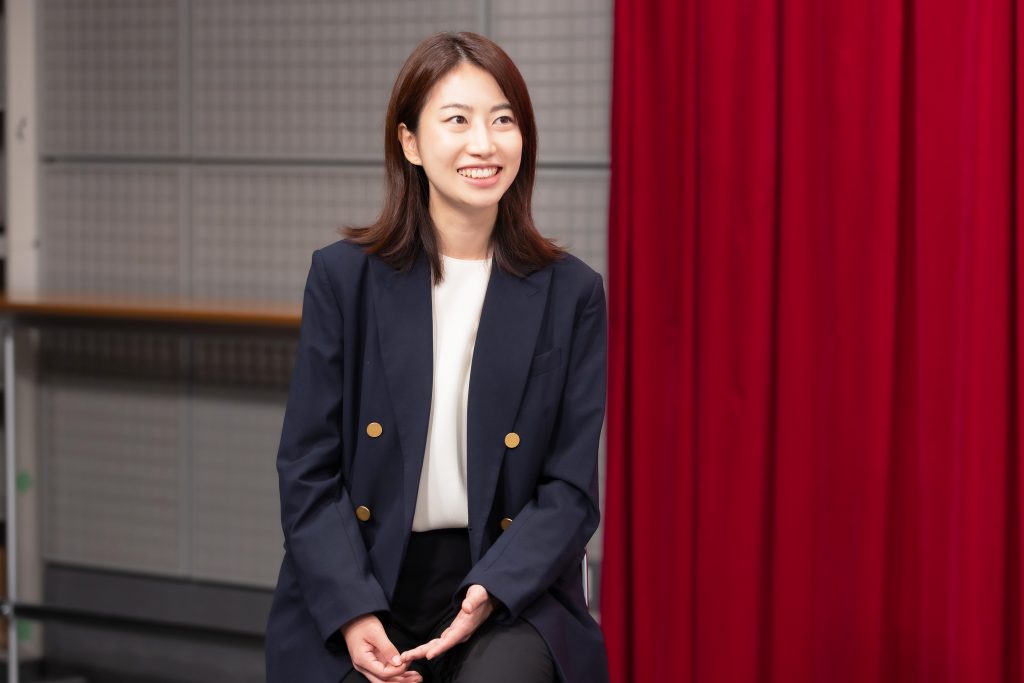
Oto: Although the name “Department of Journalism” has become rare in recent years, Sophia University’s Department of Journalism has a long history, having been established in 1932. Rather than focusing solely on newspapers, the department offers a multifaceted approach to journalism, communication, and media studies. What led each of you to choose the Department of Journalism at Sophia?
Noguchi: In high school, I had opportunities to read English newspapers and share my opinions in class. Through that experience, I noticed difference in how news is reported in Japan and abroad, which sparked my interest in media. I wanted to explore this more deeply, and that’s what led me here.
Hasegawa: I chose Sophia University because I wanted to study abroad. As for majoring in journalism, I had a general interest in reporting. When I attended open campus events and information sessions, I learned that the department offered not only lectures but also hands-on, practical classes. That really appealed to me.
Oto: One of those practical classes is conducted right here in this studio. Incidentally, this studio was deliberately designed so that it can be viewed from the sub-control room above. At TBS, where you work now, the setup is different, isn’t it?
Hasegawa: Yes. In the news division, for efficiency and rapid response in emergencies, the studio and the sub-control room are located on the same floor.
Oto: In an educational setting, however, it’s important to observe the entire process from a broader perspective. That’s why the sub-control room is located on an upper floor here. This setup allows students to experience firsthand that what television portrays does not always reflect reality as it is. By moving back and forth the between theory and practice and shifting perspectives, deeper understanding emerges.
Hasegawa: Being aware of perspective definitely deepened my learning. In a documentary production course, we filmed on location in many different places. Through hands-on production work, my perspective on other programs changed significantly.
Oto: That course, which both of you took, was conducted entirely in English, and all discussions during the production process were also carried out in English. With team members from different linguistic and cultural backgrounds, it must have been challenging.
Noguchi: It was. Our team included members from China, Korea, and Japan, and we often had differing opinions on everything—from scriptwriting to shooting schedules. Through those discussions, I realized how essential behind-the-scenes coordination and dialogue are, all grounded in a shared sense of what we want to communicate.
Hasegawa: Pointing a camera at someone carries tremendous responsibility. Even now, in the field, I often struggle with questions such as whether it is truly appropriate to film this person, and what exactly can be conveyed by doing so. It’s a job with no clear answers, which makes it both difficult and profound.
Oto: The goal of producing television programs in class is ultimately to understand the relationship between media and society. Ms. Noguchi, you are currently exploring social issues in your graduation thesis, aren’t you?
Noguchi: Yes. I am researching how renewable energy is covered in Japanese newspapers, examining both its advantages and disadvantages. I’ve noticed imbalances in coverage depending on the type of energy, and I’m currently delving deeper into that issue.
Meeting people from diverse backgrounds broadened my perspective! (Noguchi)
Oto: Ms. Noguchi, you studied abroad in Norway, a country known for its environmental awareness and well-developed social welfare system.
Noguchi: I studied abroad from the autumn of my third year through the summer of my fourth year, learning not only about environmental studies but also about social welfare. One particularly memorable experience was learning how conflicts with local communities over energy transitions can be eased through psychological approaches. I came to understand that shifting from fossil fuels to renewable energy often requires constructing new power plants, which can easily lead to social conflict.
Oto: Energy and media are not entirely separate issues. That’s why, in the Department of Journalism, we examine the role of media in society from a political economy perspective. What were you hoping to learn when you decided to go to Norway?
Noguchi: I had always had an image of the Nordic countries as pioneers in social welfare and I felt there were many lessons Japan could learn as it faces an aging society. In reality, however, I came to understand that many of Norway’s systems are made possible by factors such as its abundant natural resources and high tax rates, which make them difficult to apply directly in Japan. While studying abroad, I was surprised to hear that my roommate’s father had collapsed from overwork. Being able to see both the strengths and the challenges of a welfare-oriented society was a valuable learning experience for me.
Oto: Ms. Hasegawa, you did an internship at a local newspaper while studying abroad in Seattle, didn’t you?
Hasegawa: Yes. I found a local newspaper for the Japanese community at a supermarket in an area with a large Japanese population, and I reached out to them on my own. While attending university, I worked there as an intern for about six months. That year marked the 150th anniversary of Japanese migration to the United States, so I was assigned to work on a commemorative feature. I interviewed Japanese American families and people who had been incarcerated in internment camps during World War II. What I gained most from the experience was the courage to seek people out and meet them without hesitation.
Oto: Whether things go well or not, those experiences will undoubtedly prove invaluable in the future.
Noguchi: Studying abroad is what led me to shift my career aspirations from the media industry to the environmental infrastructure sector.
Oto: Would you say that experience changed your values?
Noguchi: Yes, I think so. I used to be quite tied to my own assumptions, but meeting people from all over the world had a strong influence on me. There were students of all ages—people raising children while studying, and others who had already earned five bachelor’s degrees. Seeing these different life paths made me realize that age doesn’t have to be a limitation. It gradually loosened my fixed ways of thinking and gave me more space to reflect on what I truly want to do.
Oto: Much like Ms. Hasegawa’s experience in Seattle, you encountered a wide range of people.
Hasegawa: My roommates in the U.S. also came from diverse backgrounds—people who had worked as babysitters in Germany, or in agriculture, for example. At the same time, many of them had a clear vision of what they wanted to pursue in the future, which was very inspiring to me.
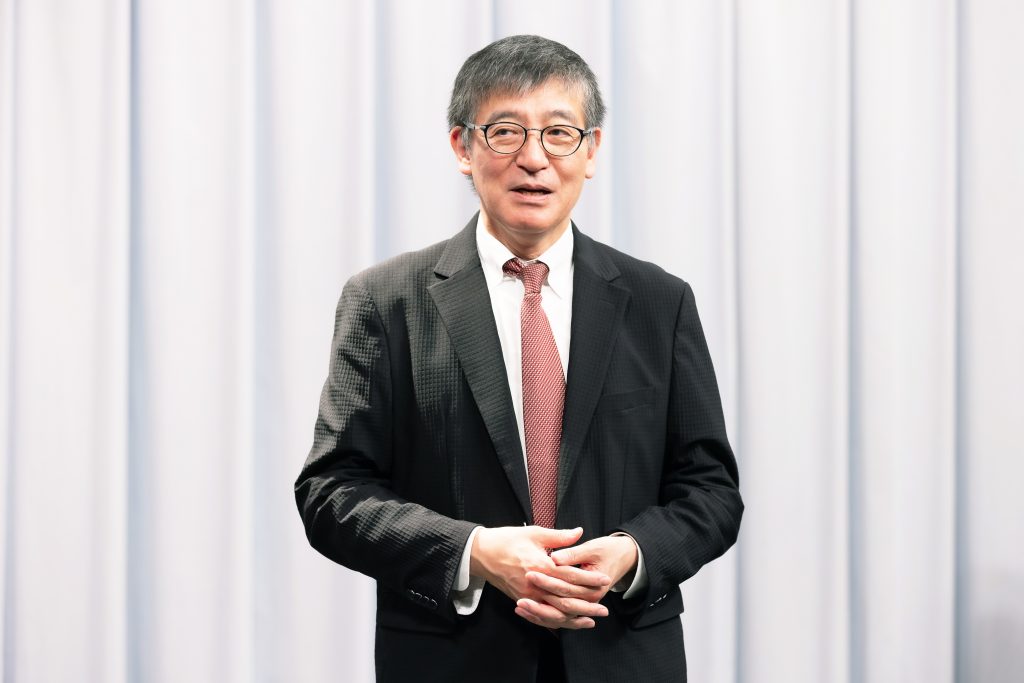
Oto: In a broad sense, studying journalism means learning about the mechanisms of democracy and the value of maintaining fairness in society. Many students, like Ms. Noguchi, take this learning further and envision careers centered on contributing to society.
Noguchi: I accepted a job offer from Kubota Corporation, a company I had been interested in because of its commitment to environmental solutions. I hope to fully apply what I learned in the Department of Journalism and through my study-abroad experience in my work.
Hasegawa: In Professor Oto’s classes, I learned that a diverse media environment makes it possible to bring to light voices that rarely reach the public and truths that often go unnoticed, thereby contributing to greater diversity in society. This is something I will continue to value and keep in mind, both now and in the future, as I work in the field of journalism.
※Please note that the content of this article is subject as of January 2025