



From June 9 to 26, 2026, Sophia University hosted the 25th Sophia University UN Weeks June 2026 under the theme, “Exploring Our Future through the Work of the United Nations.” Since its launch in 2014, UN Weeks has become one of the University’s signature outreach programs. The event welcomes not only Sophia students but also high school students and members of the public from Japan and abroad, providing opportunities to engage with leading practitioners and scholars through lectures, symposia, and workshops. This year’s program featured six events covering a wide range of topics, including peacebuilding, human rights, gender equality, and careers in international organizations.
Gender Mainstreaming to Transform the Future of Humanity: The Call for New Leadership
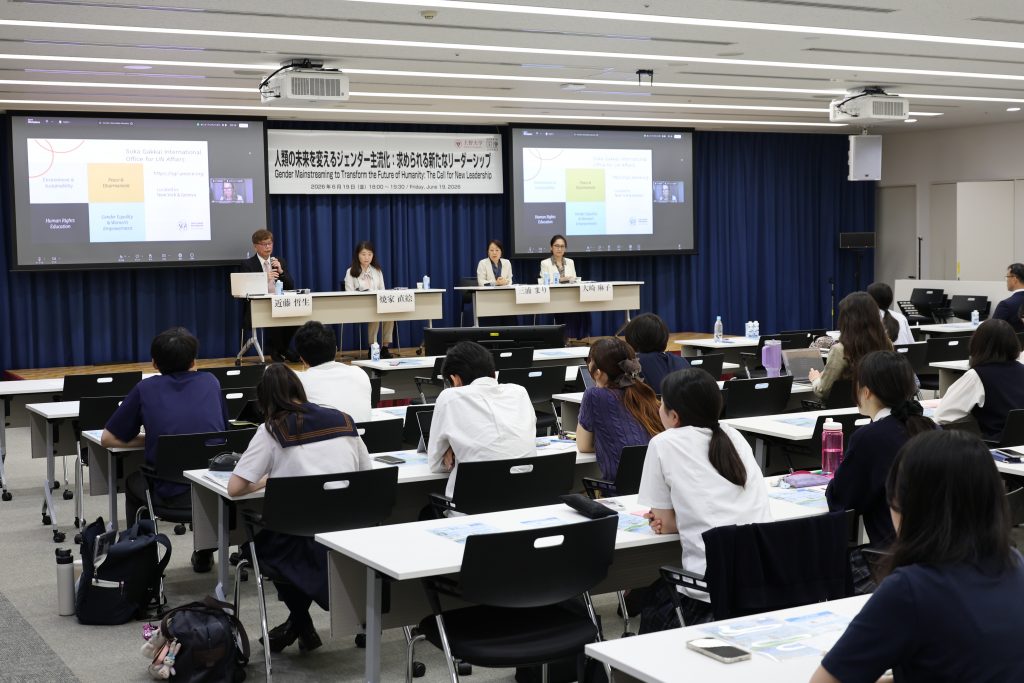
On June 19, Sophia University hosted a symposium in collaboration with United Nations organizations to explore the significance and practice of gender mainstreaming. As societies face increasingly complex challenges—including population decline, labor shortages, and the decline of local communities—the symposium examined how diverse perspectives and lived experiences can be better reflected in policymaking and decision-making, while exploring pathways toward a society in which everyone can participate and contribute fully.
The symposium opened with remarks by Prof. Tetsuo Kondo, Director of the Sophia Human Resources Center for International Cooperation (SHRIC), who emphasized that gender mainstreaming extends far beyond support for women. He highlighted its relevance across a wide range of fields, including peacebuilding and community development, stressing that meaningful social change is achieved by harnessing the strengths and perspectives of diverse people.
A congratulatory message from the Minister of State for Gender Equality and Women’s Empowerment was then delivered by Mr. Yusuke Sato, Deputy Director for Regional Policy of the Gender Equality Bureau, Cabinet Office. The message reaffirmed that promoting gender equality and women’s empowerment is indispensable to building a sustainable society and underscored the importance of collaboration among the national government, local communities, and relevant organizations.
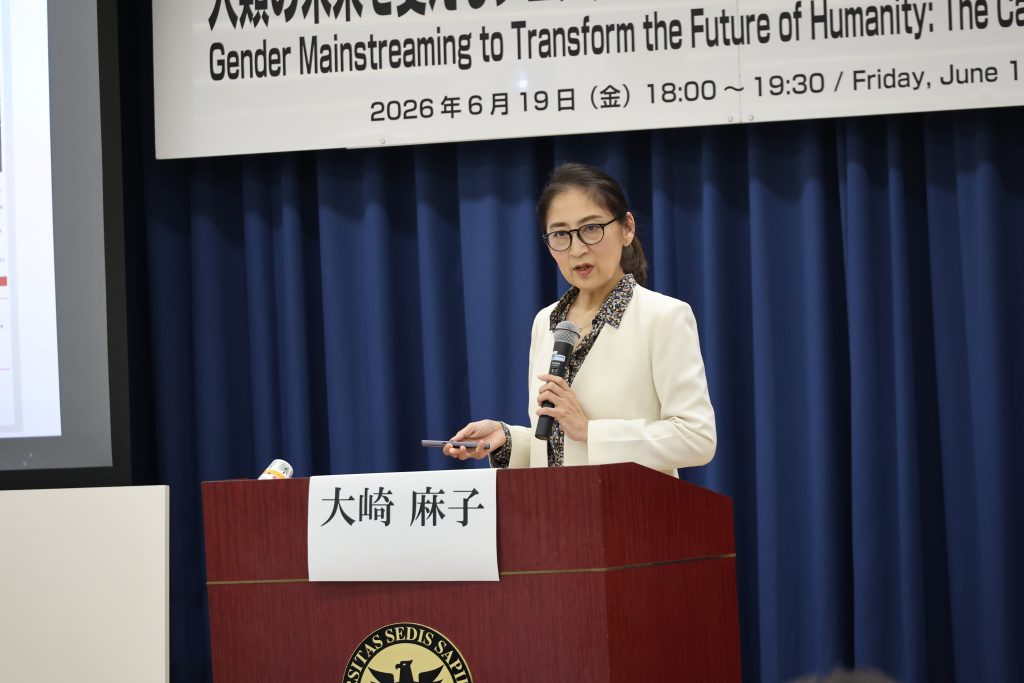
In the keynote address, Ms. Asako Osaki, Board Director of the Gender Action Platform, explained gender equality as a fundamental human rights issue and emphasized that integrating gender perspectives across all sectors is essential to achieving the Sustainable Development Goals (SDGs). She also introduced the Toyooka Model, an initiative she proposed that has since been implemented in Toyooka City, Hyogo Prefecture. By analyzing the rates at which young people return to their hometowns by gender, the initiative revealed the significantly lower U-turn rate among women. The case illustrated how evidence-based policymaking and inclusive decision-making can help address regional challenges and drive broader social transformation.
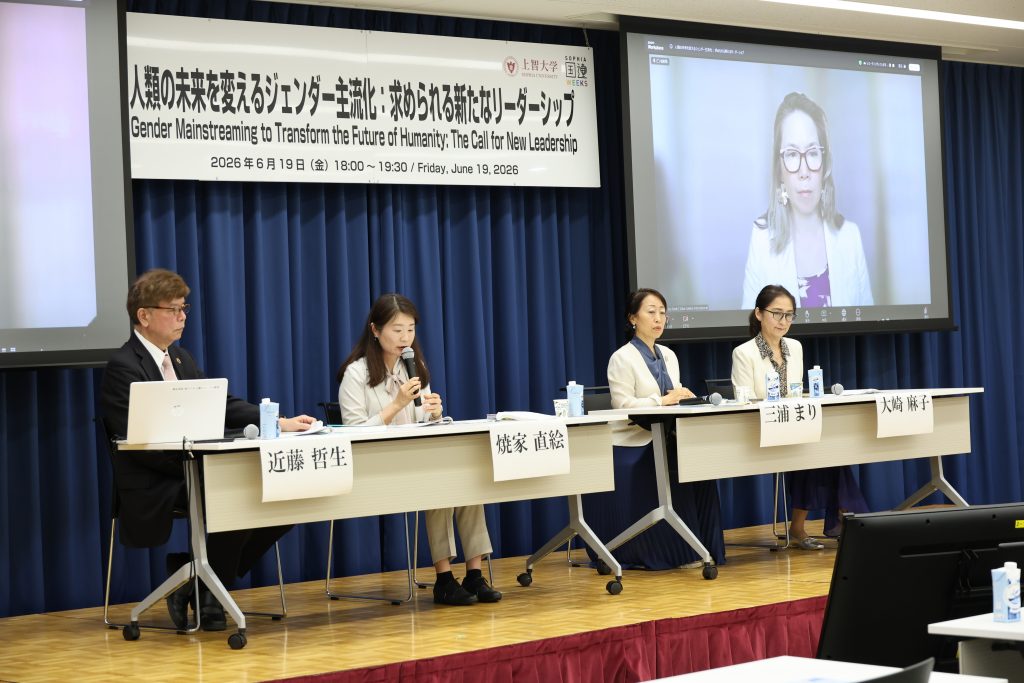
The panel discussion, moderated by Prof. Kondo, featured Ms. Ivy Koek of the SGI UN Office, former Co-Chair of the Gender Equality Committee of the NGO Committee on the Status of Women, New York; Ms. Naoe Yakiya, Director of the UN Women Japan Liaison Office; and Prof. Mari Miura of Sophia University’s Faculty of Law. The panelists discussed both the challenges and opportunities for advancing gender
mainstreaming, highlighting the importance of broad stakeholder participation and the effective use of gender-disaggregated data, while also emphasizing the need to address cultural norms, unconscious gender bias, and traditional gender roles.
During the Q&A session, participants discussed ways to encourage greater youth engagement and strengthen community-based initiatives. The discussion underscored the importance of bottom-up approaches that reflect the voices of local communities and those directly affected, supported by strong cross-sector collaboration.
The symposium provided participants with an opportunity to examine gender mainstreaming from multiple perspectives, deepening their understanding of both its significance and the challenges of putting it into practice. It also offered valuable insights into future directions for advancing gender equality and fostering more inclusive policymaking.
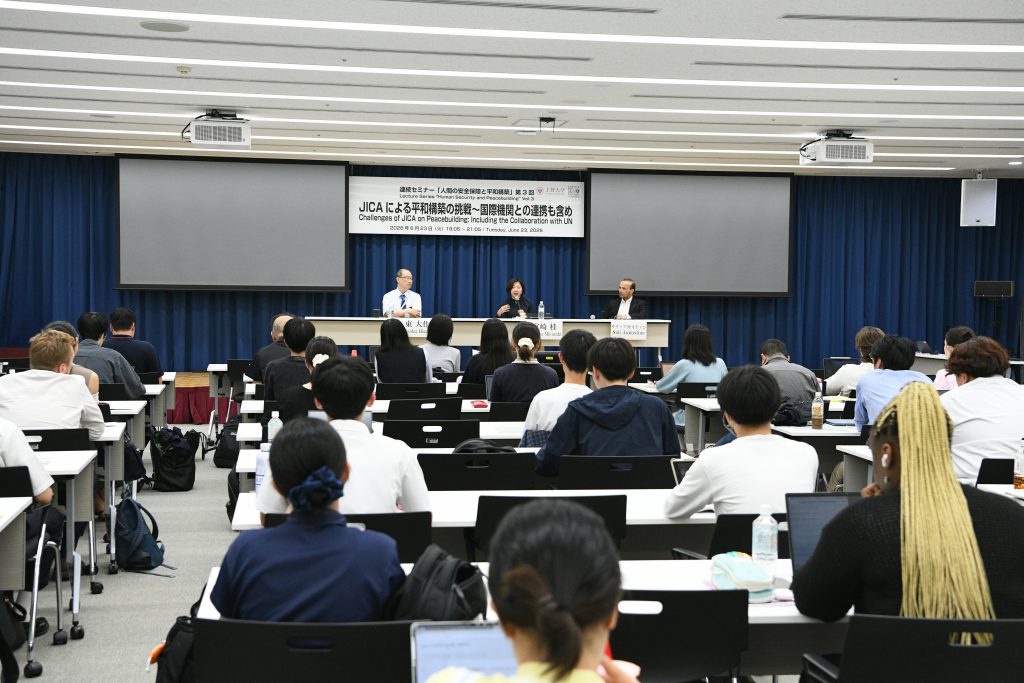
Challenges of JICA on Peacebuilding: Including the Collaboration with UN
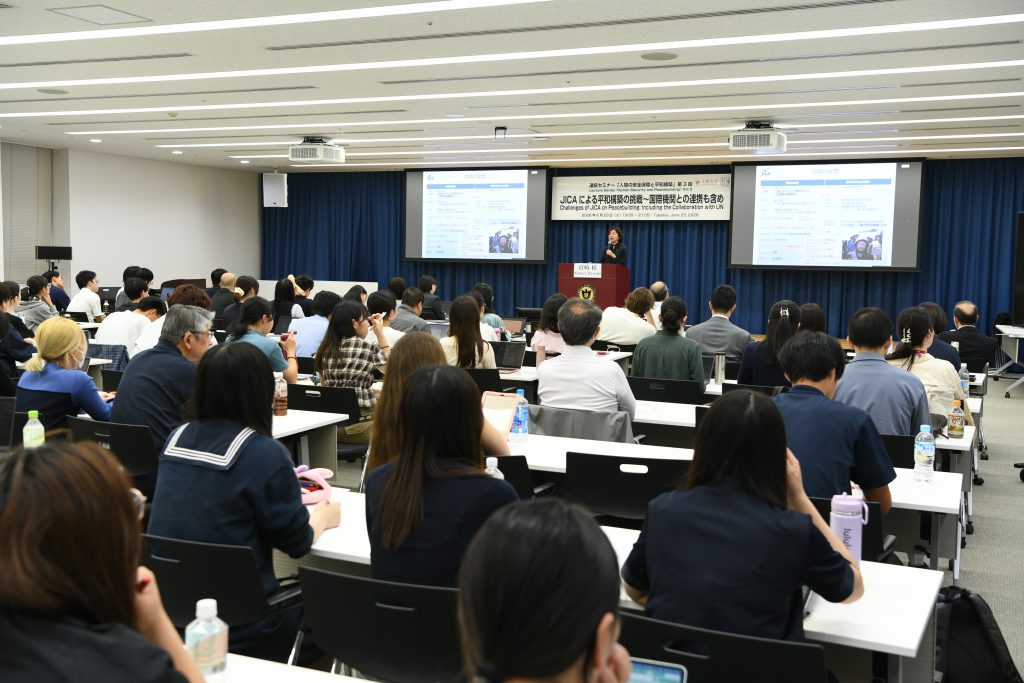
On June 23, 2026, Sophia University welcomed Ms. Katsura Miyazaki, Executive Senior Vice President of the Japan International Cooperation Agency (JICA), for a seminar on peacebuilding. As Japan’s implementing agency for Official Development Assistance (ODA), JICA has long been engaged in peacebuilding initiatives that support peaceful and inclusive societies in developing countries, covering a broad spectrum of activities from conflict prevention to post-conflict recovery and reconstruction. The seminar aimed to examine the current achievements and challenges of JICA’s peacebuilding efforts while exploring future prospects together with participants.
Approximately 260 participants, both in person and online, attended the event. Organized and moderated by Prof. Daisaku Higashi, Director of Sophia Institute of International Relations, the seminar formed part of the University’s ongoing lecture series on Human Security and Peacebuilding, which has been held since 2016.
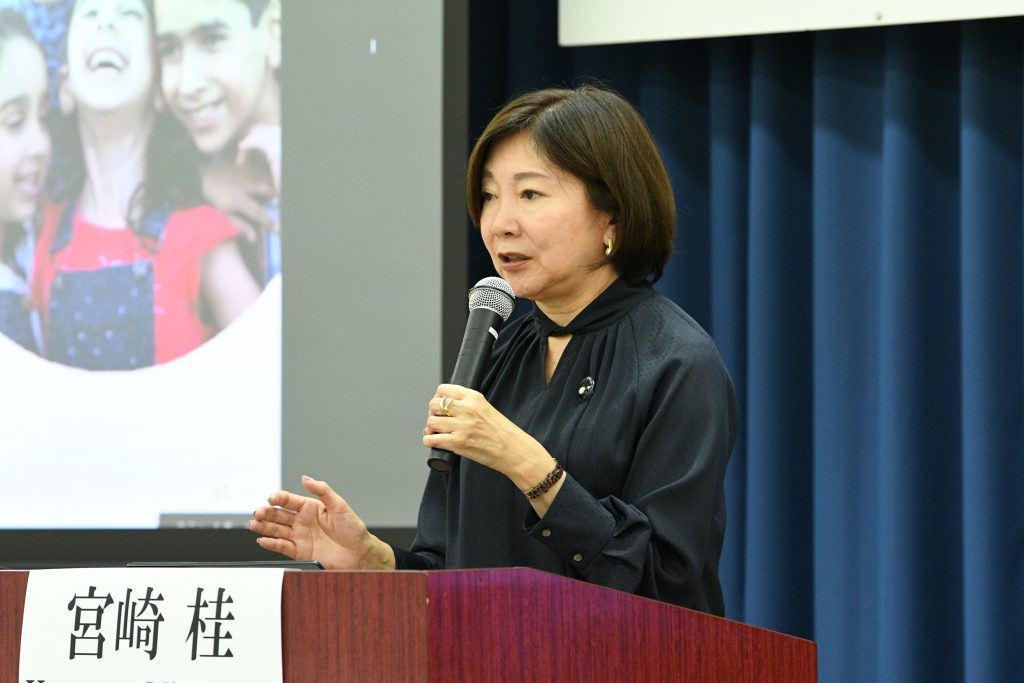
Opening the seminar, Ms. Miyazaki described today’s increasingly complex global environment, where multiple risks are interconnected. While divisions among nations continue to deepen, she noted that economic interdependence remains strong, making global peace and stability directly relevant to people’s everyday lives.
She then outlined JICA’s approach to peacebuilding, emphasizing that, amid increasingly protracted conflicts, it is essential to promote the Humanitarian–Development–Peace (HDP) Nexus based on the concept of human security, integrating humanitarian assistance, development cooperation, and peacebuilding across sectors. Drawing on practical examples, she highlighted the importance of tailoring support to the unique circumstances of each country and community while fostering nation-building and social development through dialogue.
Ms. Miyazaki also introduced JICA’s concept of “circulation of knowledge and experience,” through which lessons learned overseas can contribute to addressing challenges within Japan. Looking ahead, she stressed the importance of deepening public understanding of development cooperation in Japan, emphasizing that JICA’s commitment to building relationships between people and developing human resources, though sometimes appearing to be an indirect approach, represents a long-term investment in peace and stability for both Japan and the international community.
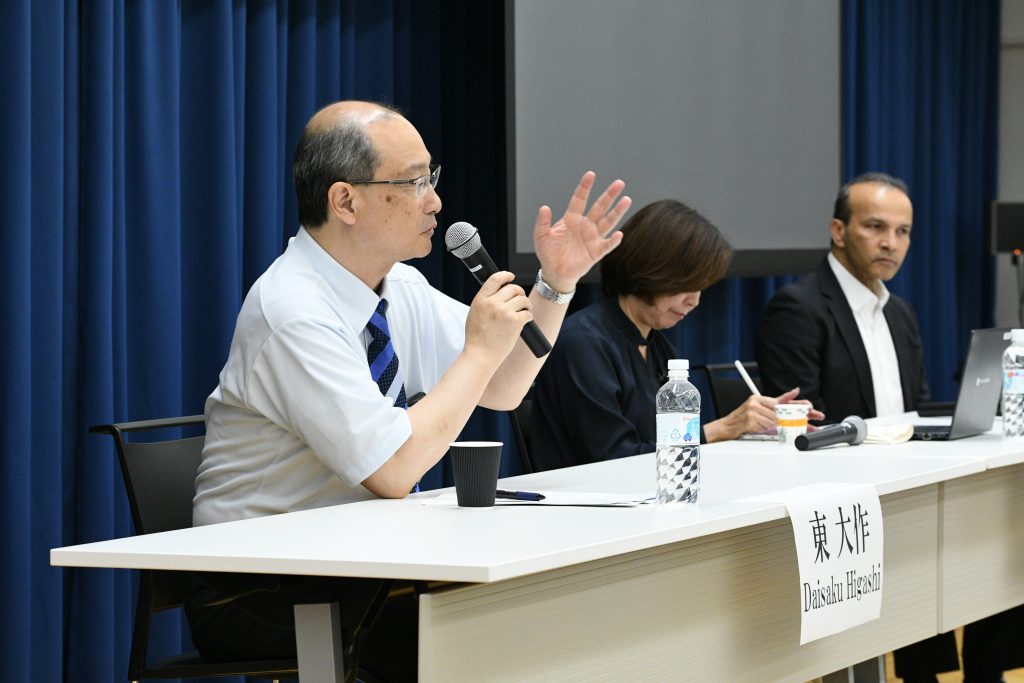
The second half of the seminar featured a panel discussion with Ms. Miyazaki, Prof. Higashi, and Sali Augustin, Chancellor of Sophia School Corporation. Prof. Augustin observed that JICA’s mission closely aligns with Sophia University’s educational philosophy of “For Others, With Others,” reminding participants that the University’s vision particularly calls attention to those whose human dignity is not fully protected.
During the lively question-and-answer session, participants raised a wide range of issues, including effective ways to communicate the significance of JICA’s work, responses to global funding shortages, and how development organizations can balance political neutrality with engagement in domestic contexts.
In closing, Prof. Higashi summarized the significance of JICA’s peacebuilding approach by noting that its emphasis on promoting self-reliance and stability offers valuable lessons for the international community at a time when externally imposed models of governance are increasingly proving inadequate. He concluded that assistance grounded in the needs of partner countries ultimately strengthens trust in Japan around the world, fostering lasting partnerships that contribute not only to global peace but also to Japan’s own security.
UN Weeks is held twice each year, in June and October, providing opportunities for participants to deepen their understanding of the complex challenges facing today’s international community. By learning from experts and engaging in meaningful dialogue, the program encourages participants to develop the knowledge and perspectives needed to contribute to solving global issues. Sophia University remains committed to continuing UN Weeks as a forum where students and the wider public can explore international affairs and work together toward a more sustainable and peaceful future.