

Clearer Environmental Benefits Could Encourage Green EV Insurance Purchases


EV owners look beyond green claims, with trust, attitudes, and perceived value shaping purchase intentions
Green insurance gives electric vehicle (EV) owners opportunities to make environmentally conscious choices throughout ownership. But what drives customers to purchase these policies?
Surveying EV owners in China, researchers from Sophia University, Japan, found that purchase intentions were shaped by customers’ overall perceptions of green insurance, including trust in environmental claims, perceived benefits, and attitudes. The findings highlight the importance of clearly communicating environmental benefits to help consumers assess the value of these policies.
For many customers, choosing an electric vehicle (EV) is an environmentally conscious choice. But sustainability doesn’t end at the showroom. It also extends to the choices people make while owning and operating their vehicles. For an EV, this can mean making informed choices about energy-efficient driving, environmentally responsible repairs, and battery support.
Some of these practices can be supported through green EV insurance. However, customers may find it difficult to verify insurers’ environmental claims before purchasing a policy, making it harder to judge whether the insurance offers genuine environmental value.
Researchers from Sophia University, Japan, examined customer attitudes towards green EV insurance in China, the world’s largest EV market, where new energy vehicle ownership reached 36.89 million by June 2025. Led by Professor Xuepeng Qian of the Graduate School of Global Environmental Studies at Sophia University, the study found that customers were more likely to consider purchasing green EV insurance when they viewed the policies and their environmental benefits positively. The study was co-authored by graduate students Yimeng Zheng and Zhao Chen, both affiliated with the same university.
This paper was made available online on August 10, 2026, and will be published in Volume 94 of the Journal of Retailing and Consumer Services on January 01, 2027.
“Sustainable consumption should extend beyond buying an EV to decisions about driving, repairs, and insurance. Since consumers cannot easily verify insurance’s environmental value before purchase, we wanted to understand how they interpret and trust environmental claims and how these shape their purchase intentions,” says Prof. Qian.
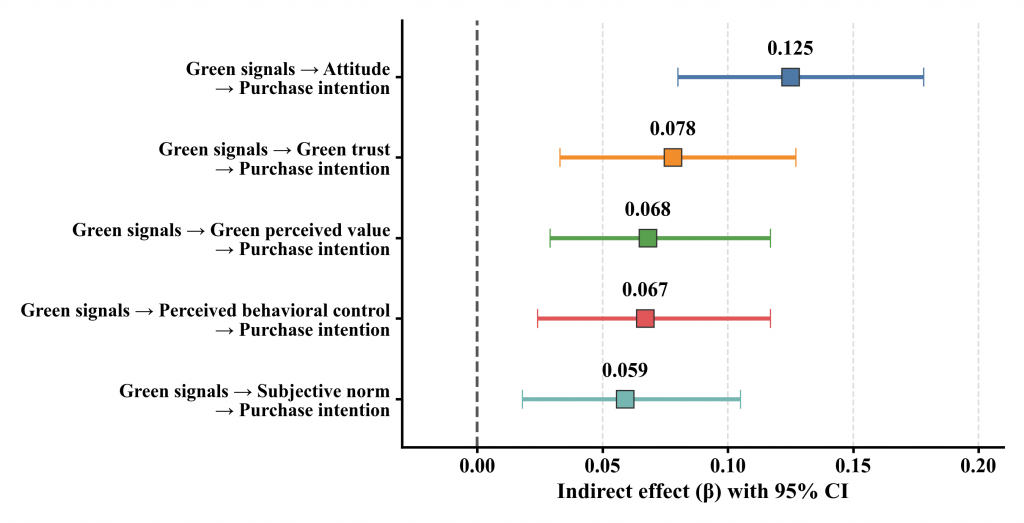
For green EV insurance, government policies promoting green insurance and insurance companies’ environmental claims may influence customers’ intentions to purchase a policy. In their study, the researchers collectively refer to these as ‘green signals.’ They examine how these signals relate to customers’ views of green insurance (attitude), trust in its environmental claims (green trust), perceptions of whether its benefits justify the cost (green perceived value), feelings of encouragement from others to purchase it (subjective norm), and perceived ability to do so (perceived behavioral control). They also examined whether customers’ sensitivity to price and concern about climate change influenced how they responded to this information.
To investigate these relationships, the researchers conducted an online survey of EV owners in China. Participants rated statements about green signals, their perceptions of green EV insurance, and their intention to purchase it using a five-point scale ranging from strongly disagree to strongly agree.
Analysis of survey data from 758 participants showed that government policies and insurance companies’ environmental claims, collectively described as green signals, were not significantly associated with purchase intention through a direct pathway. Instead, purchase intentions were stronger when customers viewed the insurance positively, trusted its environmental claims, believed its benefits justified the cost, felt encouraged by others to buy it, and believed they could afford and access it. Of these factors, a positive attitude towards the insurance had the strongest influence on purchase intentions.
However, price-conscious customers responded more strongly to green signals, suggesting that this information may play a greater role in shaping their purchase intentions. In contrast, customers with little concern about climate change showed little response to green signals.
The findings suggest that insurance companies should support their environmental claims with clear evidence to help customers better understand the benefits of green EV insurance.
“Rather than simply claiming to be ‘environmentally friendly,’ insurers should highlight specific benefits, such as incentives for eco-friendly driving, repairs that avoid unnecessary replacements, the use of remanufactured parts, battery support, and reductions in carbon emissions and resource consumption,” says Prof. Qian.
The researchers also suggest that establishing common standards for green repairs and environmental reporting would help customers compare the environmental benefits of different insurance products.
As the researchers explain, “Studying green EV insurance matters because it connects EV ownership with repeated consumer decisions.” By making its environmental benefits clear and verifiable, green EV insurance could encourage customers to continue making sustainable choices long after purchasing an EV.
Reference
- Title of original paper
Extending sustainable consumption after EV purchase: Green signals and purchase intention toward green EV insurance
- Journal
Journal of Retailing and Consumer Services
- Authors
Yimeng Zheng1, Zhao Chen1, and Xuepeng Qian1
- Affiliations
1Graduate School of Global Environmental Studies, Sophia University, Japan
About Professor Xuepeng Qian
Prof. Xuepeng Qian is a Professor at the Graduate School of Global Environmental Studies and Director of Institute for Studies of the Global Environment Sophia University, Tokyo, Japan. He specializes in urban and environmental planning and studies sustainable behavior, urban social systems, and resource sustainability through systems approaches, with over 100 publications in journals and books. His research explores urban and regional solutions and pathways for sustainable development.
Funding information
This research did not receive any specific grant from funding agencies in the public, commercial, or not-for-profit sectors.
Media Contact
Office of Public Relations, Sophia University (sophiapr-co@sophia.ac.jp)


