

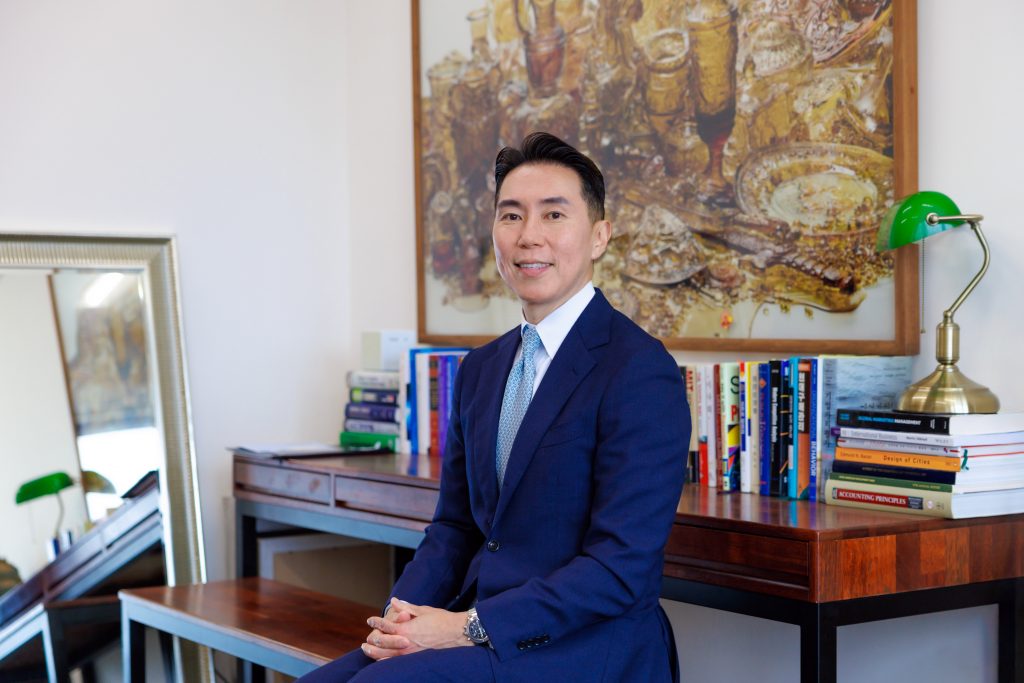
JaSeung Koo
Professor
Department of Management
Faculty of Economics



Professor JaSeung Koo brings more than a decade of experience advising multinational corporations on corporate strategy, organizational transformation, innovation, and mergers and acquisitions to his academic research. Combining practical insight with rigorous empirical inquiry, he examines how organizations adapt to uncertainty, transform themselves, and create sustainable value. His work seeks to bridge scientific rigor and managerial relevance, advancing both management scholarship and practice.
Before entering academia, I spent more than a decade advising multinational corporations on corporate strategy, organizational transformation, innovation, and mergers and acquisitions. Those years in practice exposed me to the strategic challenges organizations face as they navigate uncertainty and change. At the same time, they prompted a fundamental question: could the patterns I observed repeatedly across organizations be explained through rigorous empirical research? That question ultimately led me from consulting to academia.
Despite differences in industry, size, or geography, organizations often exhibit remarkably similar patterns in both success and failure. My research seeks to uncover the underlying principles and mechanisms that shape these outcomes, drawing on empirical evidence rather than intuition or anecdote. The ultimate objective is to generate insights that are not only academically rigorous but also meaningful to managerial decision-making.
In an era defined by geopolitical uncertainty and rapid technological disruption, initiatives such as mergers and acquisitions and digital transformation should be viewed not merely as managerial tools, but as opportunities to rethink organizational capabilities and renew the foundations of competitive advantage.
Management research, however, extends well beyond improving corporate performance. Because organizations shape economies, communities, and people’s lives, the field also carries an important societal responsibility. I therefore strive to pursue research that balances scientific rigor with practical relevance, contributing simultaneously to academic knowledge and managerial practice.
The Essence of Management Research Is to Uncover Common Principles and Mechanisms

Management is fundamentally an empirical social science. It seeks to build and test theories by systematically analyzing evidence drawn from the real world. In my own research, for example, I examine textual data contained in integrated reports, sustainability reports, and messages from senior management. By identifying the values and strategic priorities communicated by companies, I analyze how these relate to corporate performance and stock market responses.
Historically, however, empirical research has not always occupied a central position in Japanese management scholarship. One reason can be traced to Japan’s economic success during the 1980s and 1990s, when Japanese manufacturers attracted worldwide attention. International business schools and researchers wanted to understand the sources of that success, and Japanese scholars were often expected to explain distinctive practices and introduce prominent corporate cases.
As a result, considerable emphasis was placed on describing successful companies rather than constructing and testing theories that could be applied more broadly. Over the past two decades, the field in Japan has increasingly shifted from descriptive case-based work toward more systematic and scientifically grounded empirical research.
Studying individual success stories can certainly provide valuable insights. Yet the deeper purpose of management research is not simply to learn what a particular company did. It is to determine why certain outcomes occurred and to uncover the common principles and causal mechanisms that may explain similar outcomes across organizations and contexts.
Breadth of Learning Is Essential in an Era of Change
Management is an applied field that draws extensively on foundational disciplines such as economics, sociology, psychology, political science, and history. These disciplines provide the theories and methods needed to understand organizations and human behavior. For this reason, studying management alone is not sufficient to develop a genuinely deep understanding of business.
Some students enter a Department of Management because they expect practical knowledge that will help them find employment. Practical knowledge is valuable, but the students who distinguish themselves are often those who have explored subjects that appear unrelated to business and have developed perspectives of their own. A university should not function merely as an employment agency. Its role is to provide students with the intellectual foundations needed to think independently and engage seriously with complex questions.
Marketing, for example, can be described simply as understanding people’s desires and encouraging them to purchase a product or service. Yet a student who has studied psychology will approach consumers differently from one who has learned only marketing techniques. Knowledge of sociology, history, or culture can likewise transform how a person understands markets and organizations.
In a period of rapid and unpredictable change, narrowly specialized knowledge can quickly lose its relevance. I therefore hope students will pursue a wide range of interests, resist focusing only on immediate practical benefits, and experience the intellectual depth that comes from studying diverse academic fields.
The book I recommend
“Bijinesu Sukuru dewa Manabenai Sekai Saisentan no Keieigaku”(World’s Leading Management Studies That Cannot Be Learned in Business Schools)
by Akie Iriyama, Nikkei Business Publications
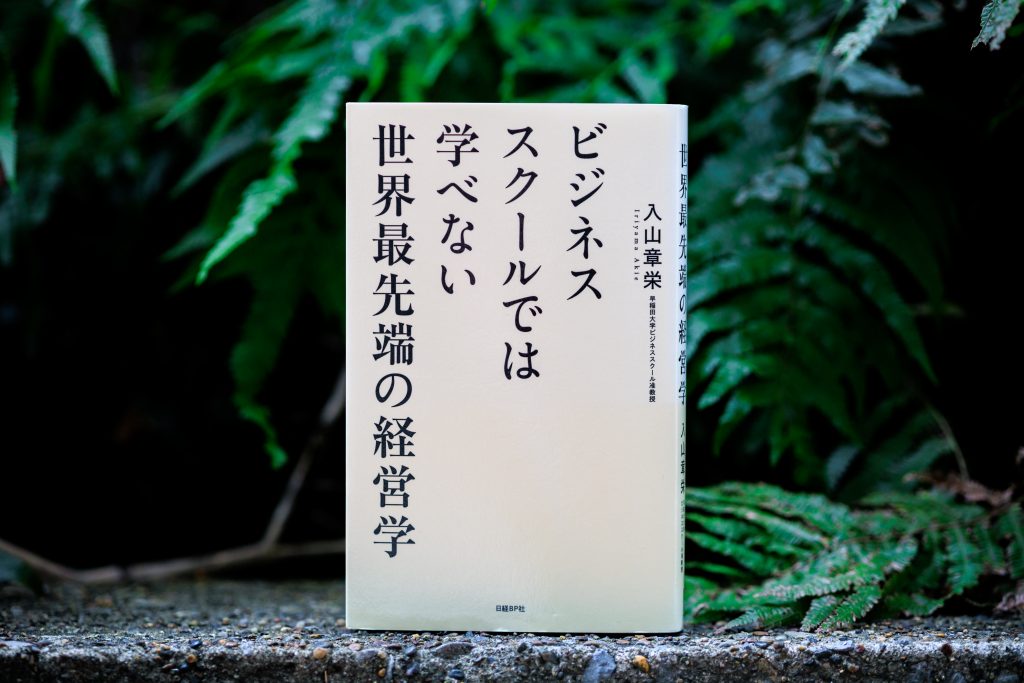
This book offers an accessible introduction to what management really is as an academic discipline. Rather than presenting management as a collection of business techniques, it explains clearly that management is an empirical social science grounded in theory and evidence. It introduces both foundational concepts and many of the emerging topics shaping contemporary management research. For high school students and general readers encountering management for the first time, it provides an excellent starting point for understanding the field.
-
JaSeung Koo
- Professor
Department of Management
Faculty of Economics
- Professor
-
After more than a decade in management consulting and related professional roles, advising multinational corporations on corporate strategy, organizational transformation, innovation, and mergers and acquisitions, Professor Koo pursued an academic career. After serving in several academic appointments, including Associate Professor at International Christian University, he joined Sophia University as Professor in 2026. He holds a master’s degree in public finance from New York University and a Ph.D. in Commerce from Waseda University. His research focuses on strategic management, organizational transformation, mergers and acquisitions, innovation, and global business through rigorous empirical analysis.
- Department of Management
Interviewed: June 2026