

The Origins of the Faculty of Law: Where Theory Meets Practice and a Vision for the Future Emerged
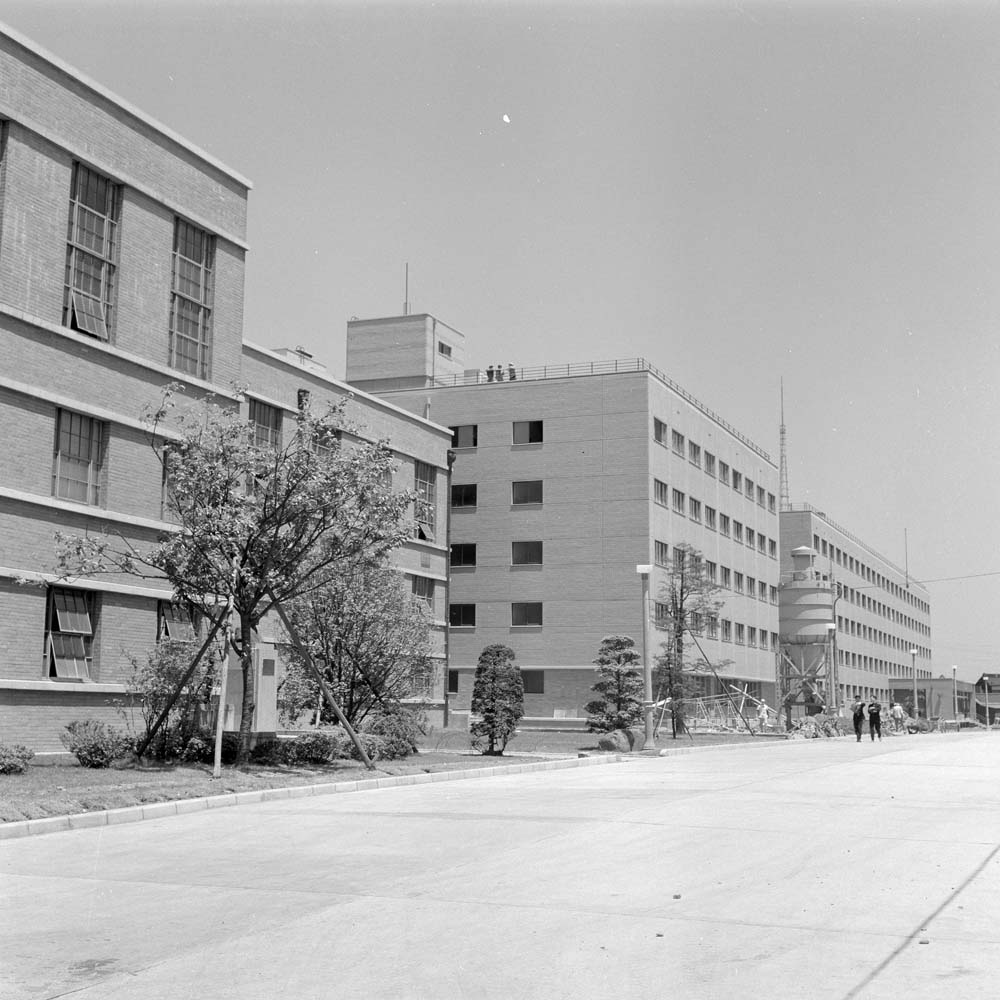



“Theory and practice”—this principle has remained at the heart of the educational philosophy of Sophia University’s Faculty of Law for more than 65 years. From international cooperation to global environmental issues, the Faculty has consistently been at the forefront of emerging fields. Its origins can be traced back to a proposal made by a cardinal in the mid-1950s. Here, we look back at the history leading to the establishment of the Faculty of Law.
Established with a Donation from Cardinal Frings of West Germany
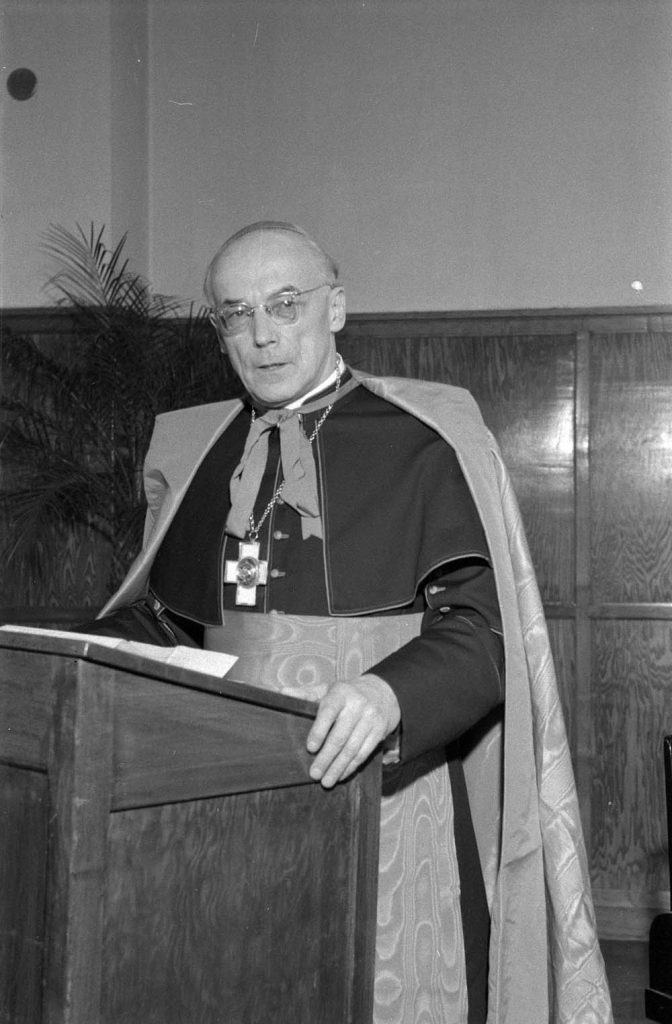
In 1957, the Department of Law was established as part of the newly founded Faculty of Law. The story behind its establishment is a fascinating one.
In 1955, while President Takashi Oizumi was attending “Tokyo Week,” an event held by the Archdiocese of Cologne in Germany, Cardinal Joseph Frings reportedly urged him to establish a law faculty at Sophia University, saying, “Sophia University does not have a faculty of law. In Germany, a university cannot be considered a comprehensive university without faculties of theology, philosophy, law, and medicine.”
When President Oizumi confided that the university did not have sufficient funds, Cardinal Frings offered to donate half of the funds required to establish the Faculty of Law. This generous contribution paved the way for its establishment, as recorded in The 50-Year History of Sophia University.
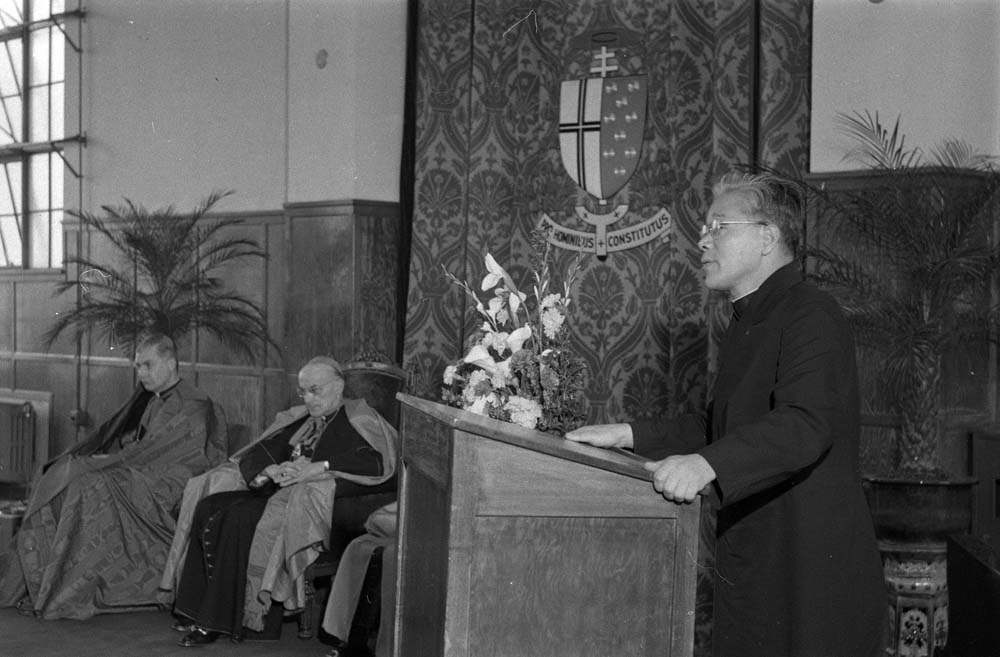
Thirty-three new faculty members were appointed, and the Faculty of Law building was completed in 1957 at a total construction cost of ¥140 million. It was subsequently demolished in 1992. On May 11, the opening ceremony was held in the reading room of the former library. President Oizumi spoke about the significance and objectives of establishing the Faculty of Law and conferred an honorary Doctor of Laws degree upon Cardinal Frings in recognition of his invaluable support for its establishment.
The Beginnings of Legal Education at Sophia
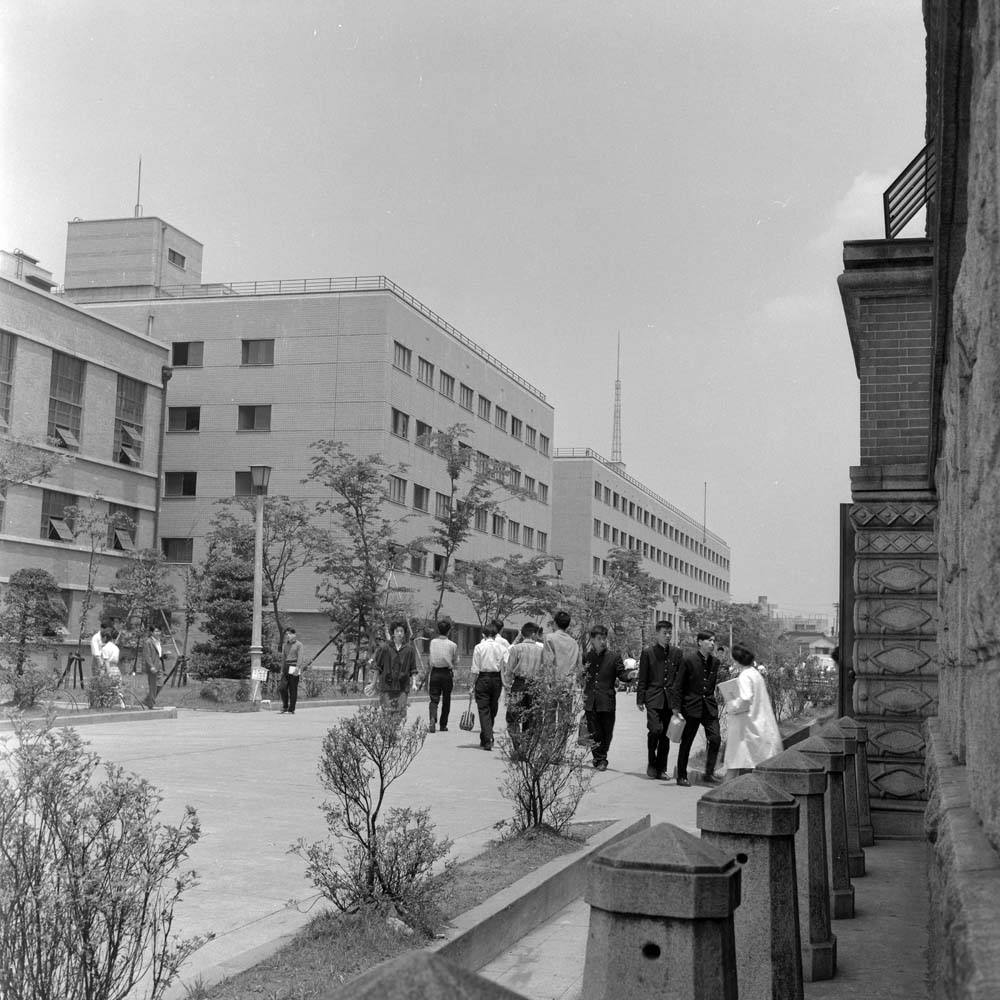
Legal education at Sophia dates back to 1932, when the university established the Special Division (Law Course).*
The Special Division differed in character from what is known today as a vocational school. Under the Vocational School Order issued in 1903, it was defined as an institution providing “higher education in academic and technical fields.” Admission was open to graduates of secondary schools and vocational schools under the prewar education system, and the program lasted three years. As no bachelor’s degree was awarded, students seeking a university degree had to proceed to an old-system university after completing an old-system higher school or preparatory course.
The Special Division closed its door after World War II. Sophia University stopped admitting students to the program in 1948, following the establishment of the new university system, and the division was formally discontinued in 1951.
The Department of Law was subsequently established as a new department in 1957 under the School Education Law enacted in 1947, with Professor Shiro Terada serving as the Faculty’s first dean. By December of that same year, the Faculty had already published its academic journal, Hōgaku Ronshū (Journal of Legal Studies).
The Faculty of Law building had one basement level and five floors above ground, with a total floor area of approximately 1,513 tsubo. Classrooms and faculty offices occupied the first and second floors, while individual faculty research rooms were located on the third through fifth floors. There were 30 rooms on each floor, for a total of 90 rooms. Initially, the building housed not only the Faculty of Law but also research rooms for the Faculties of Humanities, Economics, and Foreign Studies.
*The Special Division was an affiliated institution of old-system universities established before World War II. Legally, it was a short-term educational institution established under the Vocational School Order rather than the University Order, with an emphasis on practical education. At Sophia University, the Special Division also offered courses in economics, commerce, and journalism, which were established at the same time as the Law Course.
Two Internationally Oriented Departments
The founding purpose of the Faculty of Law was “to foster individuals well versed in both theory and practice.” This objective has remained unchanged to the present day.
At the same time, Cardinal Frings’ initiative played a pivotal role in bringing the Faculty to fruition in Yotsuya, Tokyo. Looking back on the Faculty’s 25th anniversary, Professor Masao Ōki, then Dean of the Faculty of Law, remarked that its establishment was characterized from the very beginning by “international cooperation in both material and spiritual terms, and a vibrant international spirit.”
Against this historical and institutional backdrop, the Department of International Legal Studies was established in 1980, a unique initiative among Japanese faculties of law at the time. Building on Sophia University’s distinctive international character, the department placed international legal fields at the core of its curriculum, encompassing not only traditional areas such as public international law and private international law, but also legal issues arising from international relations. These were complemented by courses in foreign legal systems and international politics and economics, with the aim of preparing students for careers in Japanese diplomacy and international organizations such as the United Nations.
Then, in 1997, the Department of Legal Studies of the Global Environment was established. It was the first department in Japan to approach environmental issues on a global scale from a legal perspective. The department developed a pioneering curriculum offering a wide range of courses in environmental law in Japan and abroad, while addressing global environmental challenges from the perspectives of the natural sciences, economics, ethics, and other disciplines.
Another distinctive feature of the department was its active recruitment of international students from developing countries. One of its objectives was to equip these students with the knowledge and skills needed to contribute to addressing environmental issues and strengthening environmental administration in their home countries.
With an inter-disciplinary approach between its three departments, the Faculty of Law enables students to take courses across departmental boundaries. This breadth and flexibility of learning will continue to expand the possibilities available to students as they shape their future paths.