

Wisdom Built Through the Ages: The History of Sophia University’s Faculty of Science and Technology



Sophia University is a comprehensive institution where students from all faculties and academic years gather on a single campus in Yotsuya to learn and grow together. Students with diverse academic backgrounds interact on a daily basis and, at times, share classrooms that transcend the traditional boundaries between the humanities and sciences. This unique educational environment reflects Sophia’s commitment to addressing societal challenges through interdisciplinary learning.
Within this setting, the Faculty of Science and Technology has served as one of the key pillars supporting Sophia University as a comprehensive institution of higher education. For more than six decades, it has continued to evolve and expand. This article traces the origins of the Faculty and the process that led to its establishment.
Preparations for the Establishment of the Faculty of Science and Technology
In 1958, as part of the commemorative projects marking the 50th anniversary of Sophia University, plans were made to establish a Faculty of Science and Technology. The inclusion of natural sciences in education had long been an important principle within the Jesuit educational tradition. The Ratio Studiorum, the Jesuit educational framework, explicitly incorporated the study of natural sciences. Historical records such as the Compendium of lectures delivered at the Jesuit Collegio established in Funai (present-day Oita City) in the sixteenth century indicate that subjects including astronomy were taught there.
Japan entered a period of rapid economic growth in the late 1950s, culminating in the announcement of the Income Doubling Plan in 1960. The Ministry of Education strengthened science and engineering education and research while placing greater emphasis on collaboration between universities and industry. At the same time, public attention increasingly turned to environmental and social issues arising from rapid industrialization, including the so-called “Four Big Pollution Diseases” of Japan. These developments underscored the growing importance of scientific and technological research in addressing pressing societal challenges.
Against this backdrop, in January 1958, President Takashi Oizumi announced plans to establish the Faculty of Science and Technology and formed a preparatory committee within the University. Fundraising efforts soon began both within and outside the University to support the creation of this new faculty, which required substantial financial resources.
Domestic and International Support for the New Faculty

In January 1961, the Support Association for the Establishment of the Faculty of Science and Technology was formed. It was chaired by Taizo Ishizaka of Keidanren, then a leading figure in Japan’s business community. Among its supporters were prominent individuals including former Prime Minister Shigeru Yoshida and Toshio Doko, President of Ishikawajima-Harima Heavy Industries. The association contributed approximately 200 million yen in donations.
Support also came from overseas. Then-Chancellor Klaus Luhmer, actively sought assistance throughout Europe and secured significant financial contributions from the Holy See, the Society of Jesus headquarters in Rome, the Archdiocese of Cologne, and the Federal Republic of Germany.
In addition, Fr. Franz Josef Moll conducted fundraising activities in Cologne, Germany, while Fr. Aloysius Miller, Fr. Daniel McCoy, and Fr. Robert Dressman led campaigns in the United States. Thanks to these combined efforts, funding amounting to approximately 2 billion yen was secured for the construction project.
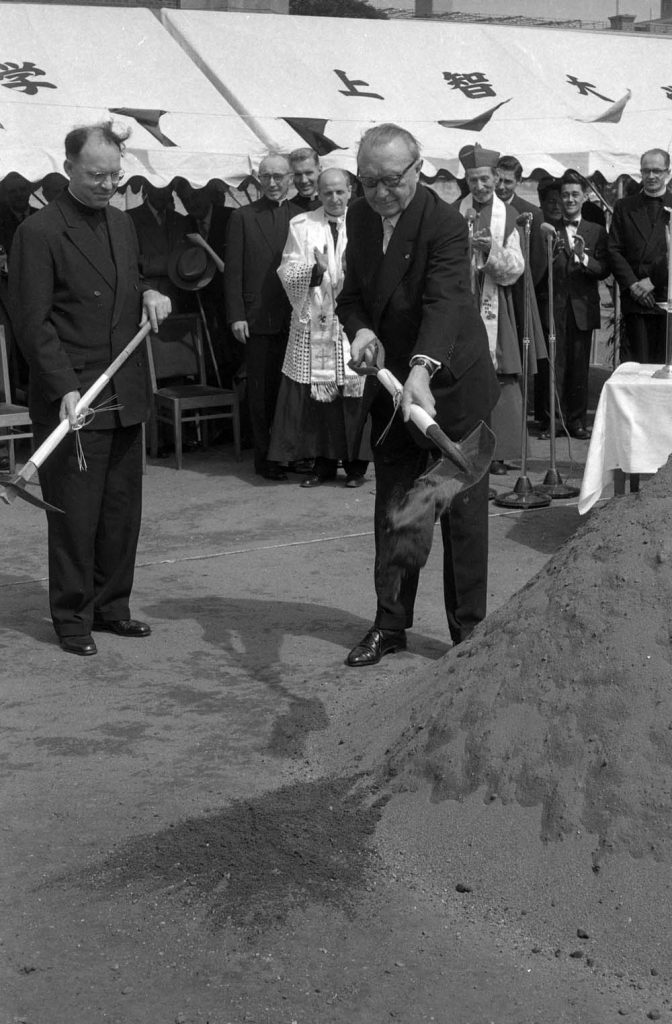
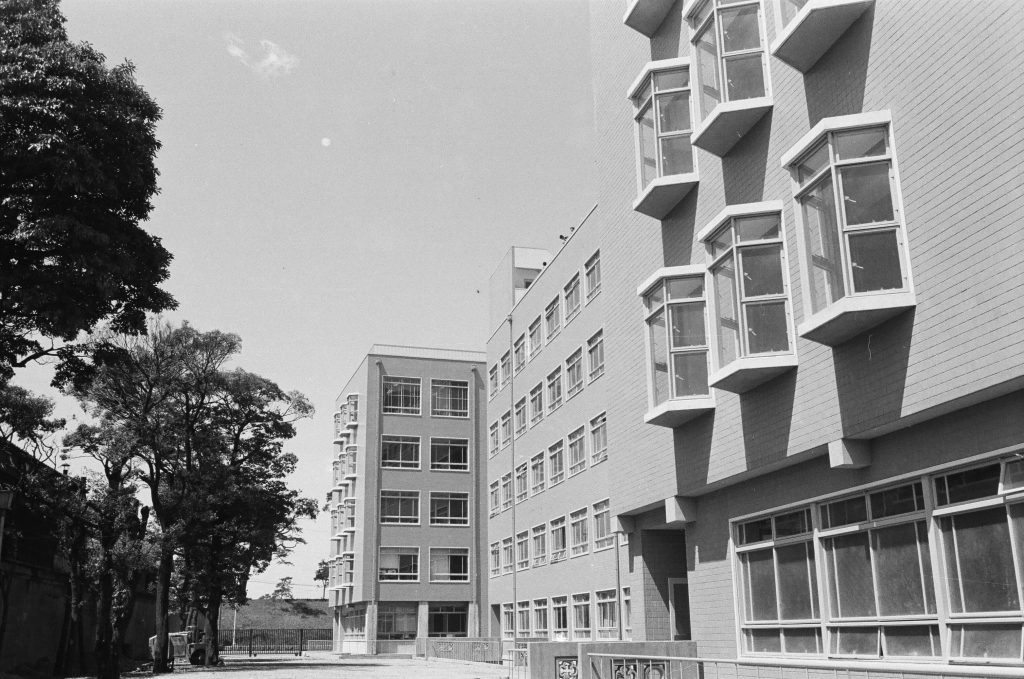
Germany’s contribution was particularly significant. In addition to financial support, numerous high-value scientific instruments and machines were donated. In March 1960, German Chancellor Konrad Adenauer visited Sophia University and participated in the groundbreaking ceremony for Building No. 3, which would become the main facility for the Faculty of Science and Technology. The establishment of the Faculty of Science and Technology was thus made possible through the generous support of many individuals and organizations both in Japan and abroad.
The Launch of the Faculty and the Growth of Sophia as a Comprehensive University
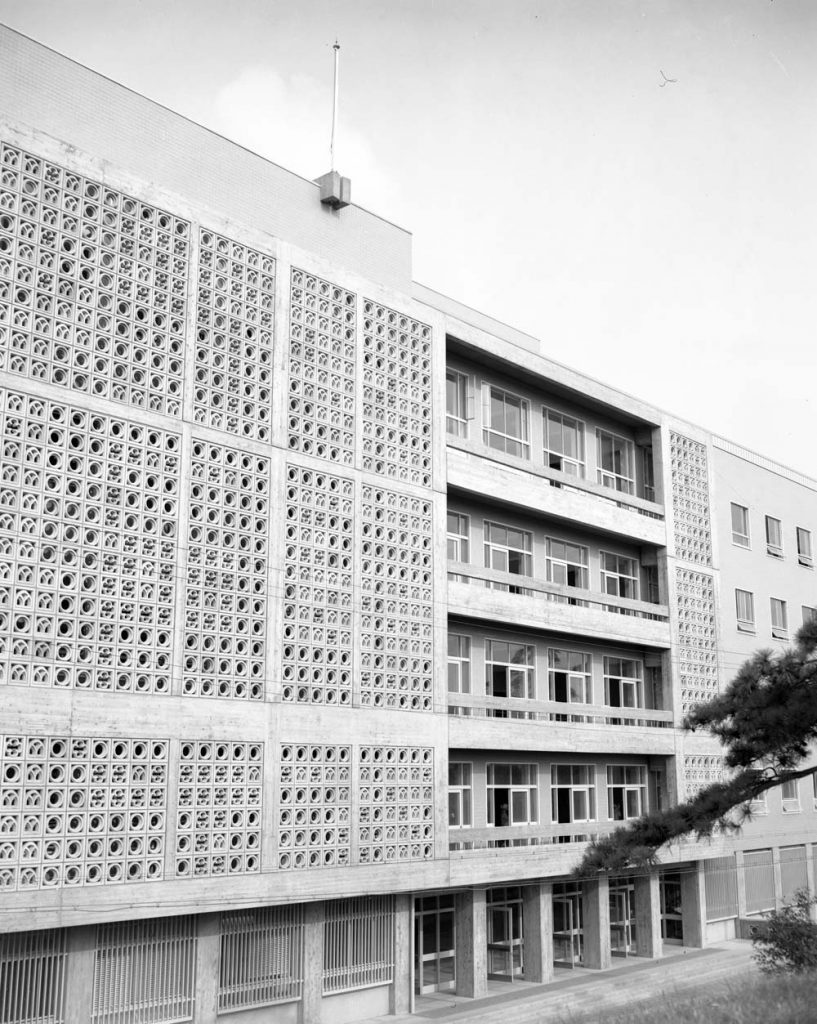
The Faculty of Science and Technology officially opened in April 1962. However, completion of Building No. 3, the Faculty’s main building, was not achieved until November of that year, following the start of construction in July 1961. Until then, classes were held in Quonset-style barracks formerly used by the U.S. military, located on the site where Building No. 7 now stands.
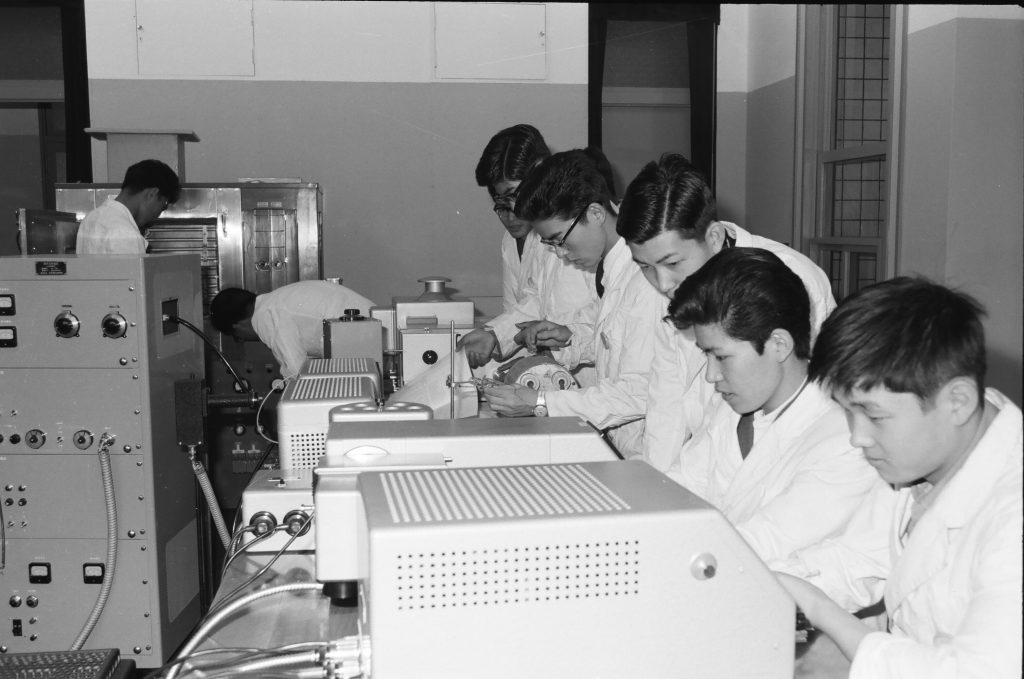
Laboratory facilities were completed during 1962, and the German industrial company Krupp donated advanced machine tools, including cylindrical grinding machines, tool grinders, lathes, and single-spindle automatic lathes. In recognition of this support, the experimental facility was named “Krupp Hall.”
In 1965, Building No. 4 and the Machine Hall were completed, significantly expanding facilities for experiments and research in electrical engineering, electronics, physics, chemistry, and related fields. These included five electric dynamometers and a wide range of specialized equipment.
The Faculty of Science and Technology was originally established with the goal of integrating engineering and the natural sciences. It began with four departments: Mechanical Engineering, Electrical and Electronic Engineering, Physics, and Chemistry. In 1965, the Department of Mathematics was added, and the Department of Chemistry introduced separate tracks in Chemistry and Applied Chemistry, further strengthening its academic structure.
From its inception, the Faculty of Science and Technology emphasized comprehensive language education, fostering an international outlook, and close interaction between faculty members and students. These principles have remained central to science and technology education at Sophia University. Even after the Faculty was reorganized in 2008 into its current three-department structure—Materials and Life Sciences, Engineering and Applied Sciences, and Information and Communication Sciences—these educational ideals have continued to guide its development.
Through the establishment of the Faculty of Science and Technology, Sophia University successfully positioned itself as a comprehensive university encompassing both the humanities and the sciences.
Celebrating 50 Years and Looking Toward the Future
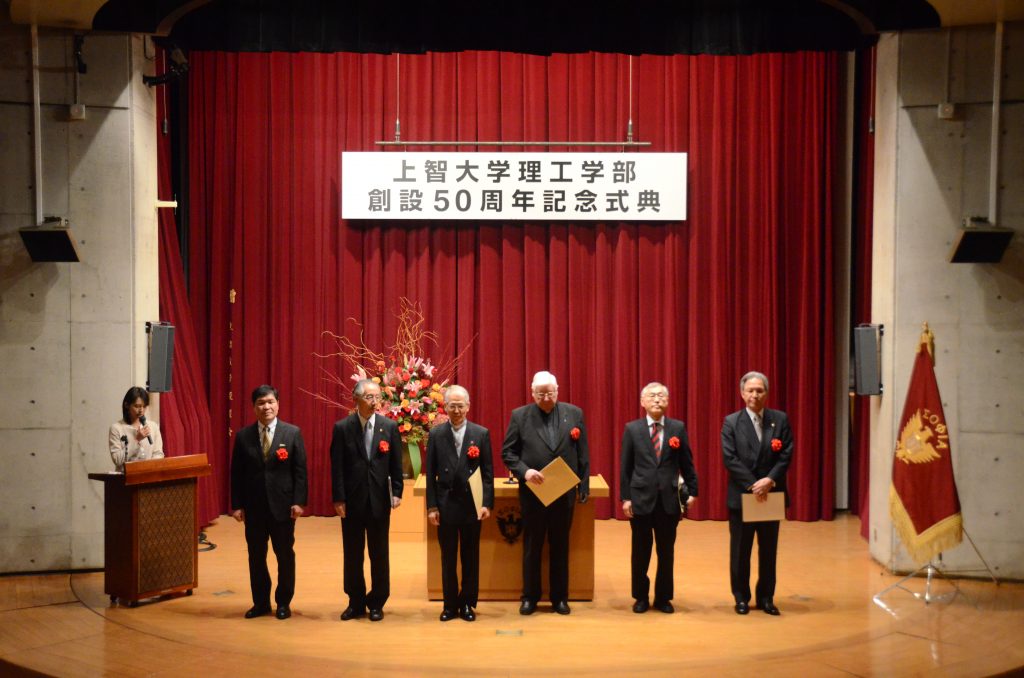
In 2012, the Faculty of Science and Technology celebrated its 50th anniversary. At the commemorative ceremony held in October, then-President Tadashi Takizawa remarked that its creation had laid the foundation for Sophia University’s development as a comprehensive university and would continue to play a vital role in advancing interdisciplinary education that bridges the humanities and sciences.
In recognition of the substantial support received from the Archdiocese of Cologne during the Faculty’s establishment, a certificate of appreciation was presented to Cardinal Joachim Meisner. The ceremony also featured a commemorative lecture by Nobel Laureate in Chemistry Ryoji Noyori.
That same year, the Faculty of Science and Technology launched new English-medium programs as part of Japan’s Global 30 initiative, a government-supported project to promote the internationalization of higher education. The Green Science Program in the Department of Materials and Life Sciences and the Green Engineering Program in the Department of Engineering and Applied Sciences welcomed their first cohort of five students.
Since its establishment, the Faculty of Science and Technology has continued to grow through the support of partners in Japan and around the world, as well as the dedication of countless individuals. Looking ahead, Sophia University is planning to launch a new Department of Digital Green Technology in 2027. Building on the strengths of the Green Science and Green Engineering Programs, the new department will further expand globally oriented science and technology education conducted in English and prepare leaders capable of driving green transformation in society.
Throughout its history, the Faculty of Science and Technology has advanced knowledge by transcending traditional disciplinary boundaries and responding to the challenges and demands of each era. Its history remains a driving force in shaping the future of Sophia University.