
Emphasizing Two-Way Dialogue to Create a Campus Where Everyone Can Learn with Confidence
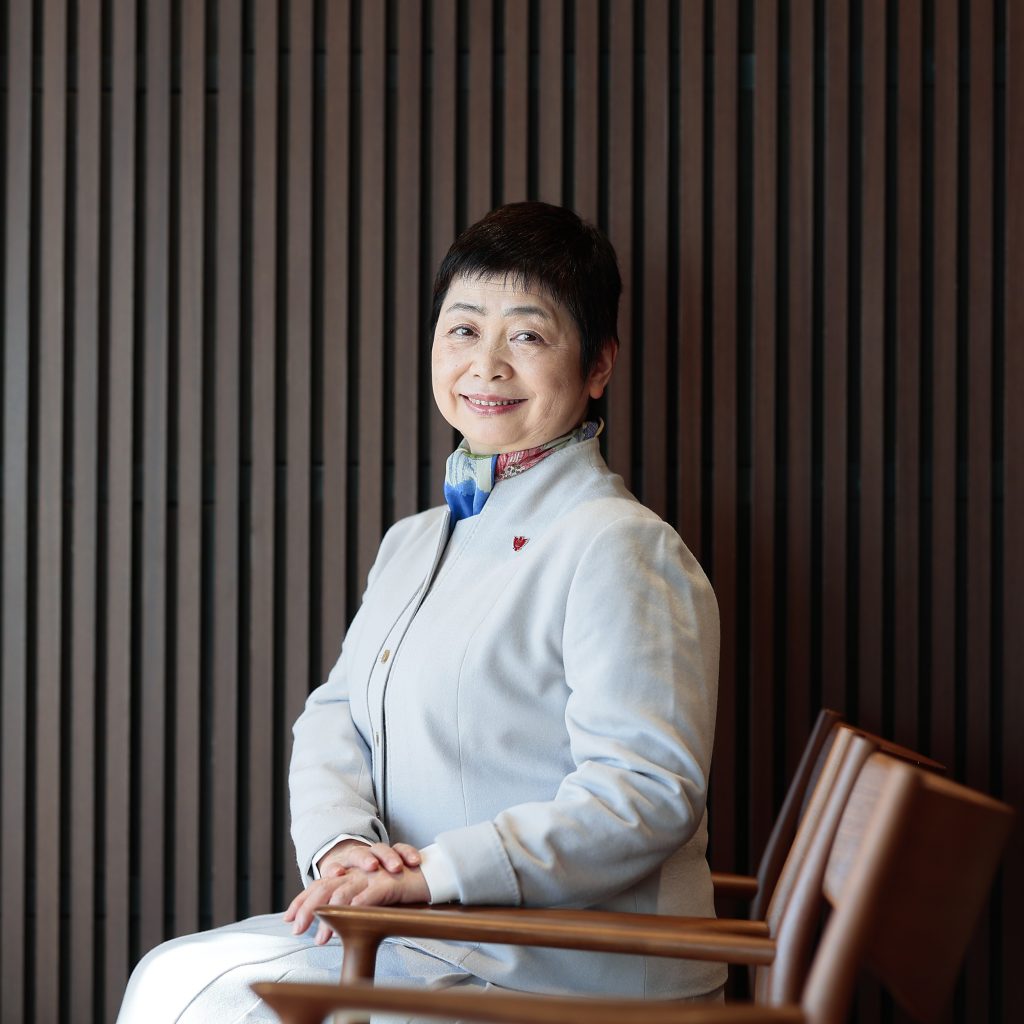
Kyoko Yokoyama
Vice President for Student and General Affairs
Professor, Department of Psychology, Faculty of Human Sciences



In April 2024, the provision of reasonable accommodation became mandatory at all universities in Japan. What systems of consultation and support has Sophia University put in place to ensure that students from diverse backgrounds can continue their studies with confidence? We spoke with Vice President Kyoko Yokoyama, who oversees student and general affairs, about the university’s approach and the ideas and values that underpin it.
What is Reasonable Accommodation?
Article 2 of the Convention on the Rights of Persons with Disabilities defines reasonable accommodation as “necessary and appropriate modification and adjustments not imposing a disproportionate or undue burden, where needed in a particular case, to ensure to persons with disabilities the enjoyment or exercise on and equal basis with others of all human rights and fundamental freedoms”.
In the case of support for students with disabilities, this means changes and/or adjustments made by the university towards ensuring that students with disabilities are not prevented from the environment and information necessary to undergo their studies, experiments, practical training, etc., as well as changes or adjustments made to appropriately judge their level of learning in the evaluation processes.
Supporting Students Through Multiple Consultation Channels
At Sophia University, reasonable accommodation means making necessary and appropriate adjustments or changes to the environment and information, while respecting the student’s wishes and ensuring that doing so does not place an undue burden on the university, with the fundamental requirement that the core principles of education are not changed. Such accommodations are provided in response to a student’s request to address difficulties they are experiencing in their studies or university life.
To support this approach, we have gradually developed systems for consultation and for considering and coordinating reasonable accommodation, with the goal of creating an environment where everyone can learn with confidence. During the 2026 academic year, we are strengthening this support structure by welcoming staff members with professional qualifications in psychology and social welfare.
Students who wish to request reasonable accommodation at the university should first consult the Wellness Center Coordinator for Students with Special Needs, the primary point of contact for such requests. Staff members will carefully listen to the student’s situation and needs and then ask the student to submit the necessary documentation for a reasonable accommodation request. Several staff members will review the request and coordinate appropriate accommodations based on the student’s individual circumstances.
The Wellness Center Coordinator for Students with Special Needs is not the only point of entry for consultations about reasonable accommodation. Students may also seek counseling through Counselling Services, consult Mental Health Consultation through the Health and Wellbeing Center Health Services, or contact the Student Information Service. When staff at these services receive a consultation from a student, they may connect the student with the Wellness Center’s Coordinator for Students with Special Needs.
In this way, we are working to establish a system in which, regardless of which point of contact a student approaches, we can recognize the needs of students experiencing difficulties and connect them with the support they need. At the same time, the first step toward receiving any form of support is for the student to reach out. The student’s own decision to seek support is always respected.
Providing Individualized Accommodations Through Dialogue
Reasonable accommodation can take many forms. It is not limited to physical disabilities, but can include developmental disabilities, mental disabilities, internal disabilities, and other cases.
For example, a student who has difficulty retaining spoken information may be provided with important course information in written form. A student who requires additional time to write during an examination may, where appropriate, be granted additional examination time or permitted to use a computer provided by the university.
Dialogue with students is central to the process of determining reasonable accommodation. We carefully examine what the student has identified as difficult through the consultation and consider what the university can do in response to each requested accommodation. Through dialogue with the student, we work toward a shared understanding and agreement.
We also want to consider what a particular accommodation or form of support means for the student and what they hope to achieve through that support, as these are important parts of the conversation.
Addressing the Challenge of Determining the Scope of Accommodation
At the same time, reasonable accommodation is subject to the requirement that it must not alter the core principles of education.
Academic assessment must be equal for all students. A course’s learning objectives or assessment criteria cannot be lowered because of a student’s disability. However, determining where to draw the line in deciding what constitutes reasonable accommodation is not always straightforward.
For example, a student may request to complete a report instead of attending class because they are unable to attend. However, if practical training or face-to-face communication is an important part of the course’s learning objectives, it may be difficult to offer such an alternative.
Because the core principles of education differ from course to course, even when the university determines that a particular form of reasonable accommodation can be provided, it may not always be possible to implement that accommodation in the same way in every class. This is why there is an additional step in which the student and instructor discuss the specific arrangements that can be made.
The university must respond to the difficulties students are experiencing while maintaining the core principles of education and ensuring fair assessment.
Building a Community of Mutual Support: A Campus Where Everyone Can Thrive as Themselves
I believe that the university has an important responsibility not only to provide appropriate accommodations to students who genuinely need support, but also to help students develop the skills they need to enter and participate in society. Ideally, students will come to understand their own needs and be able to explain: “If I can receive this particular support, I can fully demonstrate my abilities.”
This connects with the three key skills that we emphasize in our approach to student support: seeking help when needed, understanding one’s own strengths and weaknesses, and finding ways to adapt to different circumstances.
Once students enter the broader world, they cannot always expect to receive the same level of consideration or accommodation from those around them. By developing these skills while they are at university, however, I believe students will be better equipped to work independently and proactively after graduating.
It is also important that the roles of those providing support and those receiving it do not become fixed in a one-way relationship. Instead, we should strive to build relationships in which people support one another.
In that sense, I feel there can be a slight disconnect in translating the English term “reasonable accommodation” into Japanese as *gōriteki hairyo*. “Accommodation” can encompass a range of meanings, including adapting or making adjustments to meet individual circumstances. What matters most is the attitude behind it: rather than viewing support as something provided in one direction, we should be willing to make adjustments together in response to each individual situation.
At Sophia University, all first-year students take the Universal Manners Certification, providing them with an opportunity to develop attitudes and awareness that promote consideration for people with diverse needs. Through initiatives such as this, we seek to foster an environment in which students understand one another as members of the same community, moving beyond a simple distinction between those who “provide support” and those who “receive support.”
Accepting and respecting differences is the starting point. Building on that understanding, step by step, creates a community in which people support one another. I believe that is what an ideal campus should look like.