
Connecting to the World from Our Campus: New Global Learning Opportunities in a Challenging International Environment
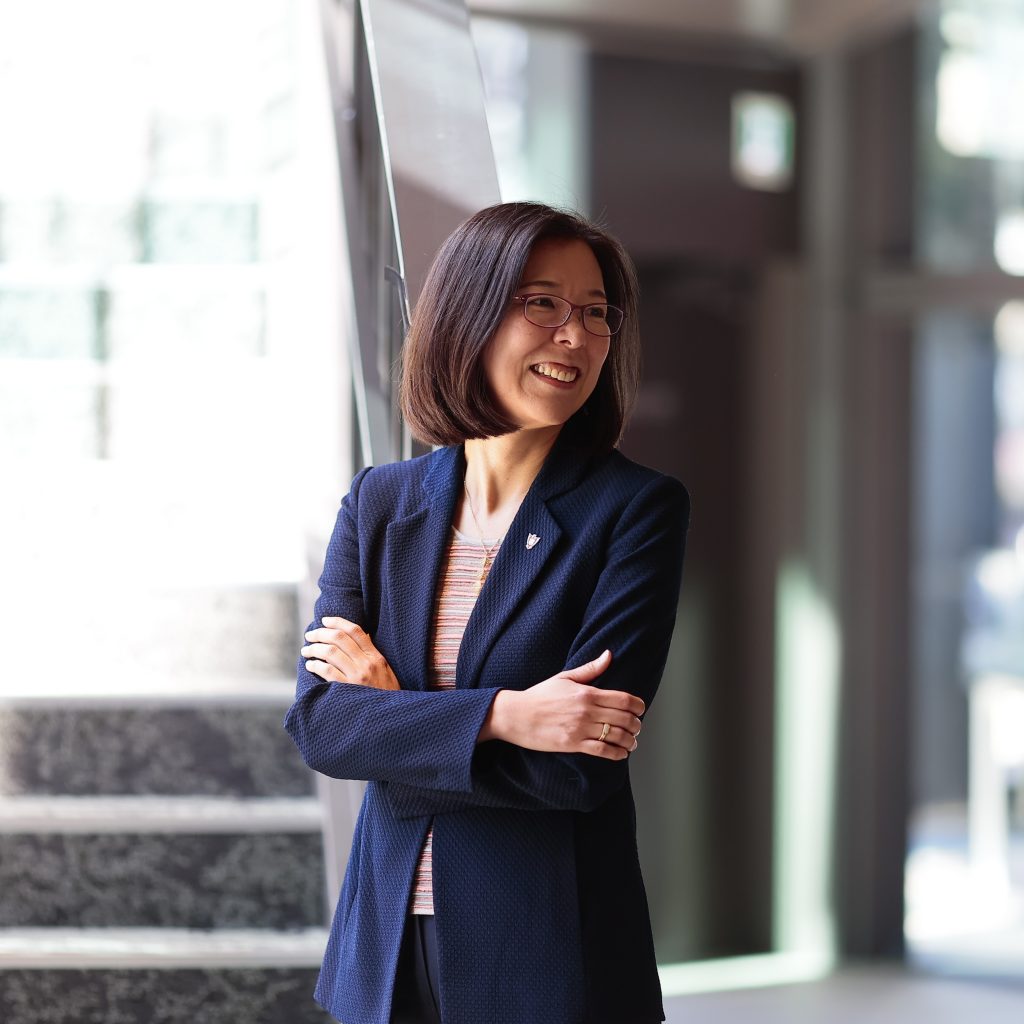
Vice President for Global Academic Affairs
Professor
Department of English Studies
Faculty of Foreign Studies
Mariko Iijima



The current uncertain international situation and exchange rate fluctuations are making it more difficult for our students to study abroad than before. Despite these challenges, Sophia University is expanding the range of global learning opportunities in Japan to help students develop a broader and more diverse perspective. We spoke with the Vice-President for Globalization about these initiatives.
Reinforcing and Diversifying Global Educational Opportunities on Our Campus
The situation surrounding study abroad programs has changed significantly in recent years. The war in Ukraine and ongoing tensions in the Middle East have limited the range of available destinations. Furthermore, rising travel and living expenses, caused by exchange rate fluctuations, have increased the cost of short-term study abroad programs. Although these programs are often an important gateway to long-term study program opportunities, changing circumstances may influence how students approach decisions to study abroad.
In response to challenges, the university is working to strengthen programs that allow students to gain international experience in Japan. One of the most notable initiatives is the social engagement program, “Diverse Communities in Japan,” which provides students with an opportunity to learn about and engage with the various ethnic communities in Japan. In 2025, the program focused on Latin America, with students visiting Brazilian schools and participating in service-learning activities. Through these experiences, they gained a deeper understanding of the experiences and challenges of children and students with Brazilian and Peruvian roots, while developing an awareness and appreciation of multicultural coexistence.
Furthermore, as part of the new “SAFICs (Sophia-Africa Future Initiatives for Collaborations)” initiative to promote student exchange with partner universities in Africa, the university conducted a 10-day practical program in Sado Island, Niigata Prefecture, in the summer of 2026. This programme brought together students from partner universities in Africa and Sophia University to learn about environmental issues and sustainable communities. For example, they conducted interviews with representatives of the local fishing industry on topics such as the island’s marine environment and oyster farming.
Through these experiences, African students gained insights into environmental issues, regional communities, and Japanese culture. At the same time, Japanese students had the opportunity to explore the challenges facing their own country while working alongside their African counterparts. As they collaborated to develop proposals for the island’s economic, social and environmental challenges, they were exposed to diverse perspectives and came to realize the importance of intercultural dialogues and human connections.
Expanding Global Learning through COIL
Global learning at Sophia is not limited to experiential programs. We have also incorporated “COIL (Collaborative Online International Learning)” into our curriculum, enabling the student to engage in international learning with peers around the world.
COIL is an educational approach that uses online tools to connect students and faculty with other universities around the world for collaborative learning. For example, in my introductory course on Africa, I partner with Stellenbosch University in South Africa. As part of this course, a professor at Stellenbosch University gives a lecture on the history of Japan’s international cooperation in Africa. Following the lecture, the students have discussion sessions to examine how they see different countries and cultures, what elements contributed to shaping certain images and how gaps in understanding can be overcome. This is just one of the many COIL courses provided at Sophia. Through collaborations with overseas universities, we are expanding the opportunities of global learning for our students while also strengthening educational partnerships with the institutions around the world.
Interactive teaching is not limited to art and science subjects but is also being implemented in other academic fields. In particular, the Department of Nursing has a curriculum designed to prepare students for the national examination, so long-term study abroad is not always feasible. Therefore, opportunities to engage in global learning while on campus, such as COIL, are especially important.
Additionally, there are many English-language courses open to all students, and these courses help our students gain confidence in their English communication skills. By studying their specialist subjects in English and interacting with their peers from other countries, students came to realize that effective communication is possible even if their English is not perfect. Some gain the confidence to believe that they can study abroad with their current level of English, while others develop a more proactive attitude towards learning, including a stronger desire to express themselves and explore their subjects in greater depth. As a result, insights and experiences gained in the classroom can help students develop specific learning goals and take a more purposeful approach to studying abroad.
The Potential of Global Learning Beyond Study Abroad
In addition to the impact of global events, many students are now finding it difficult to balance study abroad with job hunting and internships, which often begin as early as their third year. As a university, we believe it is important to consider carefully how study abroad can impact students’ future goals and career development, while maximizing opportunities available to them.
Global learning does not necessarily require overseas experience. It is possible to broaden your international perspective by interacting with people from different cultural backgrounds on campus or by connecting with people overseas online. What is important is to clarify what kind of global perspective and experience you hope to gain and take the initiative in making the most of the opportunities available to you. Rather than giving up on the idea of studying abroad, I hope that students will explore the various opportunities for global learning available in Japan.
Lastly, we have recently been hosting programs in which overseas universities send groups of students and faculty members to Japan for several weeks. Based at our campus, they conduct classes and participate in student exchanges. These faculty-led programs are held during the overseas universities’ summer vacation period, which coincides with the academic term at Sophia. We therefore see these programs as valuable opportunities for Sophia students to engage with peers from around the world on campus.
One example is the collaboration between the Faculty of Liberal Arts and Dartmouth College, a prestigious university in the United States, which launched a second-quarter program in the 2026 academic year. Faculty members from both universities work together to deliver classes, and students from both institutions learn and engage in discussions in the same classroom. Building on initiatives such as this we hope to create more structured and sustainable opportunities for international educational collaboration in the future.