

Embracing Differences, Building Connections: Exploring Multicultural Coexistence in the Netherlands
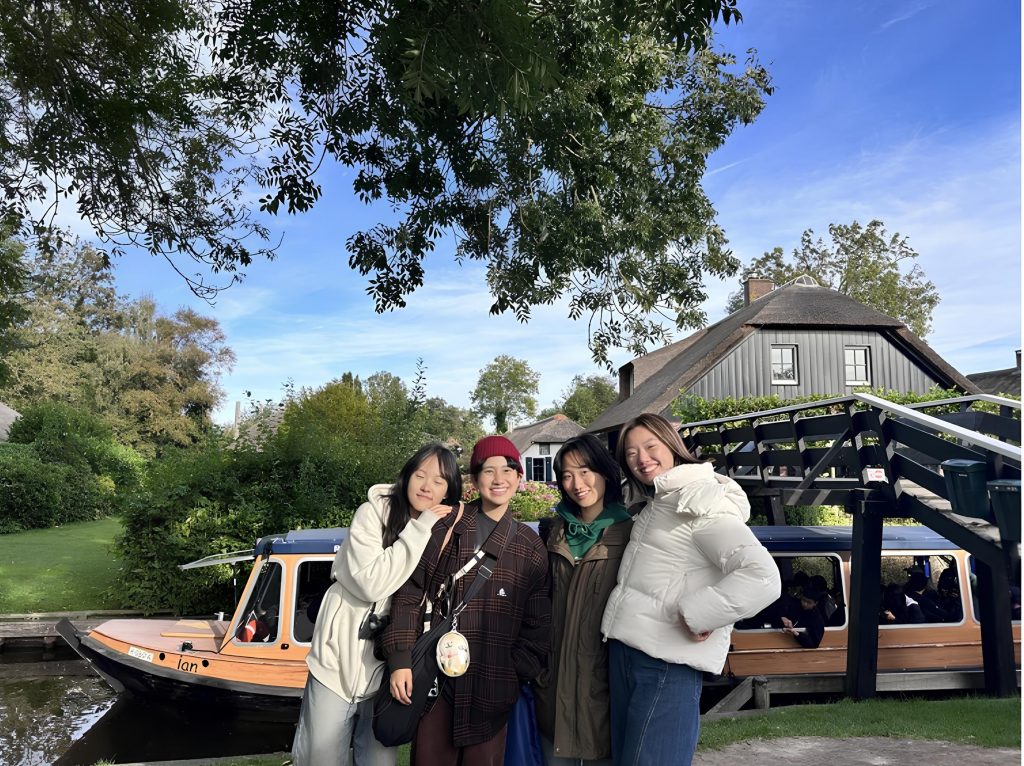
Name: Sojung Kim
Faculty/Department and Year (at the time of participation): Third-year student, Department of English Studies, Faculty of Foreign Studies
Program Period: August 2025 – January 2026
Destination: Leiden University, the Netherlands
Program Type: Exchange Program



Every year, many Sophia University students study abroad in countries all over the world outside of Japan. How did they manage to find their way through the differences in languages, cultures, and lifestyles? Here are some voices of students who studied abroad.
Q. What inspired you to study abroad?
Through my studies in the Department of English Studies and the teacher education program, I developed a growing interest in multicultural coexistence, children’s rights, and human rights education. Eager to explore how people from diverse backgrounds can respect one another and build an inclusive society, I decided to study abroad in a country recognized for its approaches to multicultural coexistence in policy and education.
Q. How did you choose your host country and university?
One of the main reasons I chose Leiden University was its distinguished research in children’s rights and international human rights law. While the Netherlands has developed various initiatives to promote multicultural coexistence, it also faces ongoing challenges related to immigration and social integration. I wanted to explore not only the institutional frameworks that support a diverse society but also how people navigate and engage with diversity in their everyday lives. By examining both the ideals and realities of multicultural coexistence, I hoped to gain a broader perspective on how an inclusive society can be built.
Q. Were there any concerns you had before studying abroad?
Before my departure, I was concerned about finding accommodation, particularly given the housing shortage. I was also worried about whether I would be able to complete the necessary procedures with the immigration authorities and the university, as all communication and documentation had to be handled in English. However, by gathering information well in advance and consulting university staff whenever I had questions, I was prepared with confidence.
Q. What did you do to prepare for your study abroad experience, and is there anything you wish you had done beforehand?
I gathered information about everyday life in the Netherlands, including transportation, student services, and emergency procedures, by referring to reports and blogs written by students who had studied there. I also learned some basic Dutch greetings so that I could blend in smoothly and interact with local people.
Q. What were the university and student communities like?
The university’s campus was spread throughout the city, creating an attractive environment where historic architecture and lush greenery existed side by side. Students from diverse countries and cultural backgrounds came together, each with their own interests and passions. I was particularly impressed by the atmosphere of mutual respect and the openness with which students engaged with one another, embracing different perspectives through meaningful dialogue.
Q. How did you expand your circle of friends?
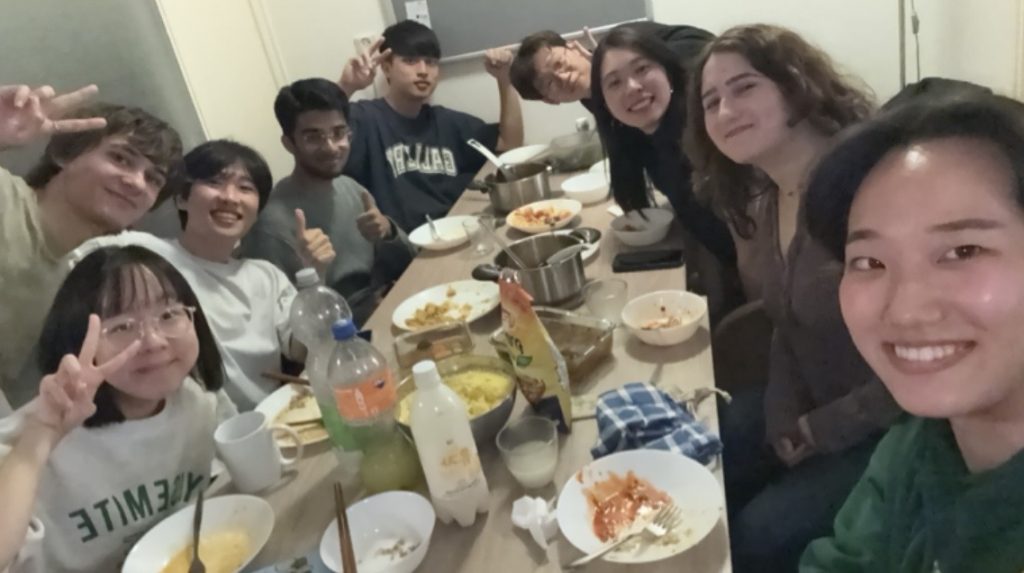
I met many people through welcome events at my residence and the university’s orientation programs. In particular, I became close with several friends from my residence, and we often shared meals and traveled together. We still keep in touch today. I also participated in events organized by student groups, group projects, and workshops, which gave me opportunities to interact with students from a wide range of countries as well as local students.
Q. Did you notice any differences in classes, learning styles, or examinations compared with Japan?
Although the lecture format itself was not significantly different from that in Japan, I was struck by the amount of reading students were expected to complete in advance and by how actively they asked questions and shared their opinions in class. I found it particularly inspiring to see how students reached a deeper understanding through open discussion and dialogue.
The examination format was also different. Exams were held at designated times in a gymnasium, where students used computers provided by the university. I was surprised by this unfamiliar format, which was quite different from my experience of taking exams in Japan.
Q. What did you devote the most time and energy to outside of your studies?
I spent much of my time exploring different parts of the Netherlands and experiencing its nature, history, and culture firsthand. In addition to visiting museums, art galleries, and historic sites, I explored secondhand bookstores, antique shops, and flea markets, allowing me to experience aspects of everyday life and local culture. These experiences gave me opportunities to learn and discover things that I could not have encountered in the classroom alone.
Q. What unique attractions or new discoveries did you find in your host country?
Each city in the Netherlands has its own distinctive landscape and cultural character, and every place I visited offered something new to discover. As much of the country lies below sea level, the Netherlands has a long history of adapting to and living alongside water. I was fascinated to see firsthand how people have adapted to their natural environment over generations, from windmills to reclaimed land.
I was also struck by the way nature is integrated into everyday life. The country’s lush greenery and extensive network of cycling paths gave me a sense of how thoughtfully urban life and the natural environment can coexist.
Q. What was the most memorable or surprising experience you had?
One of my most memorable experiences came shortly after I began my life in the Netherlands, when I encountered the country’s distinctive cycling culture. Bicycles are an essential part of everyday transportation, and I had to become familiar with cycling customs and rules that differed from those in Japan, including coaster brakes, hand signals, and riding on the right-hand side of the road.
This experience made me realize that adapting to life in another country involves more than simply learning the language. Understanding local customs and ways of doing things is equally important, particularly when it comes to staying safe and adjusting to life in a new environment.
Q. What difficulties or troubles did you encounter during your study abroad experience, and how did you overcome them?
When arranging a transportation card, I accidentally applied through a third-party service instead of the official provider and ended up paying an unnecessary fee. This experience taught me to carefully verify information and ask others when I am uncertain, even when I am pretty certain that I understood the information correctly.
I also learned not to make quick decisions, particularly when money is involved, and to take the time to consider my options carefully.
Q. In what ways do you feel you have grown or changed your perspective through studying abroad?
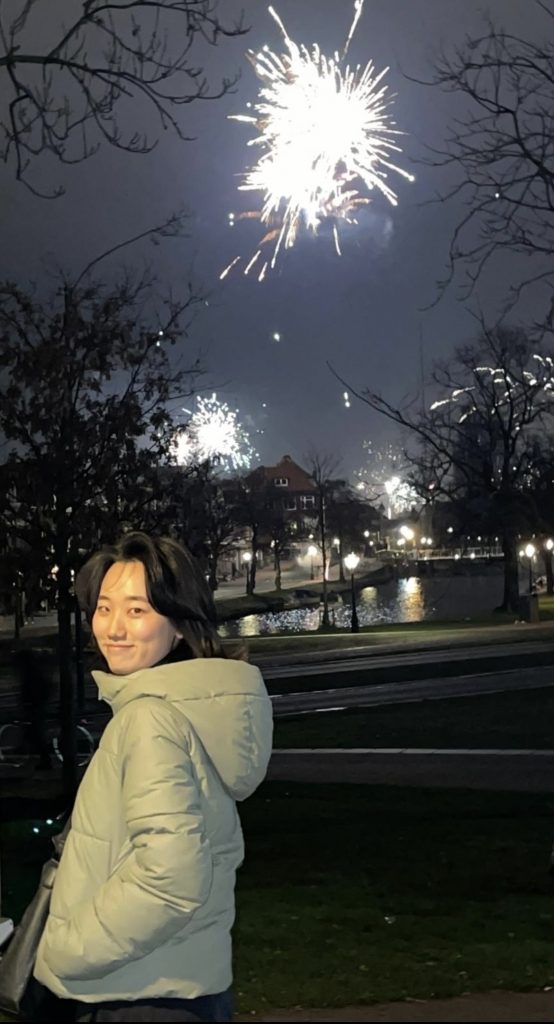
Through my study abroad experience, I became more comfortable reaching out to others in unfamiliar situations and working together to overcome challenges.
In the past, I often tried to handle everything on my own. However, I came to realize that seeking advice from others can lead to new insights and solutions. At the same time, I discovered that there were times when I could help others. Being abroad taught me that meaningful relationships are built not simply by receiving support, but by helping one another and working through challenges together.
Q. How do you think your study abroad experience will influence your future?
My study abroad experience gave me an opportunity to consider how we can interact with people from different backgrounds and live together in a diverse society in depth. Through meeting people with different values and perspectives, I learned the significance of building mutual understanding through dialogue and personal connections.
Moving forward, I hope to apply what I have learned to education and language-related career and contribute to creating environments where everyone feels safe, respected, and welcome.
Q. What would you say to students who are unsure whether to study abroad?
I myself hesitated until just before the application deadline because I was concerned about finances, my studies, and how studying abroad would fit with my job search. However, I felt that opportunities to challenge myself overseas as a student were limited, so I decided to take the leap.
As a result, I experienced one of the most rewarding periods of my life and met friends who have become truly irreplaceable.
If you are considering studying abroad, I encourage you to take that first step. You may discover new possibilities that you never expected. I sincerely wish you all the best.