

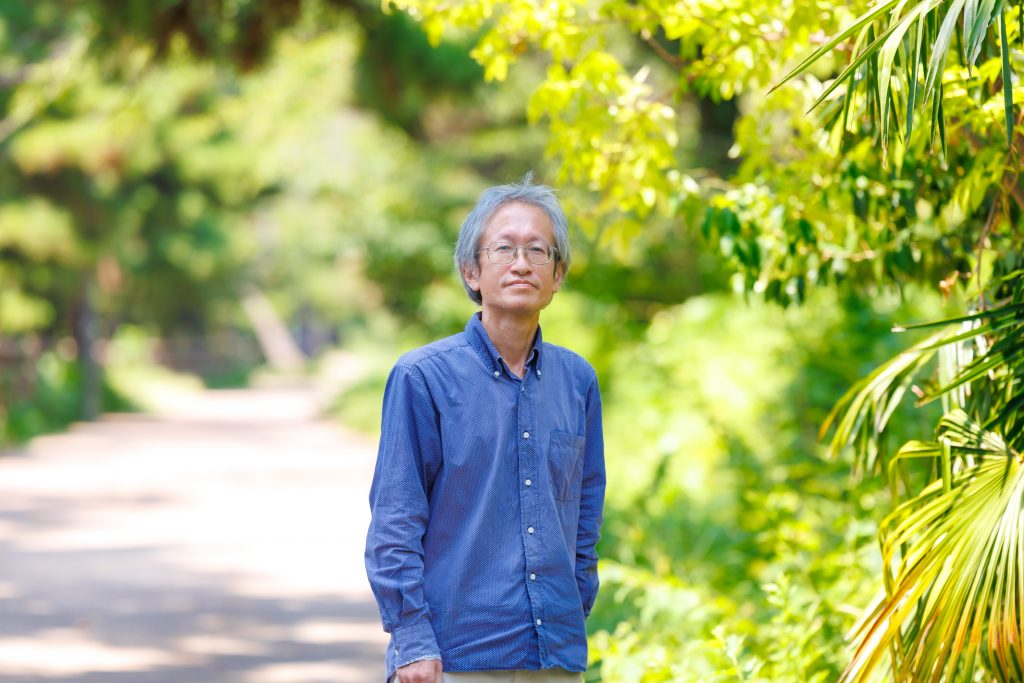
Yushin Kuwahara
Professor
Department of Legal Studies of the Global Environment
Faculty of Law



Professor Yushin Kuwahara from the Faculty of Law specializes in environmental law. He looks for ways to help improve Japan’s environmental regulations and policies through research into the basic principles of environmental law and discussions about environmental law in Germany and other countries.
I learned about global warming in 1988 and was shocked that it was a major problem fundamentally changing the Earth. I researched whether countries could be legally obligated to play a role in environmental issues and learned that there were discussions in Germany about the obligation to protect fundamental rights regarding environmental issues.
The state is obliged to protect the fundamental rights of its citizens, in terms of life, body, health, and property. As these can be violated by environmental destruction, it is the accepted view in Germany that there is an obligation to protect the environment, and this has also been adopted as a legal precedent.
When I raised these arguments in Japan, they were not well received. However, there was a fair amount of reaction to arguments for the precautionary principle. The precautionary principle is the thinking that, when there is a risk of severe impact on the environment from chemical substances, new technologies, and other influences, precautionary measures should be taken even if the scientific causal relationship is uncertain. It was first discussed in Germany.
When thinking about the precautionary principle in Japan, an essential example is Minamata disease. From the 1950s to the 1960s, people who ate fish from Minamata Bay developed a neurological disorder of unknown cause. In 1959, the prevailing theory was that organic mercury contained in wastewater from the Minamata Factory of Shin-Nippon Chisso Hiryo (presently Chisso Corporation) was the cause.
However, the cause could not be determined conclusively at the time. Therefore, the national government and Kumamoto Prefecture did not implement regulatory measures. As a result, the damage continued to spread. If measures had been taken in 1959, many people would not have suffered. This shows the importance of the precautionary principle.
The flaw of the Soil Contamination Countermeasures Act lies in defining responsibility
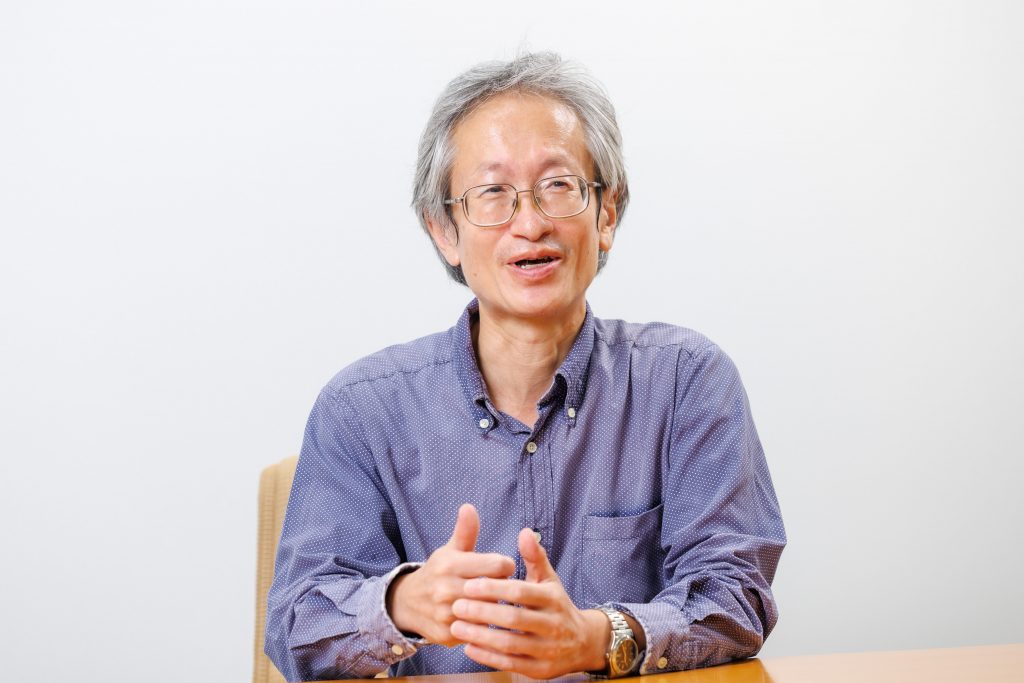
In recent years, I have been studying issues with the Soil Contamination Countermeasures Act. Established in Japan in 2002, it is based on the German concept of condition-based liability (Zustandsverantwortung), the idea that owners should be held responsible when the condition of their property poses a threat. Under this act, the responsibility for contaminated land lies with the landowners. But what happens when someone else caused the contamination?
Continuing my research with these questions in mind, I discovered that arguments calling for a revision of the concept of condition-based liability had been taking place in Germany since the 1950s, and there were legal precedents in response to these arguments. It should be possible to prioritize holding the polluter responsible. Therefore, I decided to study the liability of the polluter.
This brought me to the question of who constitutes the polluter. Besides those who dump waste that causes soil contamination, maybe those who manufacture and sell products that are difficult to dispose of should also bear some responsibility. It is important to discuss the circumstances in which we hold someone responsible, as well as the circumstances that justify holding someone responsible.
Considering Japan’s environmental regulations together with young people
In 2019, the Supreme Court of the Netherlands ruled that the Dutch government must reduce greenhouse gas emissions by 25% compared to 1990 levels by the end of 2020. In 2021, Germany’s Federal Constitutional Court ruled that the German government’s greenhouse gas emission reduction policies were insufficient and violated its citizens’ fundamental rights.
Climate change lawsuits have also been filed in Japan, but unfortunately, it seems unlikely that Japanese courts will issue rulings similar to those in Germany and other countries. Why is this so? Are there also any areas in Japan’s environmental regulations and litigation system that need to be improved? We cannot delay thinking about global warming, and I hope to think together with young people who will be living in the times ahead.
The book I recommend
“Amerika Indian Hishi”(The Tragic History of American Indians)
by Shigeru Fujinaga, Asahi Shimbun Publications
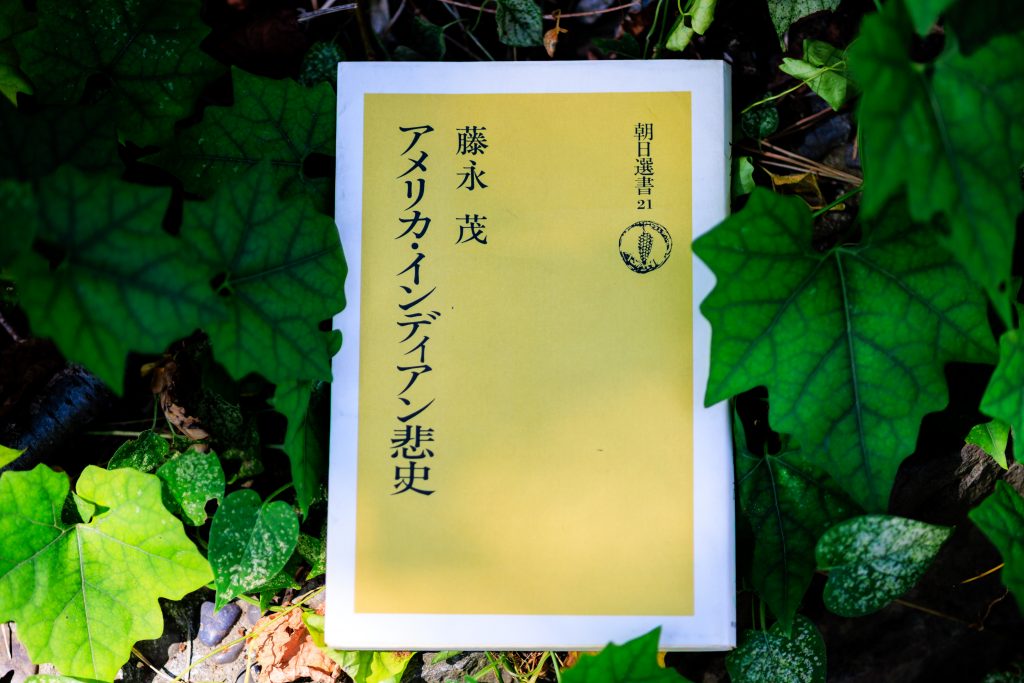
Summarizing the brutal history of how white settlers seized land from American Indians, this book may make you feel like telling white people to leave the US. It also makes you think about things such as whether we should hold the UK, which started the Industrial Revolution, or the US—the world’s largest emitter of carbon dioxide about 40 years ago—responsible for climate change.
-
Yushin Kuwahara
- Professor
Department of Legal Studies of the Global Environment
Faculty of Law
- Professor
-
Graduated from the Faculty of Law, University of Tokyo, completed the master’s program at the university’s Graduate Schools for Law and Politics, and withdrew from its doctoral program. Took on several positions—such as lecturer and assistant professor at the School of Law, Tokai University as well as professor at Tokai University’s Graduate School of Law—before assuming his current position in 2007.
- Department of Legal Studies of the Global Environment
Interviewed: September 2025