
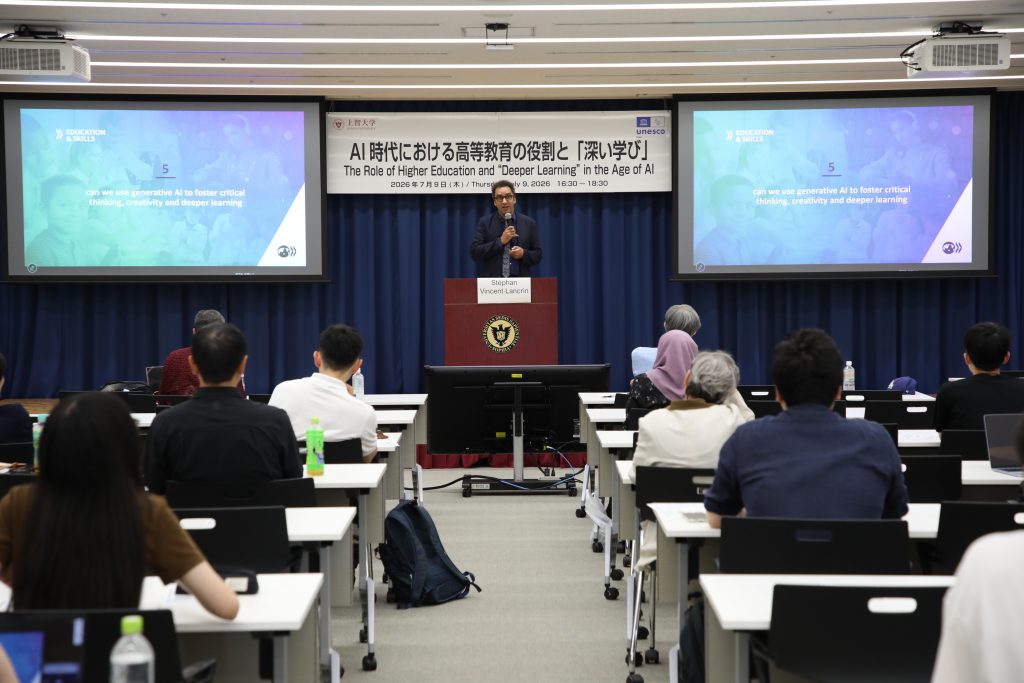



On July 9, Sophia University hosted a symposium exploring the role of higher education in the age of artificial intelligence (AI), with a particular focus on the importance of “deeper learning.”
The symposium was held to present the findings of the International Collaborative Research Project on the Visualization of Learning Outcomes in Higher Education, which has been led by Sophia University President Miki Sugimura as principal investigator since 2021. The rapid spread of generative AI is significantly transforming the way students engage in learning and research activities, including information retrieval, analytical methods, and the preparation of reports and academic papers. At the same time, educators are increasingly required to develop new approaches to supporting students throughout their learning processes and academic journeys.
As the fundamental purpose and role of higher education are being reconsidered in the age of AI, the symposium aimed to discuss what forms of learning universities should provide and to explore both the significance and challenges of the “deeper learning” promoted at Sophia University.
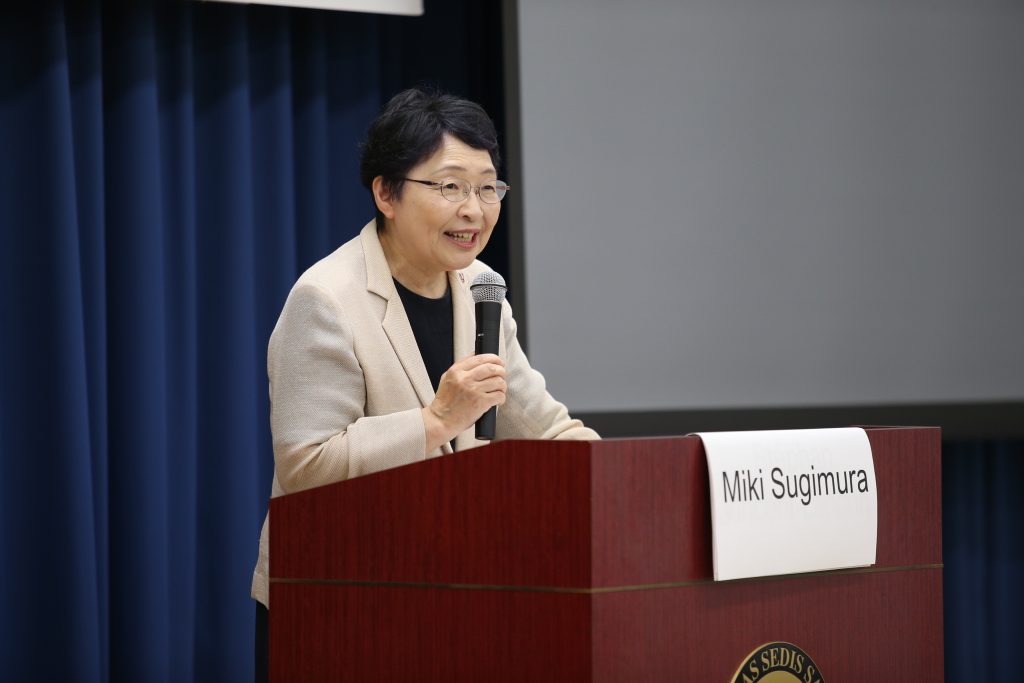
In her opening remarks, President Sugimura explained that, as a university that places a strong emphasis on internationalization and diversity, Sophia is committed to promoting education that fosters deeper learning. She also noted that advances in AI are raising fundamental questions about the very foundations of higher education, emphasizing that the challenges surrounding AI represent one of the most important issues facing contemporary society. “I hope this symposium will provide an opportunity to deepen our understanding of these challenges and advance the dialogue surrounding them,” she said, addressing the participants.
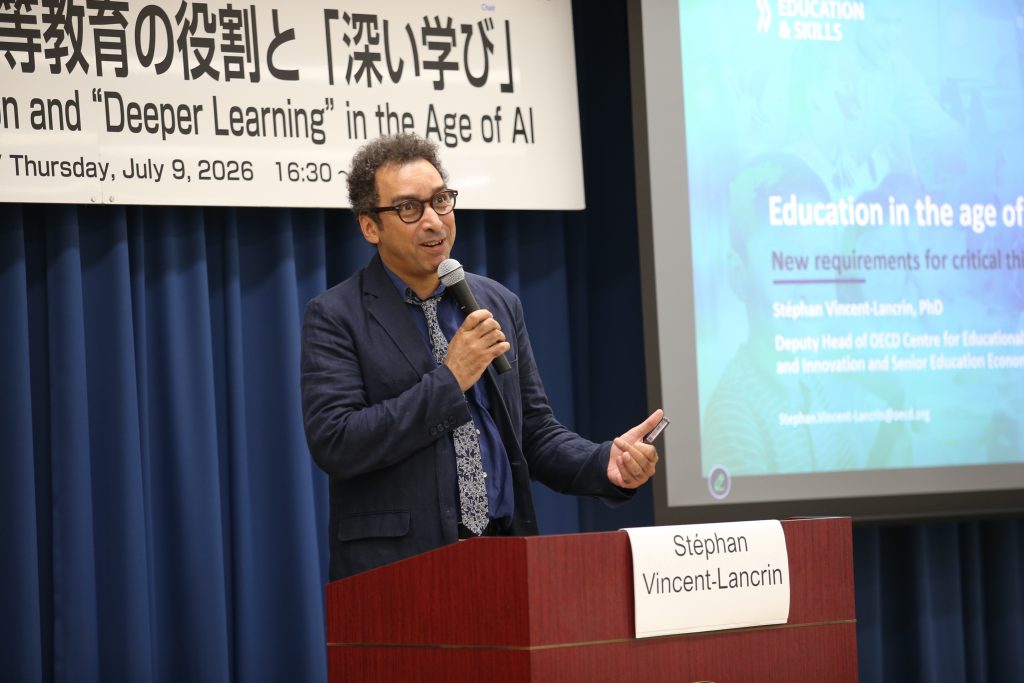
For the keynote address, Stéphan Vincent-Lancrin, Deputy Head of OECD Centre for the Educational Research and Innovation, discussed the changing role of human capabilities in the age of AI. Drawing on the OECD’s international project Fostering Students’ Creative and Critical Thinking Skills in Higher Education, conducted from 2019 to 2023, as well as the OECD Digital Education Outlook 2026: Exploring Effective Uses of Generative AI in Education, he emphasized that as AI makes it increasingly easy to search for knowledge and produce written content, two distinctly human capabilities are becoming even more important: the ability to generate ideas—creativity—and the ability to critically examine and evaluate those ideas—critical thinking. Through a range of examples, he explained how learning outcomes are significantly influenced by the design of education and stressed the need to create new learning environments designed with AI in mind.
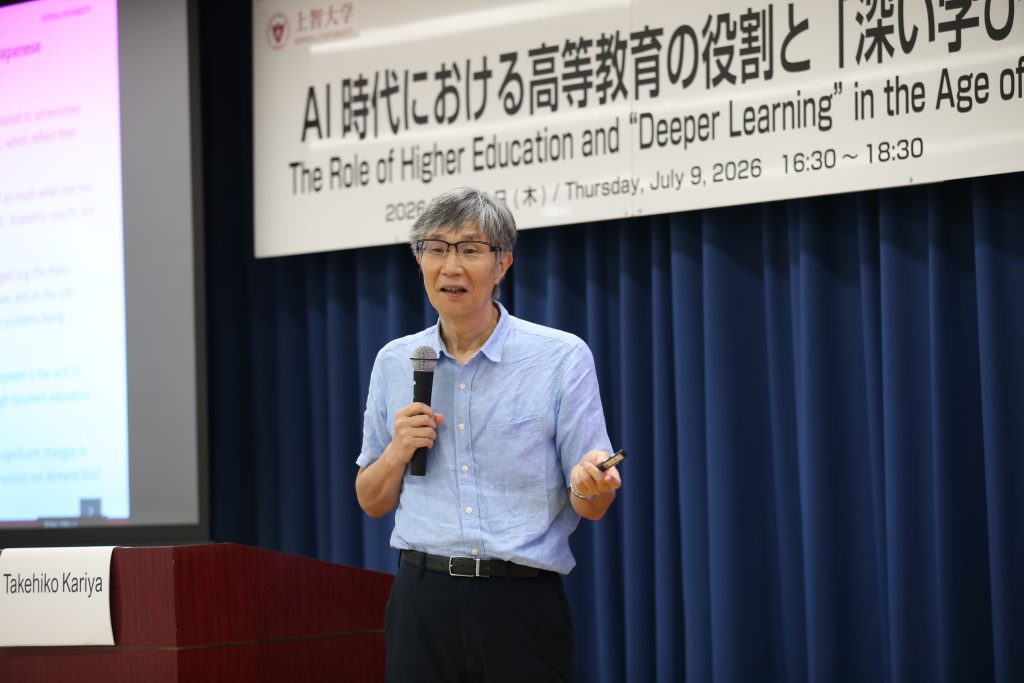
Next, Professor Takehiko Kariya, Specially Appointed Professor at Sophia University and Professor Emeritus at the University of Oxford, examined the structural challenges facing Japanese higher education from a sociological perspective. He argued that the emergence of AI has made the limitations of conventional university education, which has traditionally centered on the transmission of knowledge, increasingly apparent. He also highlighted structural issues that have hindered educational reforms aimed at developing competencies and promoting active learning. Looking ahead, he argued that change is needed not only in education itself, but also in Japan’s employment system, where competencies developed at university are not readily or directly evaluated, as well as in students’ attitudes, given the continued preference among many students for traditional lecture-based learning.
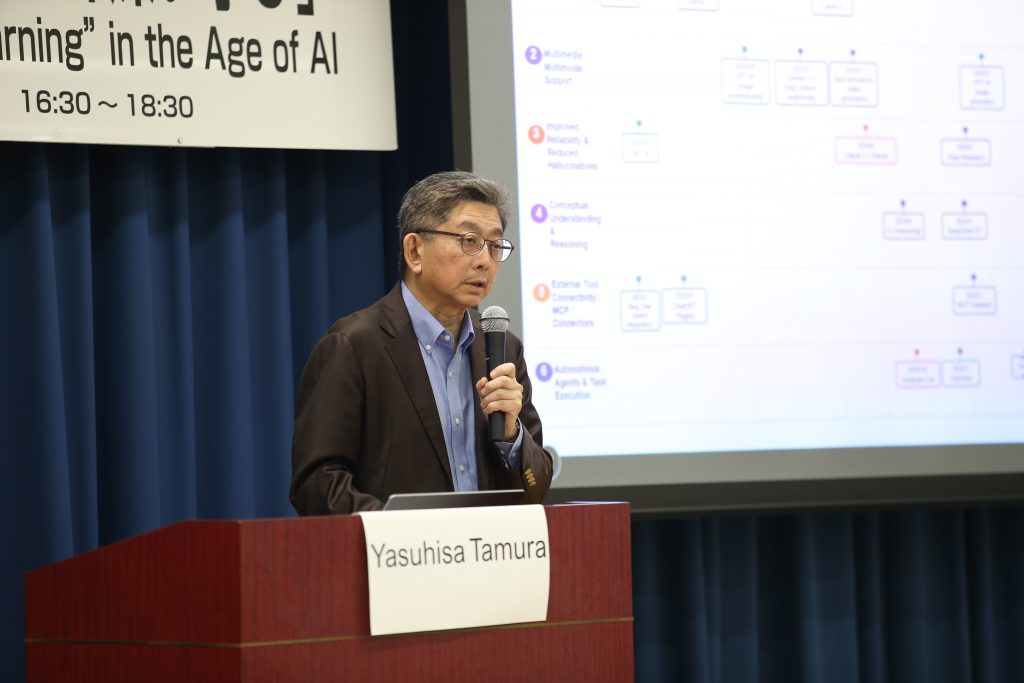
In his designated commentary, Professor Yasuhisa Tamura of the Department of Information and Communication Sciences, Faculty of Science and Technology, connected two key points raised by the speakers through the concept of “cognitive offloading”—the externalization of thinking and tasks through AI. First, he addressed Mr. Vincent-Lancrin’s distinction between using AI to complete an assignment and producing an output, and actually learning from that process and developing understanding. He then connected this with Professor Kariya’s discussion of the emphasis on correct answers within Japanese university education. Professor Tamura stressed that in the age of AI, educational approaches and assessment methods that value not only the final product but also the learning process will become increasingly important.
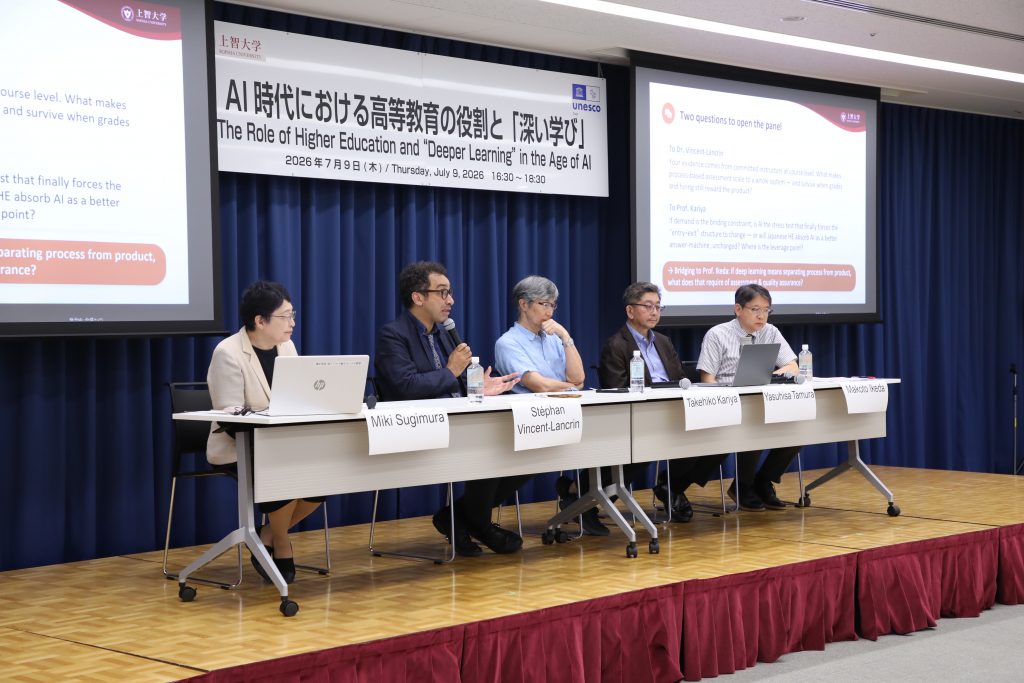
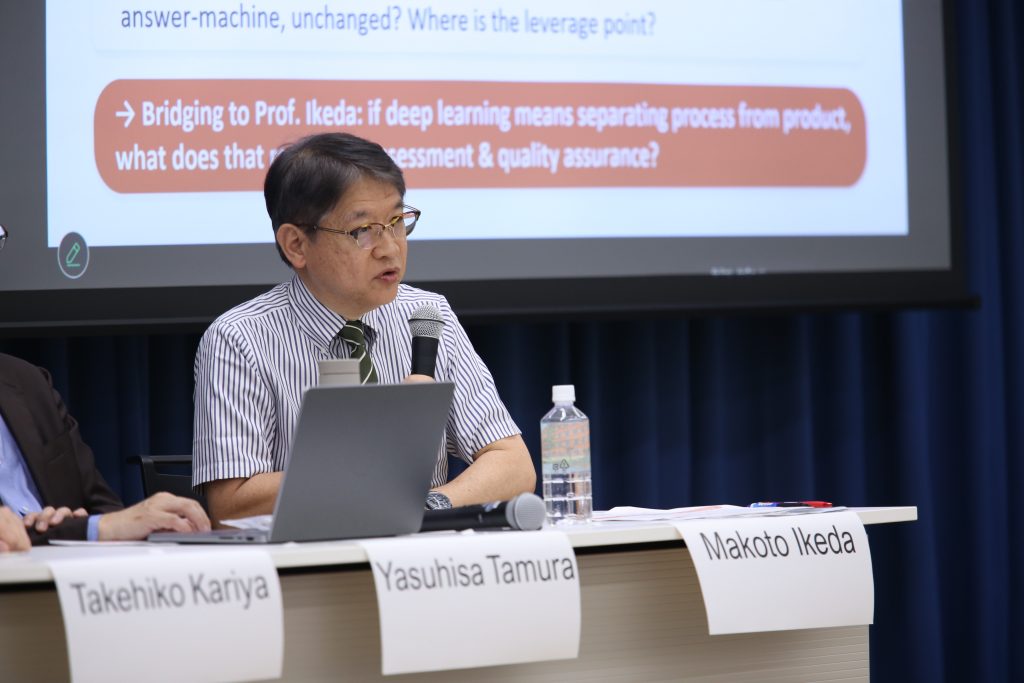
The second half of the symposium featured a panel discussion moderated by President Sugimura, joined by Professor Makoto Ikeda of the Department of English Literature, Faculty of Humanities. As Vice President for Academic Affairs, Professor Ikeda is leading the curriculum review scheduled for the next academic year and promoting deeper learning across the University. Building on the discussions earlier in the symposium, Professor Ikeda emphasized the need for a shift toward education that places greater importance on “authenticity.” He identified four distinctly human strengths that AI cannot replicate—Awareness, Agency, Action, and Affection—and emphasized the importance of authentic assessment that evaluates not only individual outcomes but also the processes of discussion and collaboration among students.
The panelists went on to engage in a wide-ranging discussion on topics including methods for assessing learning processes, feasibility and cost, and the potential for utilizing AI in education. Numerous questions were also submitted by both in-person and online participants, and the speakers responded to each question thoughtfully and in detail.
The symposium highlighted a shared recognition that while advances in AI are bringing profound changes to the nature of higher education, the importance of uniquely human capabilities—including creativity, critical thinking, and dialogue with others—is becoming greater than ever. How can universities harness the potential of AI while continuing to foster forms of learning that are uniquely human? For participants, the symposium provided a valuable opportunity to consider the future of higher education and the role universities should play in the age of AI.