



From May 8 to 25, Sophia University held Africa Weeks 2026, a series of events designed to deepen understanding of Africa among high school and university students, as well as members of the general public. Celebrating its 10th anniversary this year, the program featured ten events that offered diverse insights on contemporary Africa, including a symposium on the use of AI in education, a lecture by the Ambassador of Tunisia to Japan, and the third Model African Union (MAU) Conference, which brought together students from Japan and Africa.
Partnerships in Africa’s Infrastructure Sector: New Horizons for Multi-Sector Human Resource Development and Mutual Understanding
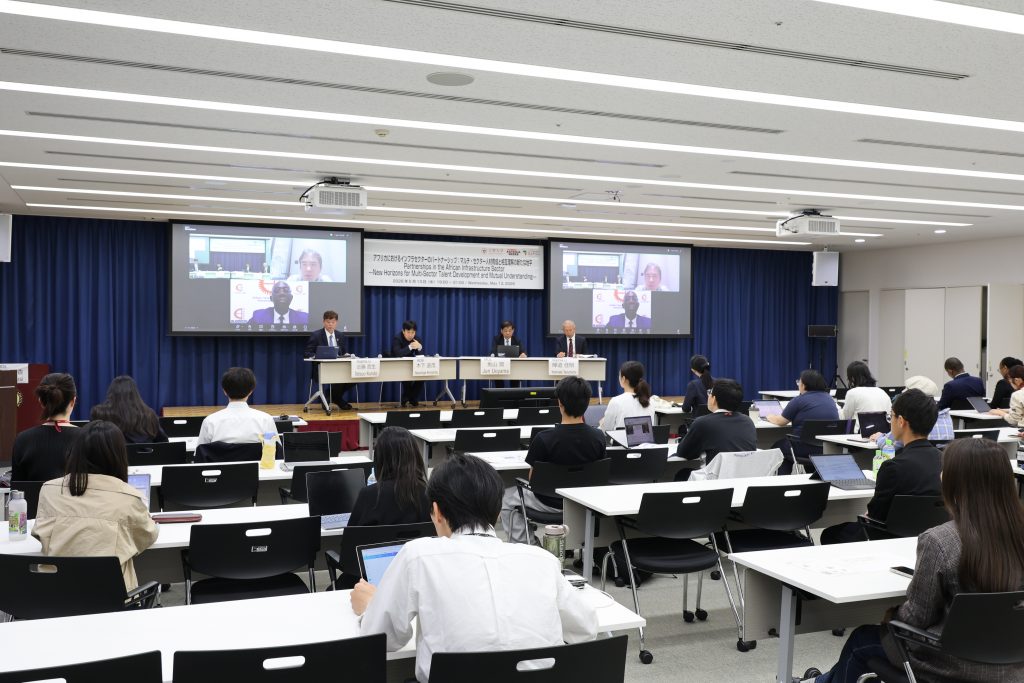
On May 13, Sophia University hosted a symposium focusing on mobility and logistics, a key component of infrastructure that underpins sustainable development in Africa.
As Japan–Africa relations evolve beyond traditional Official Development Assistance (ODA) frameworks toward partnerships based on co-creation and mutual growth, the symposium explored how future leaders with cross-sector expertise can be nurtured. Representatives from industry, government, academia, and international organizations shared their perspectives and engaged in lively discussion.
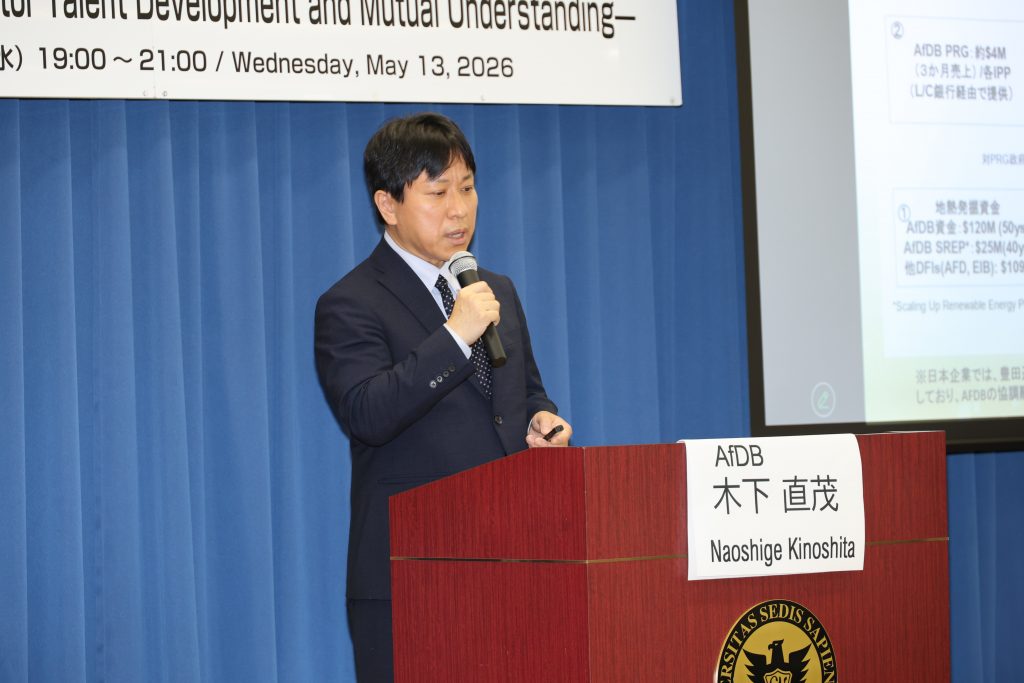
Mr. Naoshige Kinoshita, Deputy Head / Lead Program Officer, Asia External Representation Office, African Development Bank, opened the symposium with an overview of Africa’s infrastructure landscape and the Bank’s role in supporting development. While noting the rapid growth of Africa’s port and maritime sectors, he highlighted persistent challenges in railway, road, and air transport networks. He emphasized the importance of transport corridors in facilitating trade and introduced examples of infrastructure projects supported by the Bank.
Mr. Mikio Oyama, East Africa Representative, Mitsui O.S.K. Lines, Ltd., joined online from Kenya. He explained that the company has recently expanded its logistics operations on land in addition to maritime transport, aiming to provide integrated logistics services from international shipping to domestic distribution. He also shared expectations for a healthcare-related joint project in Kenya that involves collaboration with partners from other industries to establish logistics hubs.
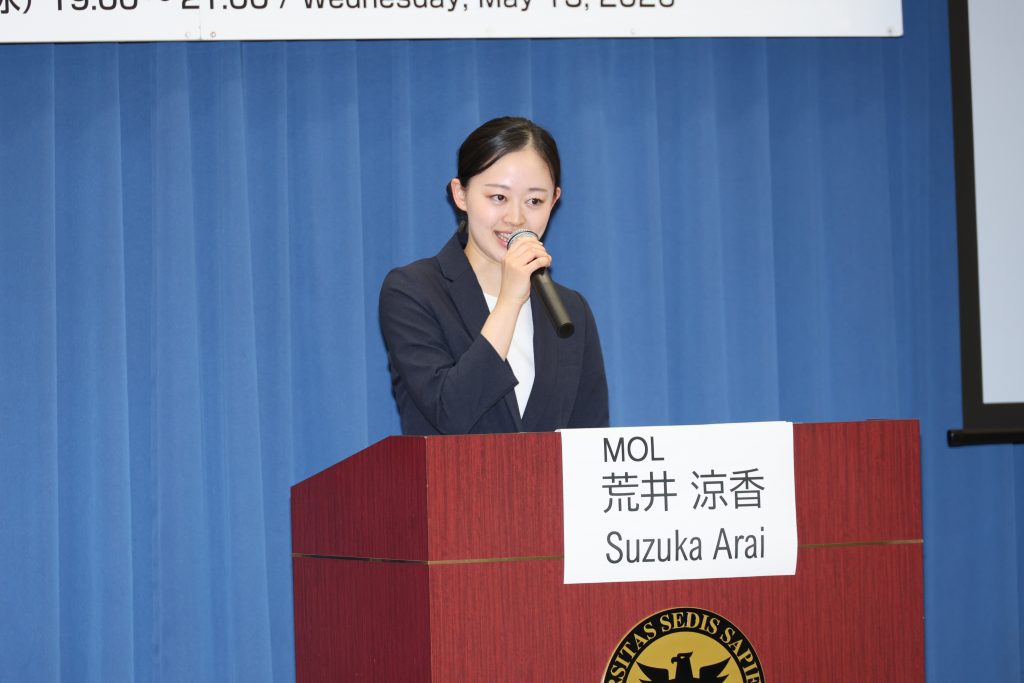
Ms. Suzuka Arai, Global Recruiting & Resource Consulting Business Team, Wellbeing Life Business Division, Mitsui O.S.K. Lines, Ltd., introduced the company’s human resource development initiative launched in 2020. Leveraging its expertise in seafarer training and extensive international networks, the company has begun a project focused on recruiting and developing Kenyan talent, which is attracting growing attention from Japanese companies. She expressed hope that such initiatives would promote business engagement with Africa and strengthen ties between Japan and Kenya.
Professor Alban Ahoure of Félix Houphouët-Boigny University in Côte d’Ivoire highlighted the significance of generating knowledge and translating research into policy to address challenges associated with Africa’s population growth, industrialization, and urbanization. He emphasized that learning from Japan’s development experience and fostering academic collaboration through Japanese Studies can contribute to sustainable development and human resource enhancement across Africa.
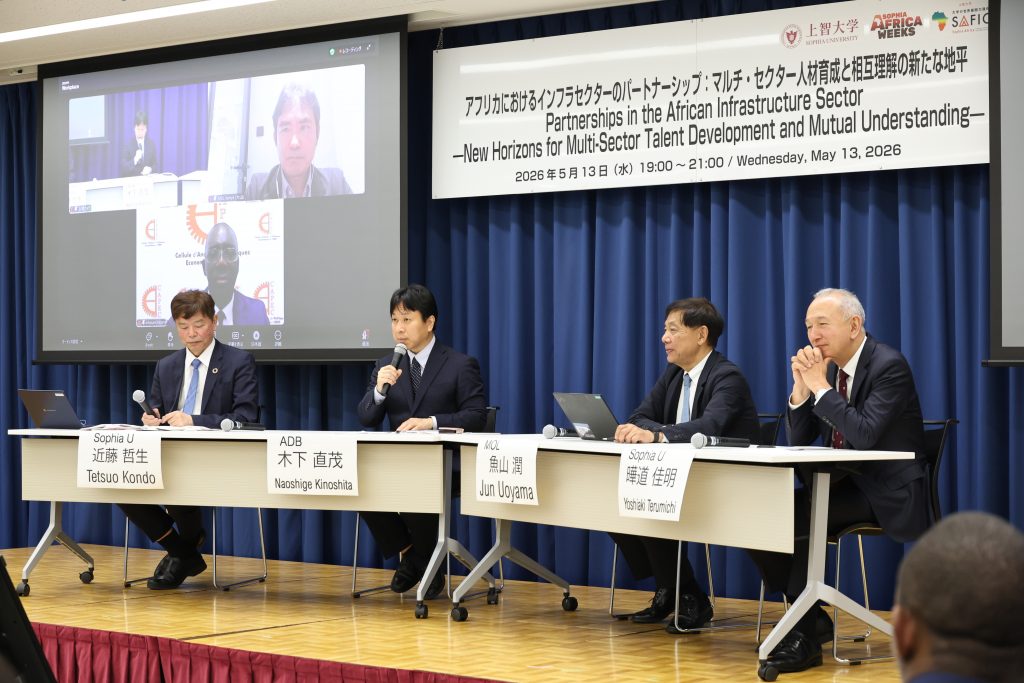
In the second half of the symposium, a panel discussion moderated by Professor Tetsuo Kondo, Director of the Human Resources Center for International Cooperation, brought together the four speakers along with Mr. Jun Uoyama, Executive Senior Advisor, Global Recruiting & Resource Consulting Business Team, Wellbeing Life Business Division, Mitsui O.S.K. Lines, Ltd., and Professor Yoshiaki Terumichi, the Faculty of Science and Technology of Sophia University. Discussions ranged from building trust with local communities in logistics and infrastructure projects to the role universities can play in fostering long-term partnerships.
During the Q&A session, participants raised questions about psychological and practical barriers facing Japanese companies entering African markets, as well as public perceptions in Japan regarding foreign workforce policies. The session provided an opportunity to reflect on the future of Japan–Africa relations.
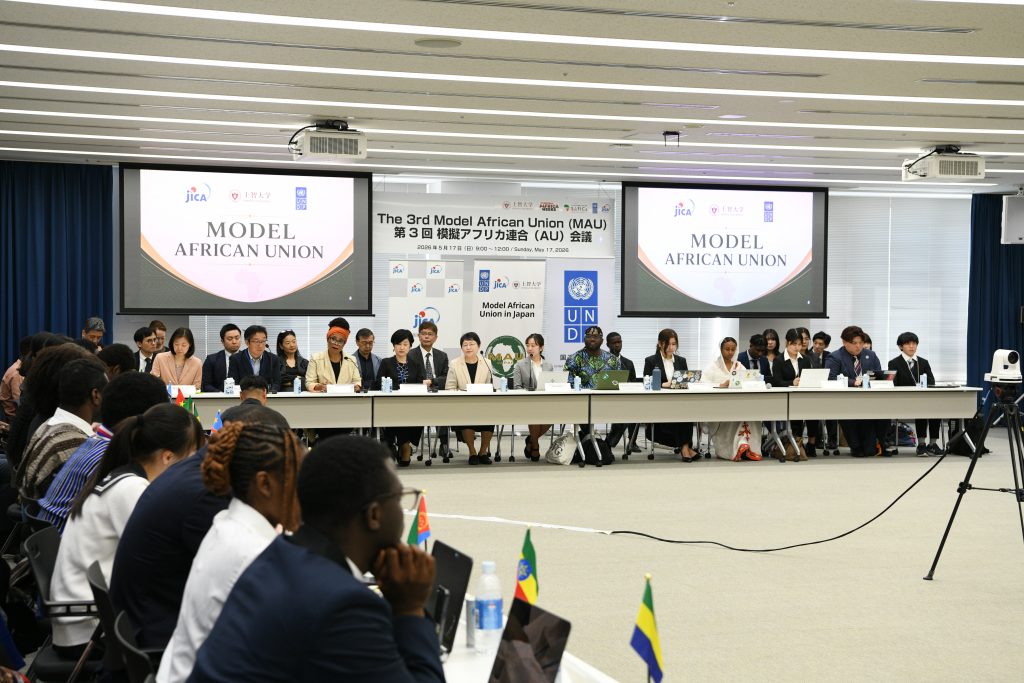
The Third Model African Union (MAU) Conference
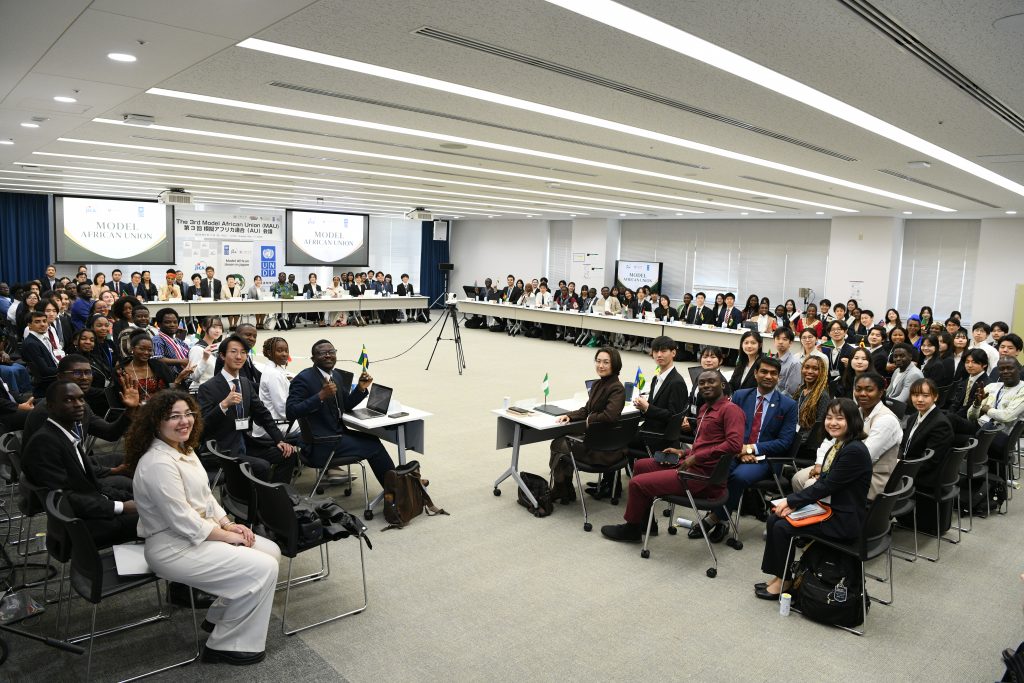
Sophia University, the United Nations Development Programme (UNDP), and the Japan International Cooperation Agency (JICA) jointly hosted the Third Model African Union Conference.
The conference is a youth-led diplomatic simulation designed to provide participants with practical experience in policy negotiation, multilateral diplomacy, and consensus-building through realistic African Union-style deliberations and negotiations.
This year’s theme was “Ubuntu – I Am Because We Are.” Rooted in Southern African philosophy, Ubuntu emphasizes shared humanity, reconciliation, and social cohesion. Participants examined how societies can better harness the potential of young people in addressing contemporary challenges.
A total of 149 delegates, selected from 326 applicants, including Japanese high school and university students as well as African international students studying in Japan, participated in discussions based on the African Union’s long-term development blueprint, Agenda 2063, and the priority areas of the Tokyo International Conference on African Development (TICAD).
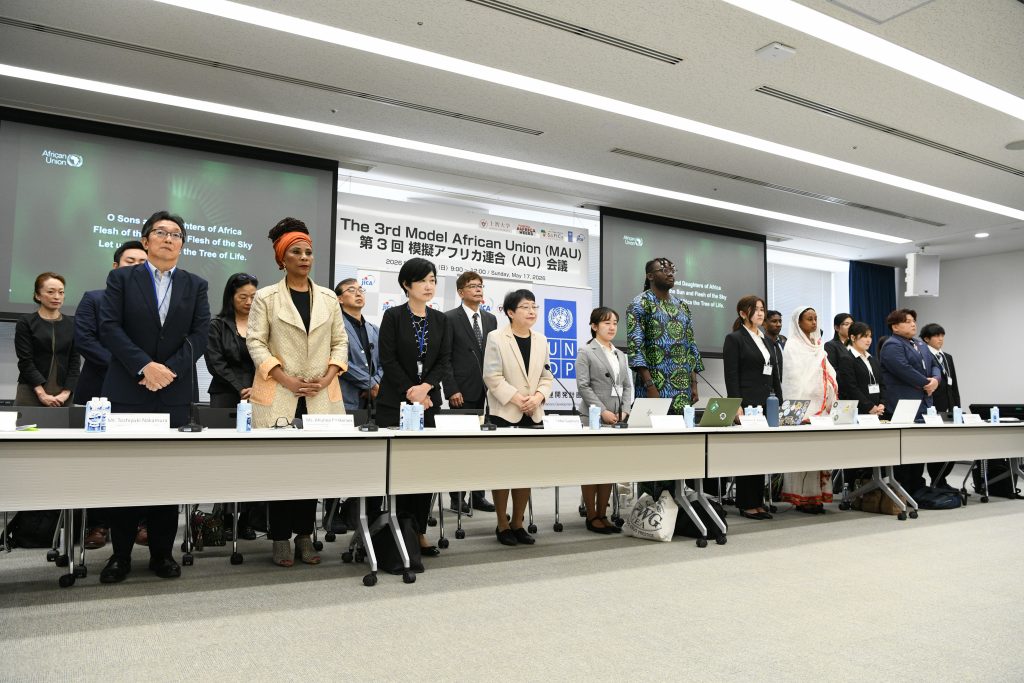
The General Assembly took place on May 17.
Opening remarks were delivered by Professor Miki Sugimura, President of Sophia University; Ms. Ahunna Eziakonwa, Assistant Administrator and Regional Director for Africa, UNDP; Mr. Toshiyuki Nakamura, Special Advisor to the President of JICA; and Ms. Misako Takahashi, Assistant Minister & Director-General, African Affairs Development, MOFA. A congratulatory message was also delivered by Ms. Prudence Nongwe Ngeleka, Director of Women, Gender, and Youth at the African Union Commission.
Speakers emphasized the importance of diversity and dialogue and expressed their expectations for the younger generation’s role in advancing collaborative partnerships between Africa and Japan.
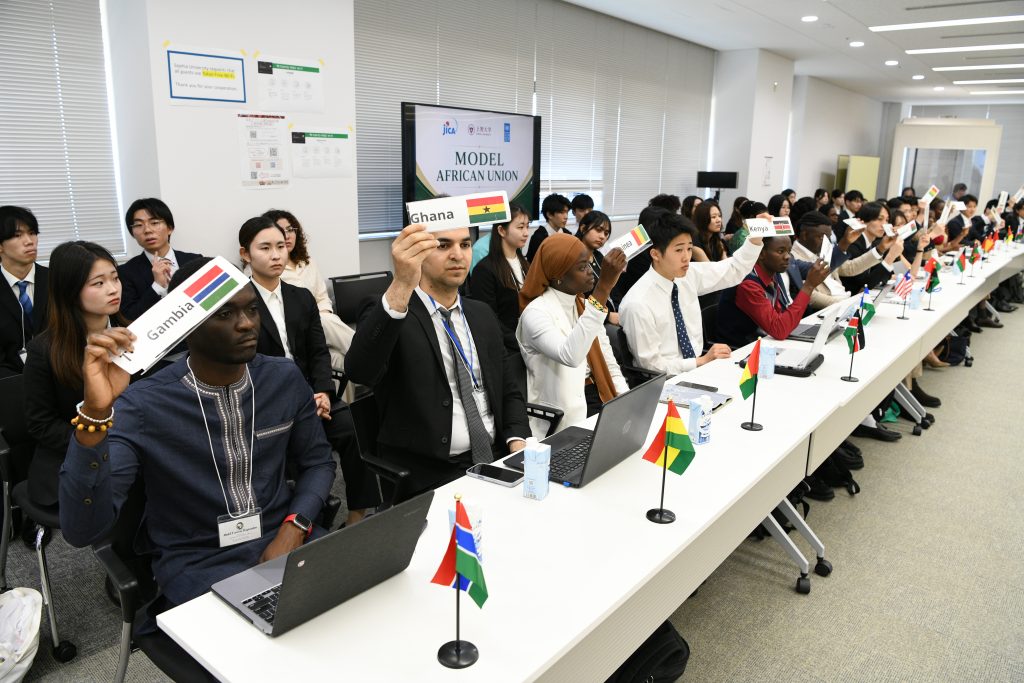
Each participant was then given one minute to address the assembly as a representative of one of the 42 African countries maintaining diplomatic missions in Japan. Delegates shared views on key issues facing Africa, including youth employment, education, the digital divide, and participation in governance.
Drawing on discussions held the previous day within Specialized Technical Committees (STCs), delegates presented and adopted three resolutions concerning:
- Public Service, Governance and Peace
- Finance, Economic Planning, and Integration
- Education, Science, Technology, and Innovation
At the closing ceremony, awards were presented to outstanding delegations.
Best Delegation Award
(Recognizing excellence in teamwork, preparation, and contributions to debate)
- STC1: Egypt Delegation
- STC2: Libya Delegation
- STC3: Nigeria Delegation
Best Position Paper Award
(Recognizing excellence in research, analysis, and policy proposals)
- Liberia Delegation
Through the conference, participants gained a deeper understanding of international cooperation and policy-making processes while developing practical skills in dialogue, negotiation, and consensus-building.
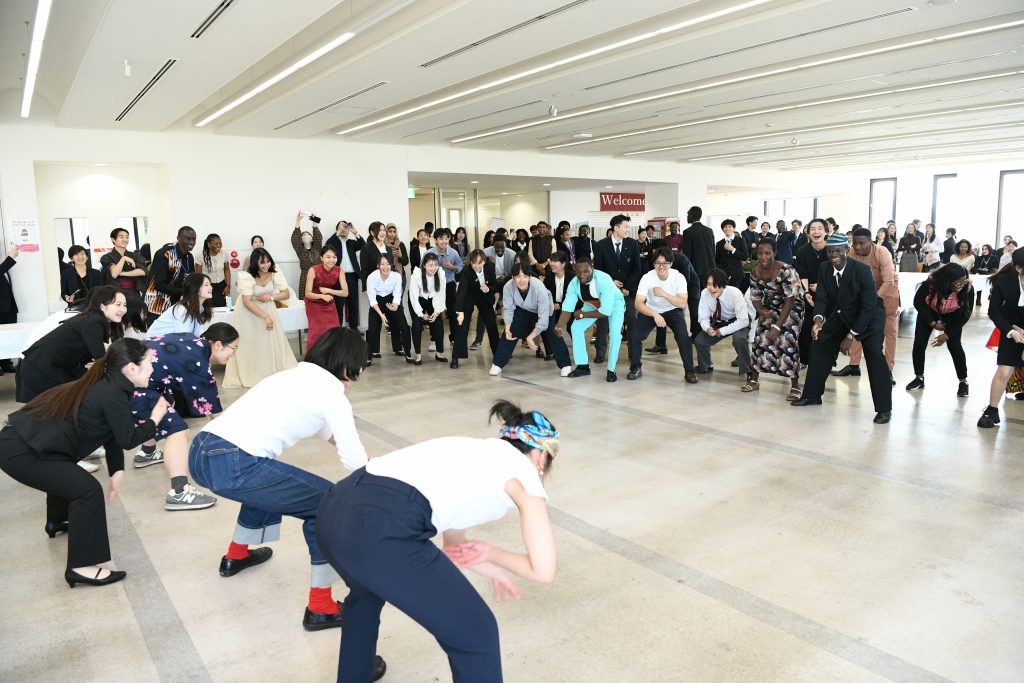
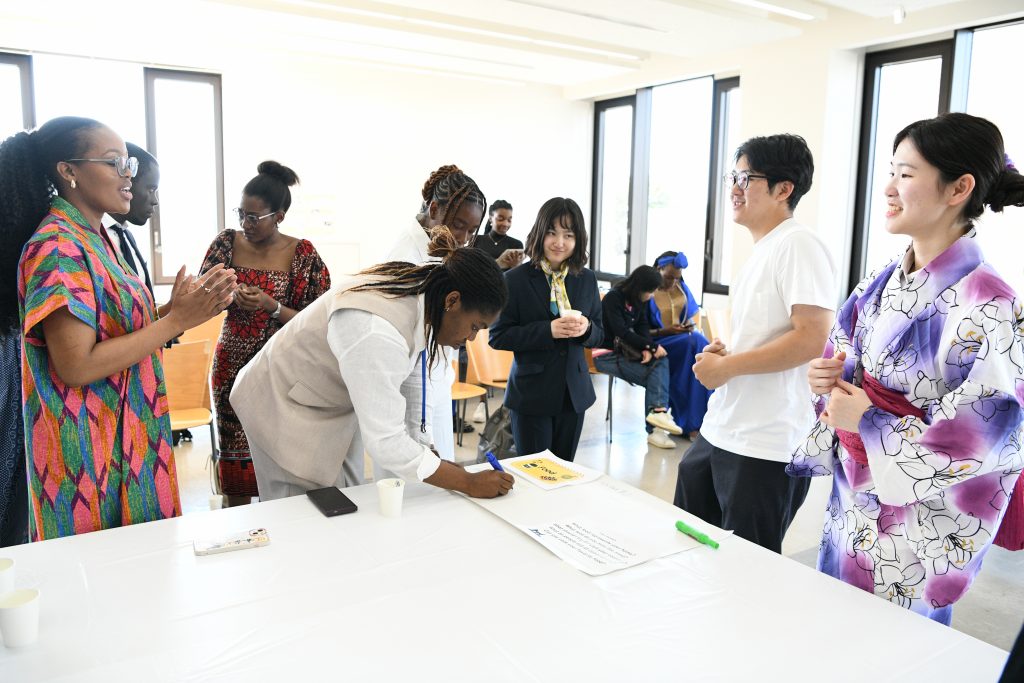
Following the General Assembly, participants joined the Japan–Africa Cultural Event, where they shared traditional dances, discussed food, clothing, and customs, and exchanged perspectives on their respective cultures and values. The event further promoted mutual understanding and strengthened connections between participants from Japan and Africa.
Two exhibition projects were held
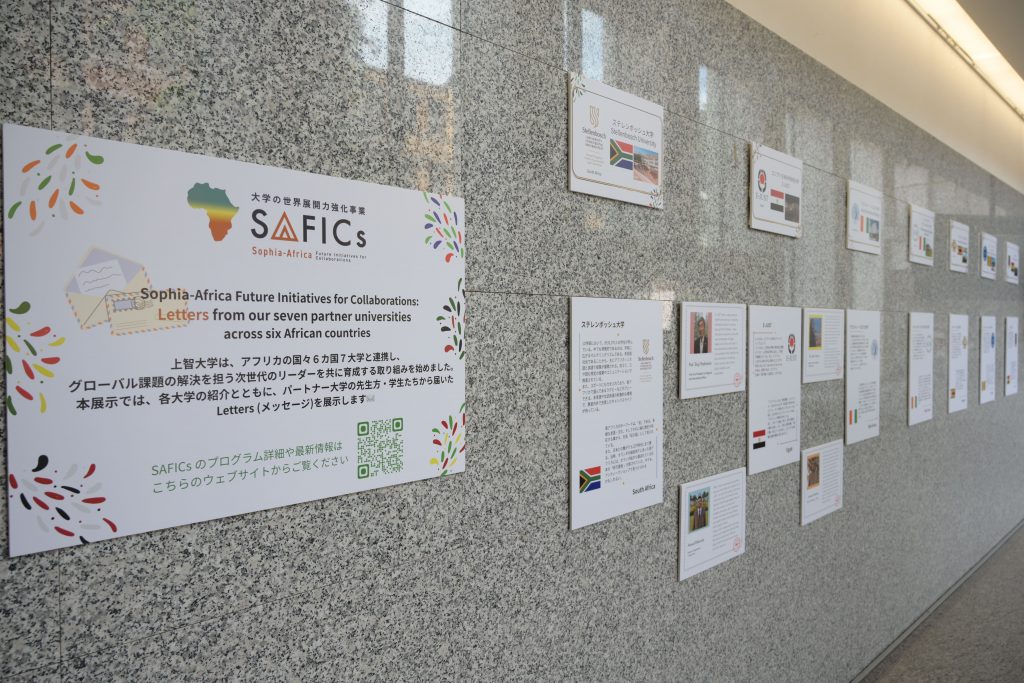
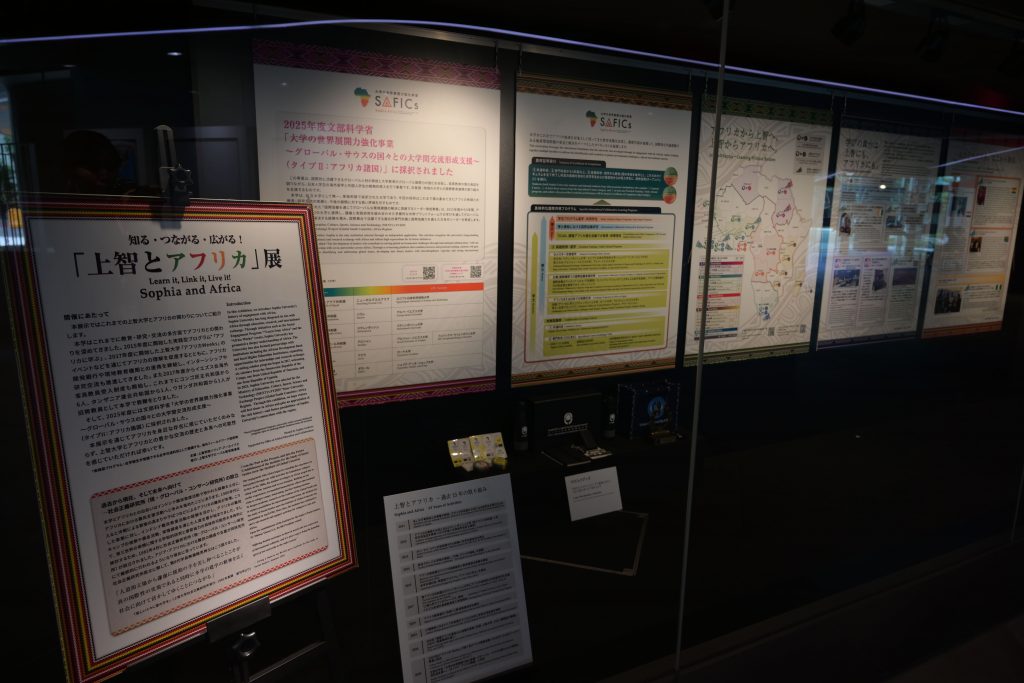
Since its launch in 2017, Africa Weeks has been held annually each May. Beginning in the 2025 academic year, Sophia University has also launched a new global education initiative, “Developing Leaders Who Contribute to Solving Global Environmental Challenges Through International Collaboration,” further strengthening its engagement with Africa across multiple fields.
Together with students, researchers, and partners committed to deeper engagement with Africa, Sophia University will continue promoting understanding of the African continent and expanding collaborative initiatives that contribute to sustainable global development.