

Sophia University PhD Student Farai Maringa Receives Outstanding Young Scientist Award at icRS 2026
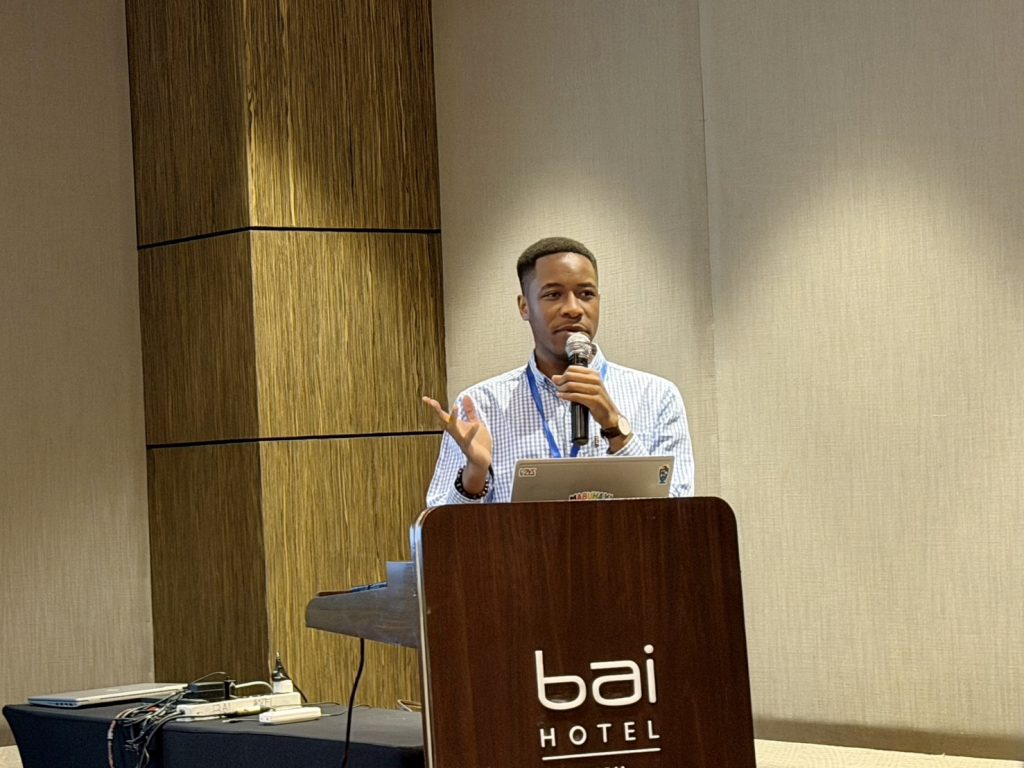



Farai Maringa, a PhD student and MEXT scholar at the Graduate School of Global Environmental Studies (GENV) at Sophia University, received the Outstanding Young Scientist Oral Presentation Award at icRS 2026, the International Conference on Resource Sustainability, held June 15–17, 2026, at the Bai Hotel Cebu, Philippines.
Farai Maringa was among four members of Sophia University’s Graduate School of Global Environmental Studies (GENV) who travelled to Cebu for the 2026 International Conference on Resource Sustainability (icRS). The delegation also included Professor Akemi Ori, Dr. Nkweauseh Reginald Longfor, Marlen Kwamboka Mochoge (GENV master’s student and JICA scholar). Together, the group delivered five research presentations, chaired two parallel sessions, and returned with an award.
The conference brings together researchers from the natural sciences, social sciences, and engineering around a shared question: how should resources of all kinds, physical, biological, and those society tends to lose track of, like waste, be managed sustainably? The 2026 edition drew participants from universities and institutions across Asia, Europe, and the Americas, with sponsorship from the journal Resources, Conservation & Recycling (2024 Impact Factor: 10.9) and six other partner journals.
The award-winning presentation
Maringa’s presentation titled “Waste Separation Systems in Central Tokyo: Evaluating Linguistic and Structural Barriers Faced by Foreign Residents” was delivered in the Environmental Behaviour session on Monday, June 15. The study focused on Tokyo’s 23 special wards, combining quantitative surveys of both foreign and Japanese residents with qualitative interviews of ward officials in three high-density wards: Shinjuku, Taito, and Minato.
The findings shifted the blame away from individual residents. Key barriers identified included:
- Non-standardized rules across wards, cited by ward officials themselves as a primary compliance hurdle
- A broken information chain: over 50% of foreign respondents reported never receiving a formal waste separation orientation, with some never receiving guidelines at all due to poor communication from building managers
- Specific category confusion, particularly for oversized garbage requiring Japanese-language phone booking, and the distinction between recyclables and combustible waste
Maringa applied the Cultural Theory of Risk to map how different residents approach the system, identifying four distinct compliance patterns: hierarchists (rule-followers), egalitarians (community-adapters), individualists (independent problem-solvers), and fatalists (those overwhelmed and disengaged). The icRS 2026 award committee noted that this framework extends well beyond Tokyo to any city managing waste systems across diverse communities.
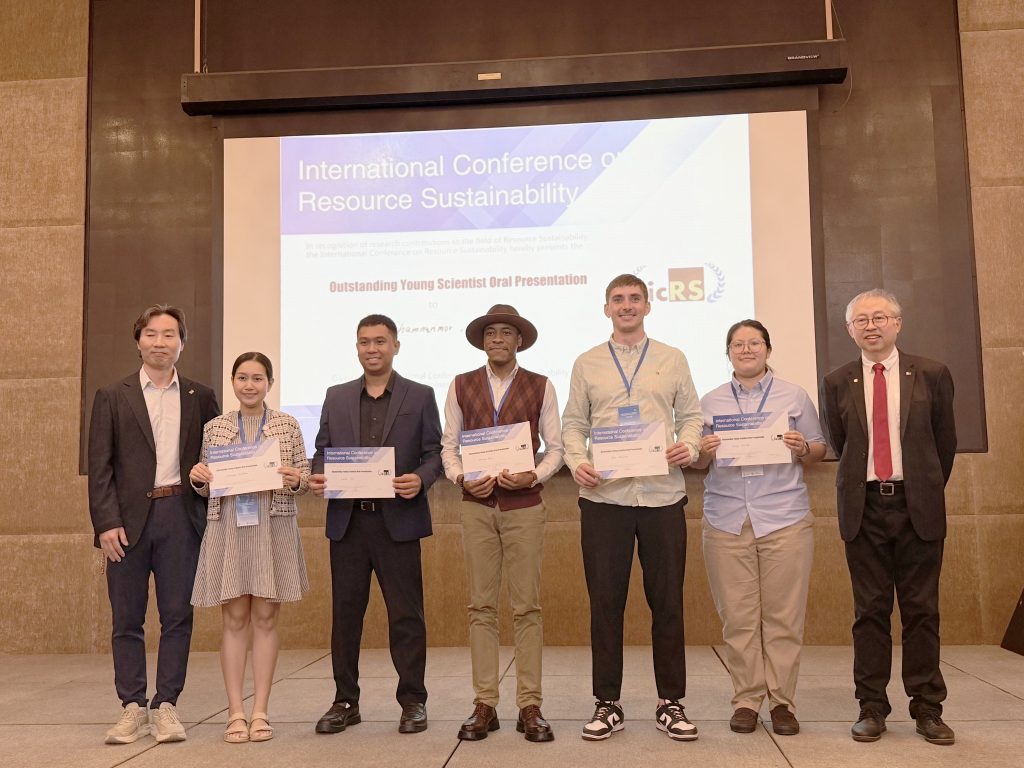
About the Outstanding Young Scientist Award
The Outstanding Young Scientist Oral Presentation Award was presented by the icRS organizing committee at the end of the icRS 2026 to recognize early-career researchers producing work of exceptional quality. The award is designed to encourage the next generation of scholars in resource sustainability. The award ceremony was held on Wednesday, June 17, the final day of the conference.
Reflecting on the award, Maringa commented:
This recognition affirms the importance of centering foreign residents in urban sustainability research. Waste separation is often treated as a technical problem, but it is fundamentally a governance and communication challenge. I hope this work contributes to making Tokyo’s environmental systems more proficient in regard to the broken communication lines and offers a framework that other cities can adapt.
The Sophia University delegation at icRS 2026
The Sophia University group delivered a total of five presentations across Monday, June 15, spanning three continents and a wide range of resource sustainability challenges:
- Marlen Kwamboka Mochoge (GENV Master’s Student, JICA Scholar): Sustainable end-of-life management of solar photovoltaic waste in Kenya, the Solar Energy session chaired by Prof. Ori
- Dr. Nkweauseh Reginald Longfor (Assistant Professor at GENV): Urban sprawl, functional centrality, and traffic externalities in Yaoundé’s satellite towns, Cameroon, in the Urban Systems session
- Farai Maringa (GENV PhD Student, MEXT Scholar): Waste separation barriers for foreign residents in Central Tokyo in the Environmental Behavior session
- Professor Akemi Ori (Professor at GENV): Toward a governance framework for sustainable packaging systems in Japan in the Sustainable Packaging session
- Dr. Nkweauseh Reginald Longfor (Assistant Professor at GENV): Assessing progress toward a circular economy in Cameroon and Ghana in the Circular Economy session, which he also chaired
Beyond presenting their own research, Prof. Ori and Dr. Longfor each chaired a parallel session on Monday, June 15, guiding the discussion, managing the floor, and fielding questions across a set of papers from researchers around the world. A review of the full conference program confirms that the three Africa-focused studies presented by the Sophia group were the only presentations addressing African countries or contexts across the entire icRS 2026 conference, underscoring the Graduate School’s commitment to research on the African continent.
Looking ahead
Out of the five studies presented by the Sophia University group at icRS 2026, three have been submitted through the conference’s journal partnership channel and are currently under peer review. Partner journals include Resources, Conservation & Recycling; the Journal of Environmental Management; the Journal of Industrial Ecology; Sustainable Production and Consumption; and the Journal of Environmental Informatics, among others. The findings of these studies will be shared on the Graduate School of Global Environmental Studies’ website upon acceptance and publication.
Maringa is continuing doctoral research at GENV under the supervision of Professor Akemi Ori and Dr. Nkweauseh Reginald Longfor, building on the momentum from the ICRS 2026.
For further information about the icRS 2026 conference, visit: https://www.icrsconf.com/icrs_2026.html