

Words shared by Mother Teresa at Sophia University: “For Others, With Others. ”
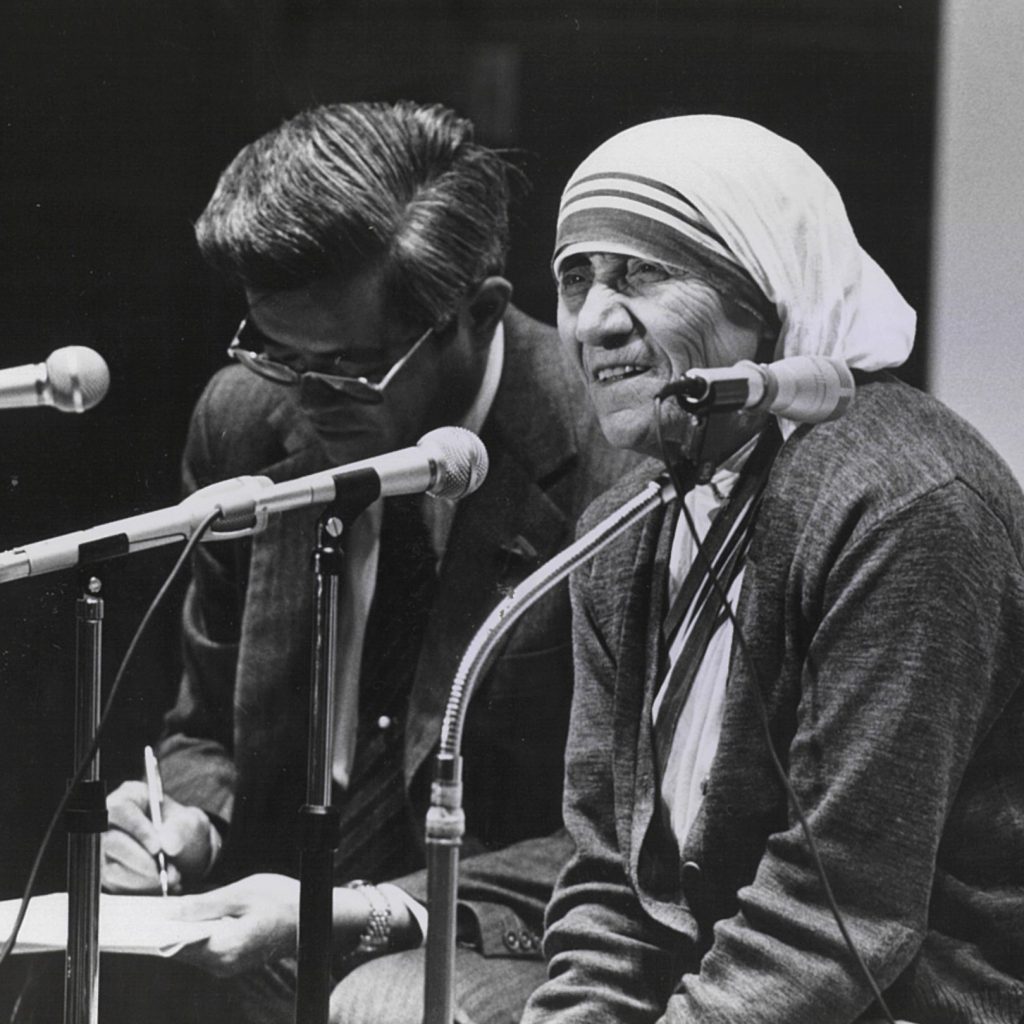



Over the years, Sophia University has welcomed many prominent figures who have influenced the world. Mother Teresa is one figure whose legacy has left a lasting impression on many hearts. She visited our university three times during her lifetime.
What did Mother Teresa, who was known for her compassion and care for others, have to say to the students?
Mother Teresa’s visits to Sophia University
Mother Teresa visited Japan three times during her lifetime and gave a talk at our university on each occasion. The title of the talk she gave during her first visit in 1981 was “What Is Beautiful?”. The talk had a deep impact on around 1,300 students and faculty members. The following year, she delivered a speech entitled “What Is Hunger? ”, and in 1984, she spoke on the topic “Hunger and Life”. Both speeches highlighted the spiritual hunger present in Japan, a country that appeared to be affluent.
Mother Teresa dedicated herself to the slums of Calcutta (Kolkata, India) — described as “the worst living conditions on earth” — to help those abandoned on the streets, orphans, people with leprosy and those with AIDS. For half a century she carried out relief work for people suffering from poverty and disease. The world came to know her work of love, and in 1979 she was awarded the Nobel Peace Prize. After her death, her work was continued by the Missionaries of Charity, and today, there are approximately 4,500 members working worldwide.
Mother Teresa’s first posting to India saw her teaching geography at St. Mary’s College in Calcutta, a school for the children of the wealthy, and also serving as its principal. Travelling from Calcutta to Darjeeling by train in 1946, she received a revelation. It instructed her to “work for the poorest of the poor”. Then, in 1948, after receiving permission from Pope Pius XII to live and work outside the convent*, she left alone. It is said that she had only five rupees (the equivalent of 200 yen) with her at the time.
Her first initiative was to gather children from the slums and provide free lessons in a dilapidated, mud-walled hut. Former students who resonated with her work began to gather around her, and donations started to come in. In 1950, the Holy See granted permission to establish the “Missionaries of Charity”, an order dedicated to serving the most disadvantaged. Those in need were the mission’s focus: the homeless, the destitute, the abandoned, the impoverished, the unwell. The order’s most distinctive feature was the “Home for the Dying”. Mother Teresa recounted that the catalyst for this was her encounter with a woman on the street whose face had been eaten away by maggots and rats. Those who died after being left by hospitals and passersby were the poorest of the poor. Mother Teresa established a facility to support such people in their final moments.
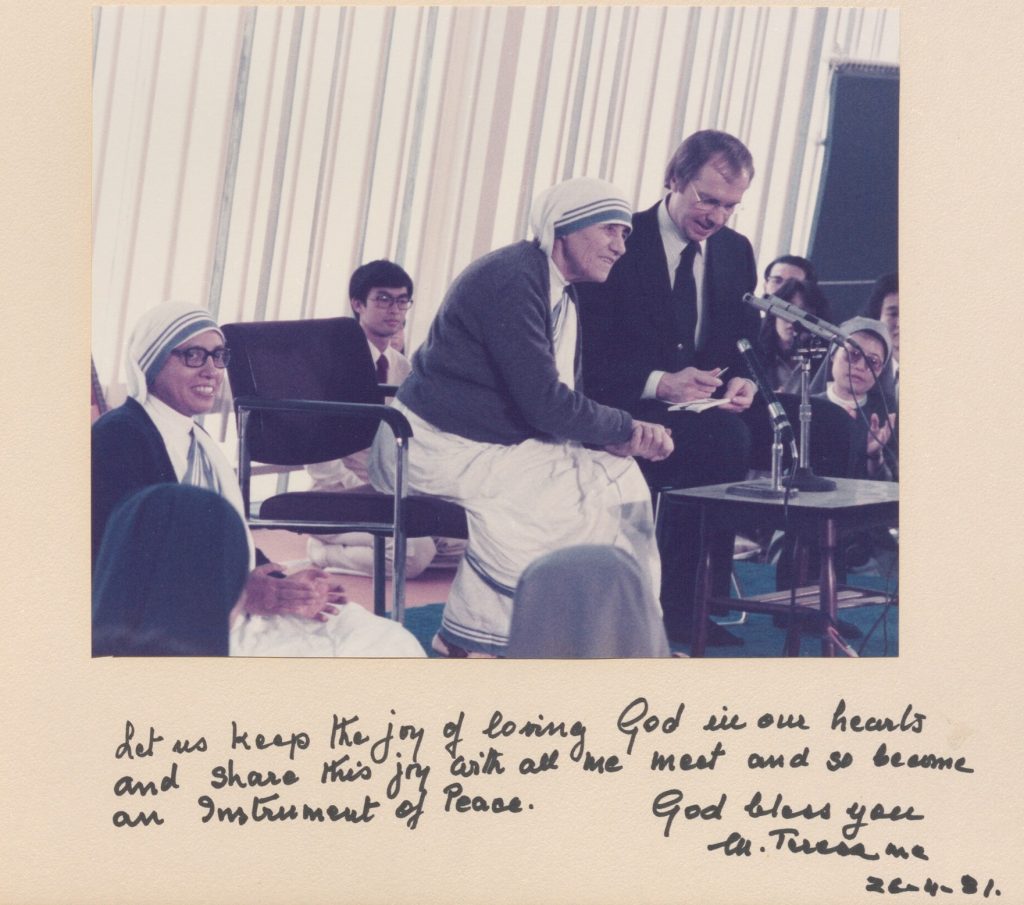
During her first visit to Sophia University in 1981, Mother Teresa said the following:
“One night, I came across a woman who was on the verge of death and whose body was covered in maggots. I removed the maggots from her body and washed her. When I had finished and laid her back in bed, she took my hand, gave me a gentle smile, and said just one word—’Thank you’—before passing away.”
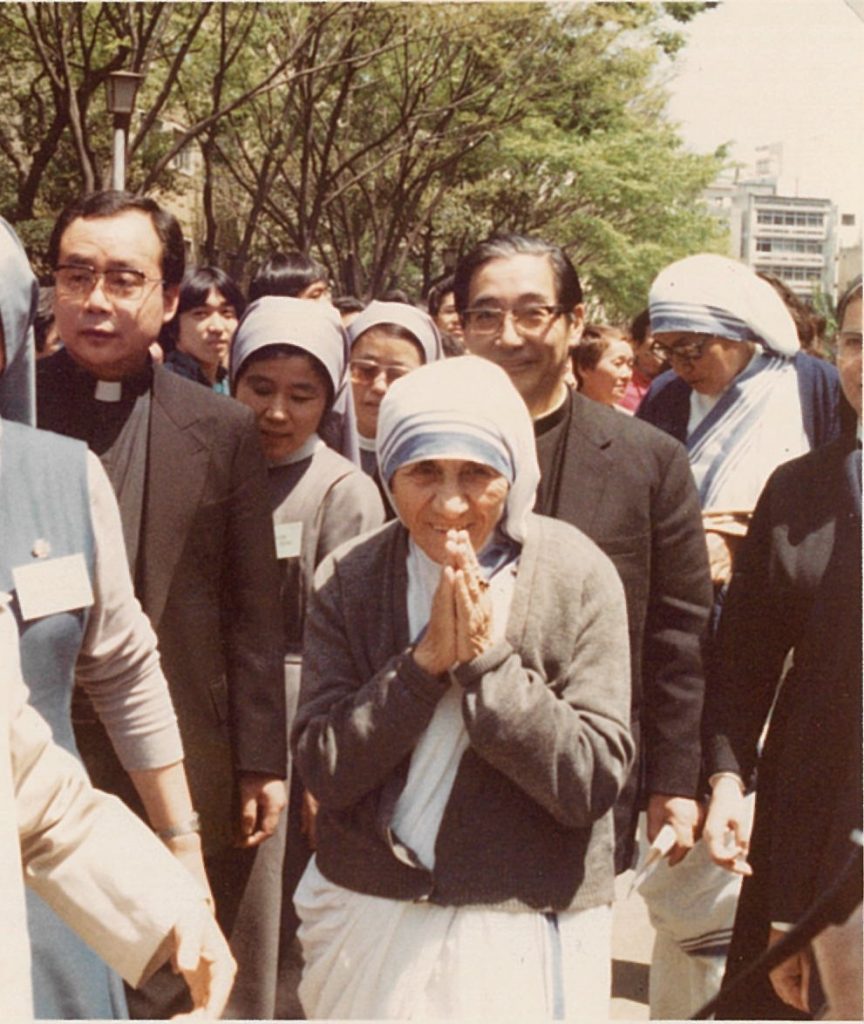
Mother Teresa received more “God’s love” than she gave. Reflecting on this, it was remarked by her, “The greatness of the poorest of the poor is seen here”. She then added, “Do you know why that is? It is because every poor person is a child of God, created by God’s loving hands to love and be loved.”
Spiritual Hunger: Poverty Amid Affluence
The following are some particularly striking words from a talk Mother Teresa gave at Sophia University:
“The poor are not only those who hunger for bread or are homeless. Even when there is plenty of everything, those who are desperate for love and have been abandoned by society are more deprived. In a sense, hunger caused by a lack of food is much easier to alleviate. Spiritual hunger, the thirst for love, and the hunger of the heart are much more difficult to address. We pray, deepen our faith, and love Christ. This means serving the poorest of the poor without expecting anything in return. Love begins with those closest to us, and these relationships form the foundation of our lives. Begin by practicing love within your own family. Love those who are suffering and in distress until your love becomes a source of comfort for them.”
“Even if a mistake has been made, please do not take the child’s life. Accept the child, the unborn baby, and help one another. Seek help from those around you so that you can face each other, God, and your families. A single mistake should not lead to more harm. You are all young, and a future and a new life await you. Whether you’re married or living a religious life, pray that God may give you a heart that is pure and without blemish, full of love, joy, and peace.”
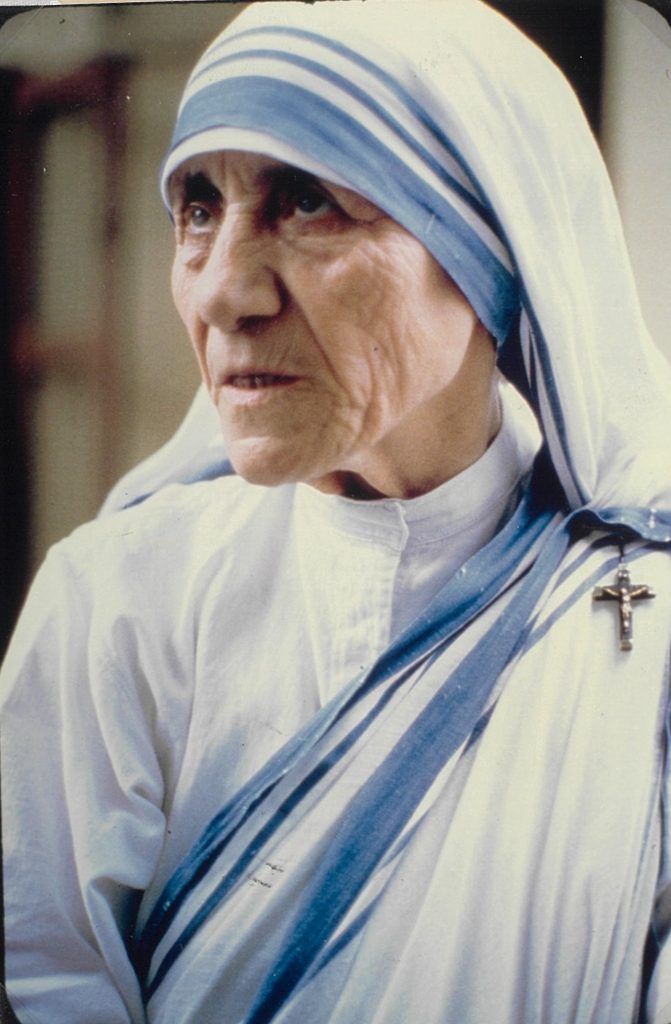
During her talk, Mother Teresa highlighted that even in Japan, a nation with plenty of material wealth, there are many individuals who are spiritually starving. She emphasized that those around them must acknowledge this hunger and offer a helping hand. At that time in Japan, there was a growing number of people who felt lonely, believing no one needed them, and took their own lives, as well as those who had abortions or killed their own children. After visiting Japan and recognizing this “spiritual hunger”, Mother Teresa established homes for unwed mothers, abandoned children and people who are living on the streets. Today, her work continues to focus primarily on helping people who are homeless.
When Mother Teresa was awarded the Nobel Peace Prize, she said, “I do not consider myself to be a person worthy of this award, but I accept it on behalf of the poorest people in the world.” Apparently, she attended the ceremony dressed, as usual, in sandals and a sari, traditional Indian attire, and skipped the banquet, claiming, “I don’t need a banquet.”
Our university is dedicated to pursuing educational and research activities focused on the front lines of international cooperation. The spirit of “being close to people” that Mother Teresa left behind surely lives on.
*Going out was a rare occasion for nuns, except when it was essential for their religious duties.