

Bringing Molecular Interactions to Life: WaterPuzzle Makes the Invisible World of Hydrogen Binds Easy to Learn for Students
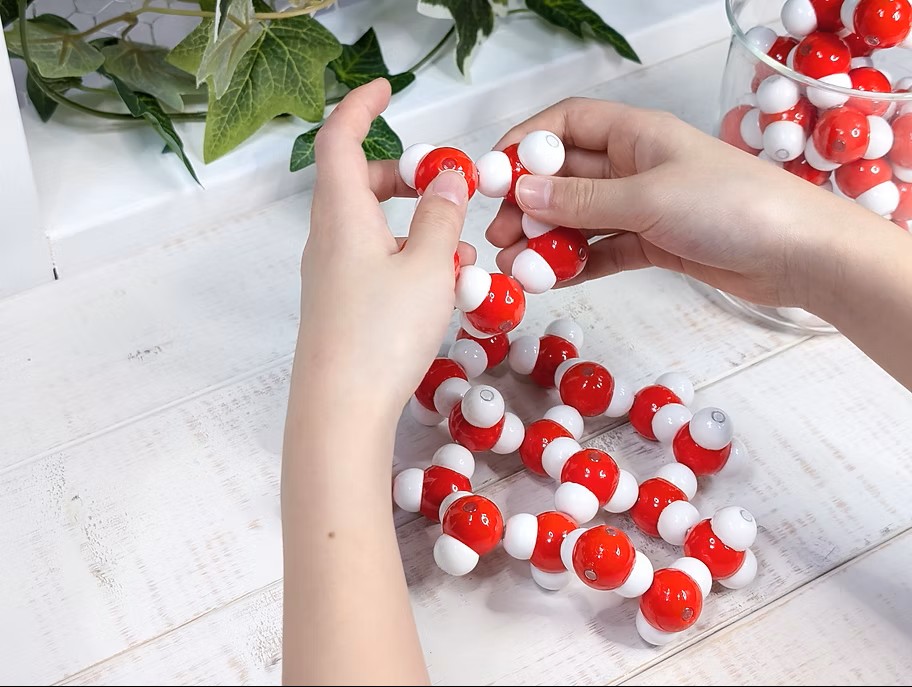


A new educational activity using 3D-printable magnetic model helps students understand how water molecules interact
Hydrogen bonding is fundamental to understanding water’s unique properties, structures, and interactions. However, conventional molecular models often struggle to demonstrate how molecules interact, making these concepts difficult for students to grasp.
To address this challenge, researchers from Japan have developed WaterPuzzle, a 3D-printable magnetic molecular model that allows students to physically explore hydrogen-bond networks and molecular structures, offering a more intuitive and engaging approach to chemistry education.
Water is one of the most essential components of life and many of its unique properties arise from interactions between its molecules. Hydrogen bonds influence water’s physical properties, contribute to the formation of ice crystals, and are crucial for normal biological processes. Understanding these interactions is fundamental to chemistry, physics, and biology. However, because molecular interactions take place at a scale that cannot be directly observed, students may struggle to visualize how individual molecules connect and organize into larger structures.
Traditional molecular models help students understand the arrangement of atoms within molecules, but most often they cannot demonstrate how separate molecules interact. Although magnetic models have previously been developed to represent intermolecular interactions, there exists an opportunity to use them more extensively to explore the structural properties of water through guided classroom activities. Recognizing this challenge, researchers sought to make chemistry more intuitive through physical exploration rather than relying exclusively on textbooks and static illustrations.
In an effort to help students better understand these interactions, a researcher team led by Professor Jiro Kondo, Department of Materials and Life Sciences, Faculty of Science and Technology, Sophia University, developed WaterPuzzle, a magnetic molecular model designed to help students investigate hydrogen bonding and molecular interactions in water.
The study was available online on September 30, 2026, and published in Volume 103 of The Journal of Chemical Education on October 13, 2026, and was co-authored by Yuna Ohtani (Graduate School of Science and Technology, Sophia University), Tania Guadalupe Peñaflor Galindo (Department of Materials and Life Sciences, Sophia University), and Shota Nakamura (StudioMIDAS Inc.).
In Kondo’s words, “Our motivation came from observing that many students struggle to understand chemistry’s underlying principles or fully appreciate the subject through conventional teaching methods. We believe that a more intuitive understanding of the laws of nature could help students develop a stronger affinity for chemistry.”
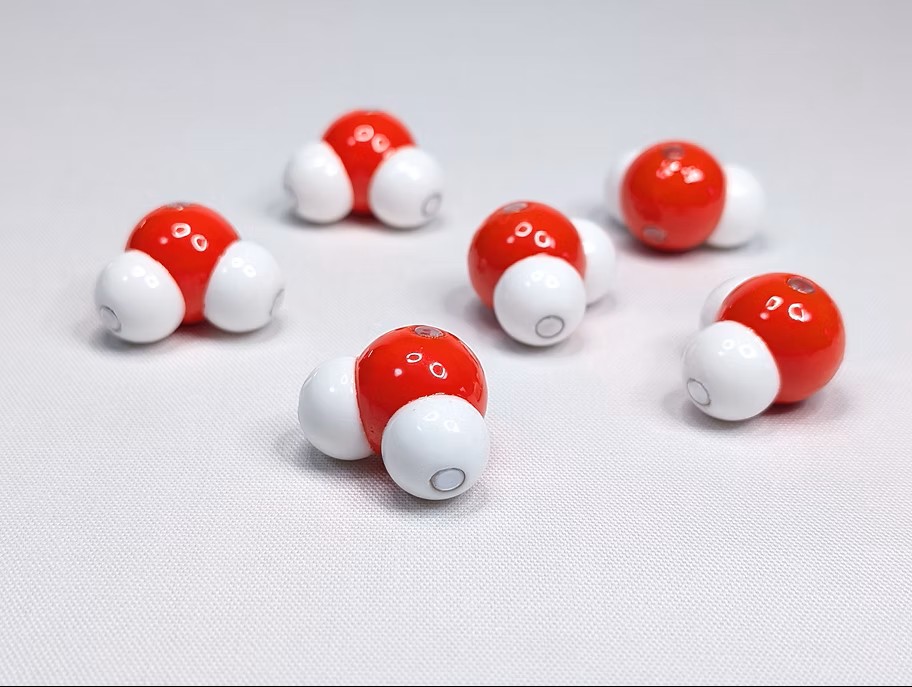
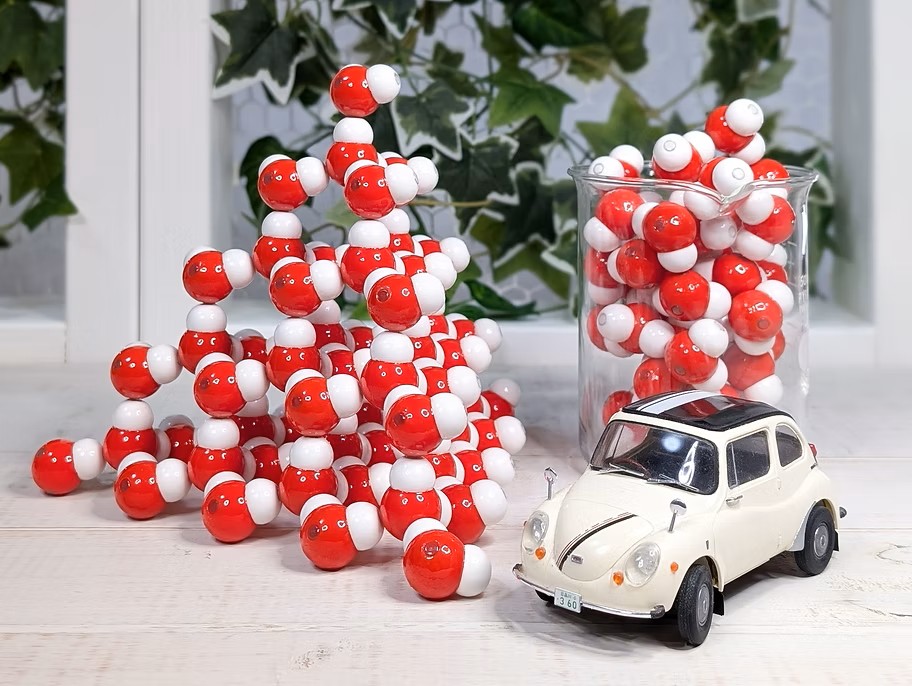
WaterPuzzle consists of 3D-printed water molecule models attached using small neodymium magnets. The magnetic sites represent hydrogen-bond donors and acceptors, with attractive and repulsive forces guiding the pieces towards hydrogen-bond-like arrangements. The researchers developed structured educational activities in which students assemble molecules, construct hydrogen-bond networks, and explore molecular geometry and crystal structures. The STL files required to print the models are provided free of charge, allowing educators to easily fabricate them using commonly available 3D printers.
These activities allow students to explore the tetrahedral arrangement of hydrogen-bonding sites around water molecules and construct the hexagonal networks characteristic of Ice Ih, which is the most common crystalline form of ice under atmospheric conditions. By stacking hexagonal rings, they can investigate how ice forms an open framework that forms the basis for its lower density compared with liquid water. Students can also explore other ice structures, including Ice Ic, Ice II, Ice III, and Ice XVII. Further, combining WaterPuzzle with the previously developed BasePairPuzzle model allows students to understand how water interacts with nucleobases and forms hydration shells around biological molecules.
While WaterPuzzle primarily helps in practically understanding molecular structures, it also acts as a tool for educators to encourage active learning and scientific inquiry. Its easy-to-use design could promote active learning and scientific inquiry. Its accessible design could help make complex concepts easier to explore, while free printing files support wider classroom adoption.
WaterPuzzle offers a hands-on approach to making chemistry more intuitive, accessible, and enjoyable. By allowing students to physically construct and investigate molecular networks, the activity could help them develop a deeper appreciation of the molecular interactions that shape the natural world and contribute to stronger chemical literacy.
Reference
- Title of original paper
WaterPuzzle: An Educational Activity Using a 3D-Printable Magnetic Molecular Model to Explore Hydrogen Bonding, Ice Crystals, and Hydration of Molecules
- Journal
The Journal of Chemical Education
- Authors
Yuna Ohtani 1, Konatsu Kondo2, Shota Nakamura 3, Tania Guadalupe Peñaflor Galindo1, and Jiro Kondo1*
- Affiliations
1Department of Materials and Life Sciences, Faculty of Science and Technology, Sophia University, Japan
2Independent Researcher, Japan
3StudioMIDAS Inc., Saitama, Japan
About Professor Xuepeng Qian
Jiro Kondo is a Professor in the Department of Materials and Life Sciences at Sophia University in Tokyo, Japan. With a PhD from the Tokyo Institute of Technology in 2004 and postdoctoral research at the University of Strasbourg, his main research focus is in biophysics and structural biology, with particular emphasis on the three-dimensional structures of DNA and RNA and their applications in medicine and nanotechnology.
Professor Kondo has also developed innovative educational tools, including BasePairPuzzle and WaterPuzzle, which use magnetic molecular models to make complex scientific concepts more intuitive and accessible to students.
Funding information
- Research Support Project for Life Science and Drug Discovery
- Toray Science Education Award
Media Contact
Office of Public Relations, Sophia University (sophiapr-co@sophia.ac.jp)


