

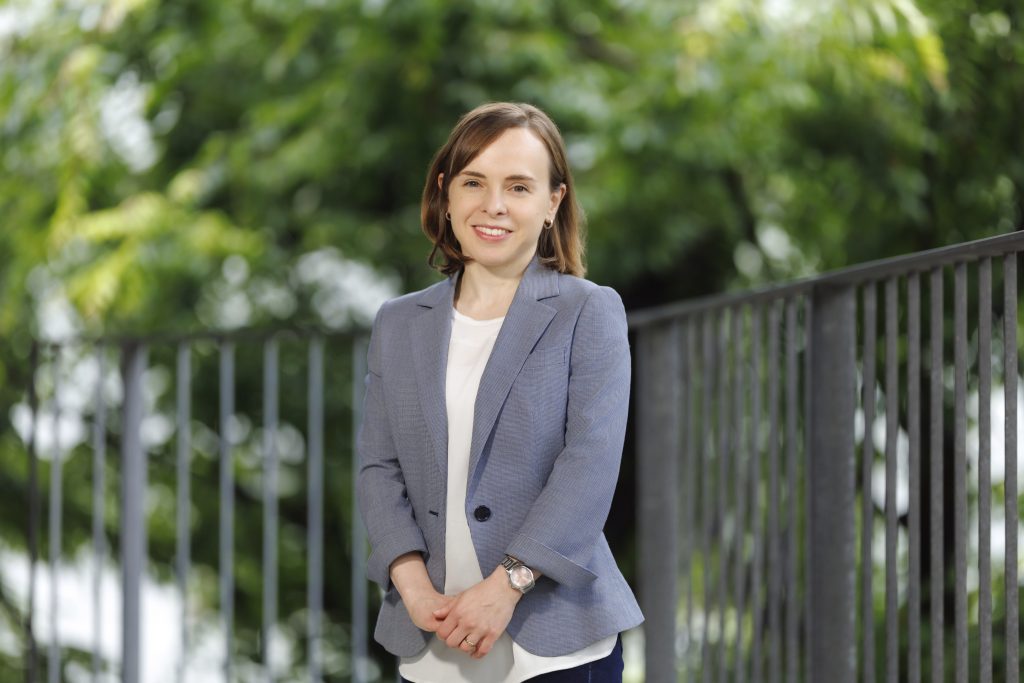
Manuela Sato-Prinz
Associate Professor
Department of German Studies
Faculty of Foreign Studies



Associate Professor Manuela Sato-Prinz of the Department of German Studies specializes in intercultural learning within foreign language education. Educated as a teacher and researcher of German as a foreign language, she recognizes the challenges in fostering interculturally competent individuals who can engage meaningfully with people from diverse backgrounds. Her research explores effective ways to support students’ intercultural learning, particularly in helping them reflect on stereotypes and prejudice.
My main interest centers on intercultural and cultural learning, with a particular focus on foreign language education. The broader framework of my research is shaped by questions such as: “What is culture, and how does it influence identity and perception?”; “How do individuals acquire culture?”; “How are intercultural competencies developed?”; as well as “How can we educate interculturally competent individuals?”
I studied German as a foreign language, a scientific discipline that refers to teaching and learning German for non-native speakers. In language education, it is often recommended to immerse oneself in a foreign environment to acquire both language and cultural competencies. To evaluate the effectiveness of this approach, I conducted a longitudinal case study with Japanese students studying abroad in Germany. The study explored their intercultural learning experiences and examined how their perceptions of Germany and their development of self-identity evolved over time.
Over the course of a year, I followed two groups of students: one that studied in Germany and one that remained in Japan. Data were collected through interviews and questionnaires at three points––before departure, during their stay, and just before returning to Japan. To enrich my humanities-based research, I complemented qualitative methods with quantitative analysis, adding a data-driven dimension.
One key finding was that while students’ perceptions became more complex, traditional stereotypes persisted. Some students, initially holding a positive image of Germany, developed more nuanced, and sometimes slightly negative views of German culture or people. Others adopted overgeneralized or simplified expressions when reflecting on their experiences.
This research revealed limitations in the assumption that immersion alone is sufficient for developing intercultural competence. It highlights the need for structured support, such as preparing students to recognize and reflect on stereotypes and prejudice, and equipping them to handle common experiences such as culture shock. My research results were incorporated into a training module for teachers of German as a foreign language. I hope that such training will help educators better support students in developing intercultural competencies in language education.
Developing Interculturally Competent Individuals is More Important in the Age of AI

In today’s globalized world, we face complex societal challenges that require individuals capable of meaningful engagement with people from various backgrounds. Although the idea is not new, individuals with intercultural sensitivity remain the exception rather than the norm. And even though global mobility, such as international student exchange programs, have become very common nowadays, this hasn’t resulted in greater intercultural understanding or tolerance on a societal level, or a peaceful world.
This motivates my continued research into how we can better support intercultural experiences, especially in the context of foreign language education because language and culture cannot be separated. I hope my research helps clarify the underlying processes at work in cultural and intercultural learning, and equips educators with tools to support the development of individuals taking on responsible roles in an interconnected world.
Like Sophia University as a whole, the German Department creates a transdisciplinary environment, and this diverse academic base enriches both research and teaching. I encourage students to engage in research from an early stage—formulating questions, conducting small projects, and reflecting critically. Through this experience, they gain a deeper cultural understanding and develop essential skills for navigating our globally connected world. Encouraging critical thinking is not just valuable in education—it is also closely tied to the development of intercultural competence.
Additionally, as AI tools such as ChatGPT begin to perform linguistic tasks, I believe the cultural aspects of communication will become even more important in language education. While AI may assist with simple translation, I wonder whether it will ever be able to fully grasp the cultural dimensions of interpersonal interactions. Therefore, language education should shift towards emphasizing intercultural learning even more. I hope to support this transition by preparing individuals to communicate successfully across cultures.
Researching Locally to Explore Pedagogy for Development of Interculturally Sensitive Individuals
Looking ahead, I have a few research projects in development. One is a long-term follow-up of the Japanese students who studied in Germany, tracking how their perceptions of Germany and intercultural awareness evolve over the next 10-20 years.
Another study involves exploring intercultural learning in domestic settings––examining how such competencies might be developed in the classroom. In this context, I have already started analyzing foreign language textbooks. I plan to conduct classroom observations to evaluate how cultural content is taught. Such observations are important to assess whether classroom interactions promote critical reflection or unintentionally reinforce stereotypes. I hope to contribute to the development of teaching strategies and further training modules aimed at better equipping instructors of German as a foreign language to promote reflective intercultural competence.
I also wish to support the bilateral relationship between Germany and Japan by encouraging students to explore their shared values. Often described as value-based partners, Germany and Japan offer strong examples of successful diplomacy despite cultural differences. I aim to inspire and support students in becoming culturally aware contributors to such partnerships.
The book I recommend
“The Silent Language”
by Edward T. Hall, Published by Anchor Books, A Division of Random House Inc.
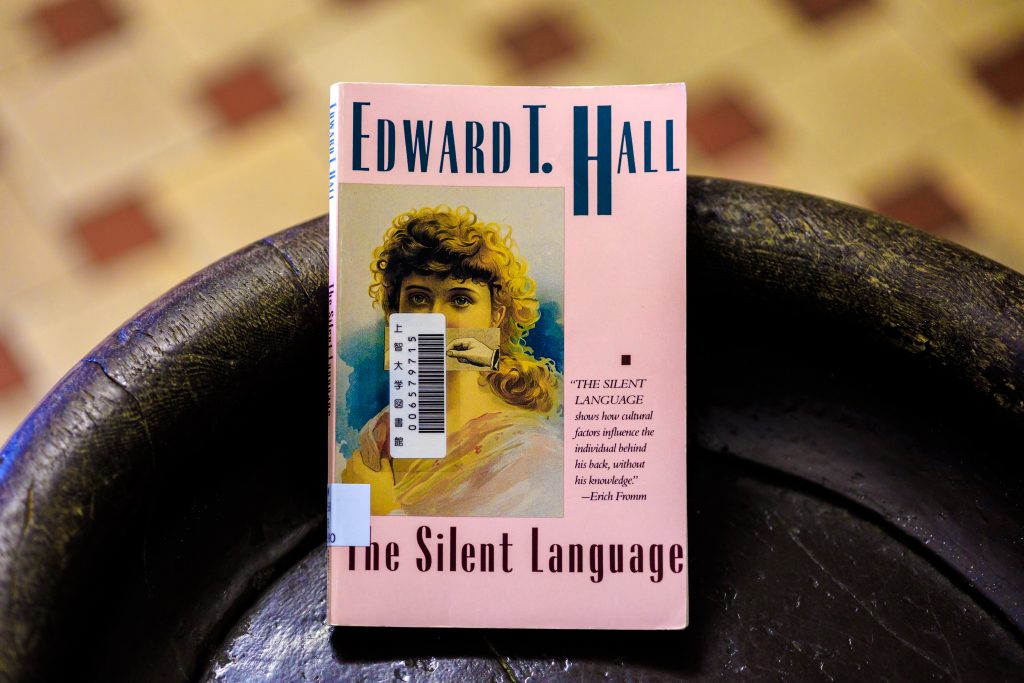
This book was a big eye-opener during my early studies, showing me how culture permeates daily life. It introduces how the hidden dimensions––space, time and nonverbal communication––shape our interactions. Despite criticism for stereotyping and oversimplification, the book with its vivid examples and insights into the cultural impact on identity and daily life remains fundamental in intercultural communication – provided it is read with reflective engagement.
-
Manuela Sato-Prinz
- Associate Professor
Department of German Studies
Faculty of Foreign Studies
- Associate Professor
-
Manuela Sato-Prinz graduated from the University of Munich in Germany with a master’s degree and doctorate in German as a Foreign Language, Japanese Studies and Intercultural Communication. While serving as Director of Study Support and International Affairs at the Technical University of Munich (TUM) School of Management, she gained extensive experience in international relations and higher education. Prior to joining Sophia University in 2024, she served concurrently as a special visiting lecturer at Keio University’s Faculty of Letters and the German Academic Exchange Service (DAAD) in Tokyo.
- Department of German Studies
Interviewed: June 2025