



At Sophia University, classes are suspended each year for Sentetsu-sai (the Founders’ Memorial Service). Have you ever heard the term sentetsu (“pioneers” or “forerunners”)? This is a word that you might not hear very often in your everyday life. What kind of event is this? What is its purpose, and when did it begin?
1.Liturgical Celebration of the Founders
In the Catholic Church, November 2nd is called All Souls’ Day. The ways of celebrating this day vary by country. Some traditions include decorating graves to commemorate the deceased, setting up altars adorned with the departed’s favorite items, and arranging and worshipping skulls. What these traditions have in common is reflecting on the deceased and praying for their peaceful rest, thereby feeling the connection between the living and the deceased. The festival shares many similarities with Japan’s “Obon” festival.
Prayers for the deceased like these are found in similar customs in every country and in almost all religions. The Catholic Bishops’ Conference of Japan states in its “Guidelines for Interreligious Dialogue in the Catholic Church”: “In Christianity, the commemoration and dignity of the dead center on praying to God for them. While it is natural to offer prayers for one’s own family, relatives, and others with whom one had a relationship, it is also important to pray for all those departed who had no connection with us in this world. (…) The Church, guided by this spirit, has incorporated the customs of each country to commemorate the deceased. (…) Therefore, in Japan too, we wish to practice ‘Commemoration of the Deceased’ based on this same spirit, appropriately incorporating Japanese traditions.”
In line with this Catholic observance of All Souls’ Day, Sophia University has held its annual Sentetsu-sai Memorial Service to honor its early founders.
2.The Beginnings of the Sentetsu-sai Memorial Service
So, when did Sentetsu-sai Memorial Service begin? The January 1937 issue (No. 3) of the Sophia University Bulletin contains a description of the “Liturgical Celebration for pioneers.” On June 23rd, the fifth annual commemoration of Father Joseph Dahlmann’s passing (1861-1930), who dedicated himself to founding Sophia University, took place. This event coincided with a proposal for faculty and students of the Faculty of Humanities, as well as alumni, to visit the Catholic cemetery in Fuchu City, Tokyo,and reportedly, the group visited the graves together. They also commemorated the lives of Father Mark McNeill (1874–1934) and Professor Shigetaro Mizuno (1868–1933). This occasion led to the proposal of holding an annual ceremony to honor those who contributed to the university’s development. Consequently, on November 2 of that same year, faculty, staff, and students gathered in the auditorium of Building No. 1 for the university-hosted ” Sentetsu-sai.” This became the first Sentetsu-sai Memorial Service. The ceremony included the participation of the families of deceased professors, as well as lectures by the university president and other faculty members. Afterwards, the Sophia Alumni Association organized a banquet attended by existing students and members alumni. The banquet was a great success, providing an opportunity to share great memories of Sophia.
3.Transition to the Memorial Mass
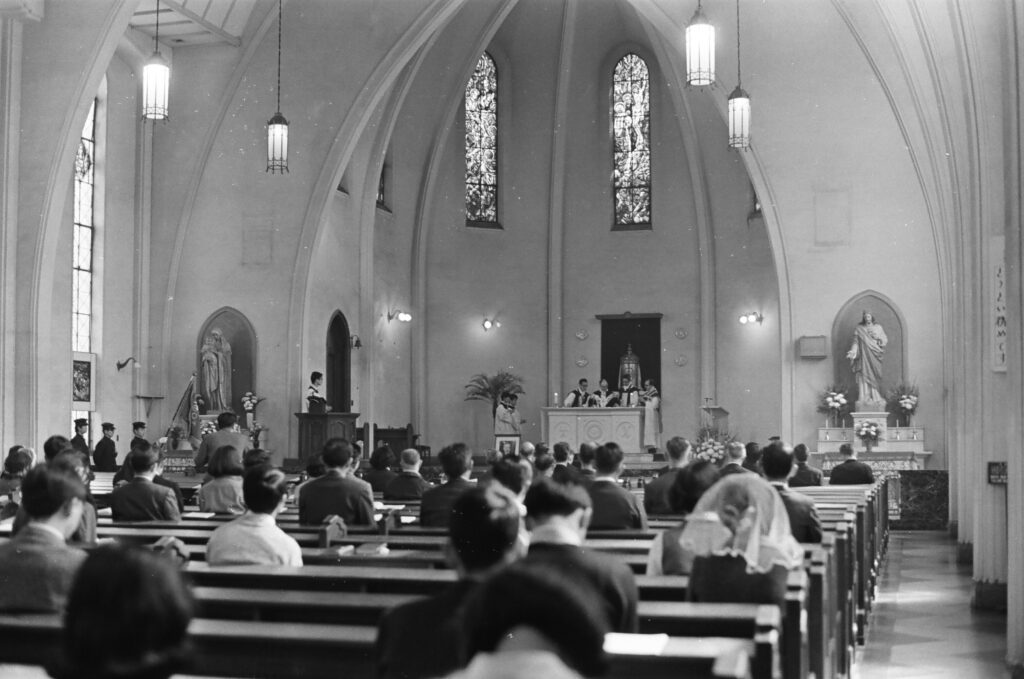
The ceremony was suspended due to World War II, but was revived in 1950. Around that time, Mass was occasionally held in the sanctuary of St. Ignatius Church.
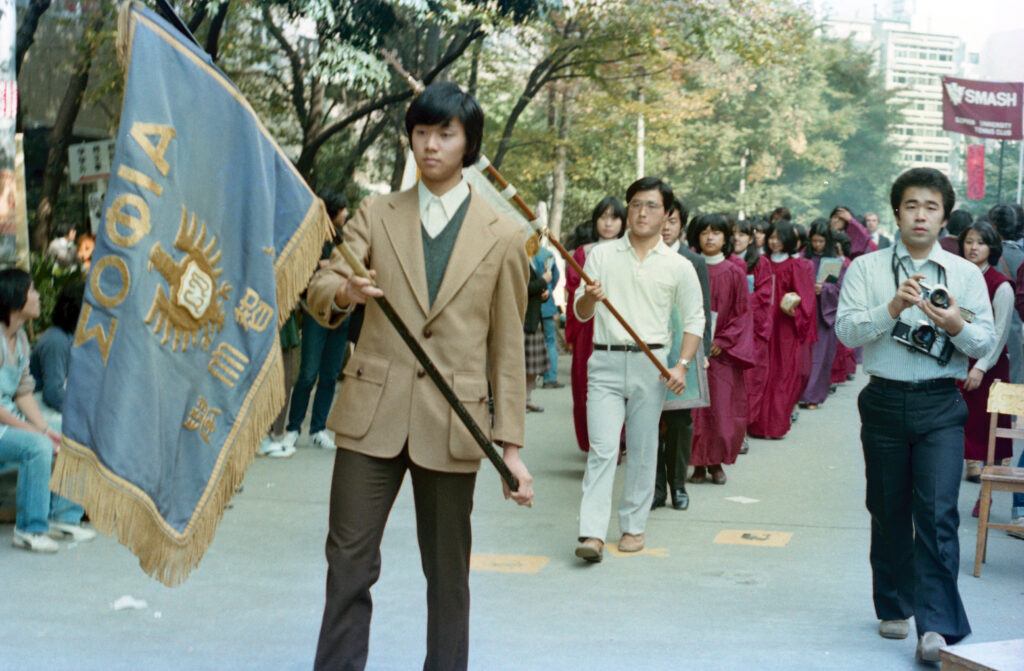
By around 1970, Sentetsu-sai (Memorial Service) had evolved into a diverse event featuring a variety of activities: It included Mass, a parade from the Mass location to the bust of Father Hoffman, the laying of flowers at the bust of Father Hoffman accompanied by a band performance, and the singing of the Alma Mater. The Catholic Students’ Association, the Sophia Festival Executive Committee, and the Sophia University Choir all played a role in the event, which was attended by faculty members, staff, and students. Today, the service continues mainly as a commemorative event centered around Mass.
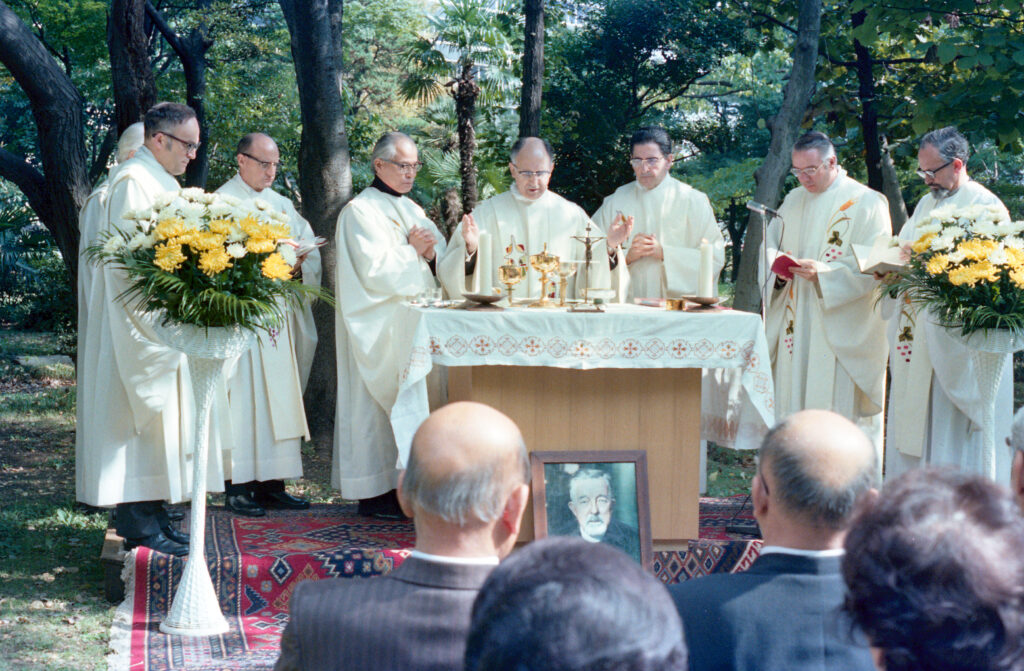
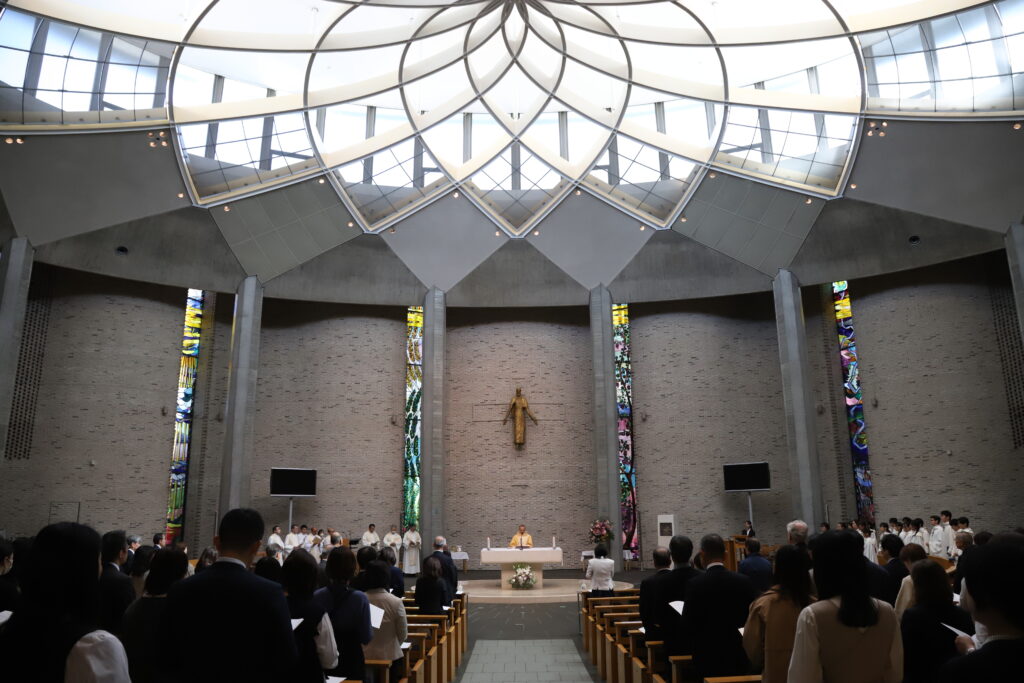
In 2024, a Mass was held on November 1, the university’s founding day, to celebrate the anniversary and honor pioneers. During the communal prayers, faculty, staff, and student representatives expressed their appreciation and commitment to carrying on traditions. They prayed for mutual dialogue and new contributions to society. At Sophia University, Sentetsu-sai (Memorial Service) is more than a prayer for the deceased. It is also an opportunity to express gratitude for those who established the university and a time to reflect on the future.
(※1) The “Sophia Newsletter” was a publication issued by the Sophia Alumni Association, a fellowship organization of graduates, to facilitate communication among members and share updates about their alma mater.
(※2) Father Joseph Dahlmann was one of the three priests sent to Japan after the pope agreed to their proposal to create a Catholic university in Japan. He died on June 23, 1930, and was the first Jesuit priest to be interred in the Catholic cemetery in Fuchu.
“Remembering the Efforts of Our Forerunners” is a rewritten version of the “SOPHIA” No. 17 Celebration for the First Founders, which was originally published online.