

Department of Digital Green Technology

To be established in April 2027. The information provided is based on the planned establishment and is subject to change.
Department Features
Climate change, resource depletion, and other challenges that directly affect our daily lives are becoming increasingly serious. That is why we need the power of digital technology and GX (Green Transformation) to move society forward. In response to these growing needs, Sophia University will launch the Department of Digital Green Technology in April 2027. This new department offers an interdisciplinary program that integrates data science and digital technology with applied chemistry, life sciences, mechanical engineering, and electrical and electronic engineering. All classes are conducted in English, and with about half of the students coming from overseas, you will learn alongside peers from diverse backgrounds in a truly global environment.
Through internships with companies and local governments, as well as a hands-on graduation research project, you will gain practical skills that directly connect to real-world problem solving. After graduation, a wide range of paths awaits you, including graduate school, domestic and international industries, and public institutions. Join us in creating a sustainable future through digital technology and engineering. Your first step has the power to move the world.
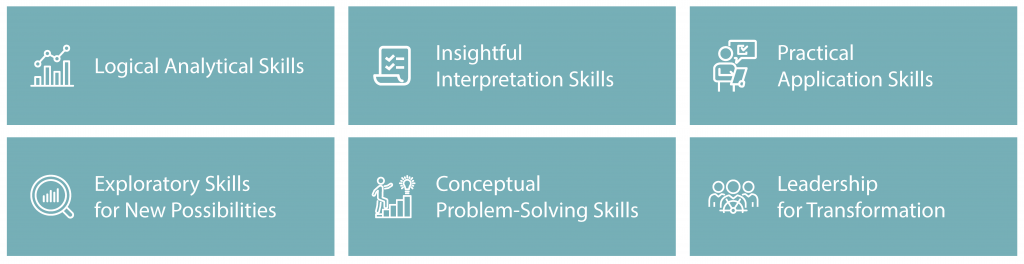
Cultivating Innovators to Shape Tomorrow
The new department aims to cultivate the next generation of leaders who possess the knowledge and insight to deeply understand the essence of global environmental issues and contribute to building a sustainable society through innovation. These leaders will explore the scientific principles behind data science, digital technologies, and a wide range of fields in science and engineering, and will approach problemsolving from an integrated, interdisciplinary perspective.
Curriculum
Three Specialized Course Clusters for Learning Science and Technology Driven by Digital Innovation
The curriculum of this department is built on three core pillars that support students’ learning. The Applied Chemistry and Life Sciences Cluster covers fundamental to advanced topics in materials and biosciences. The Mechanical Eng., Electrical and Electronic Eng., and Physics
Cluster provides the engineering knowledge and skills required to design and create complex systems. The Digital Technologies Cluster forms the foundation of data science and DX, bridging and empowering both scientific domains. By choosing one of these clusters, students
can deepen their specialization while also combining studies from the other Clusters, enabling them to naturally develop a multidisciplinary perspective and a broad, integrative view of science and technology.
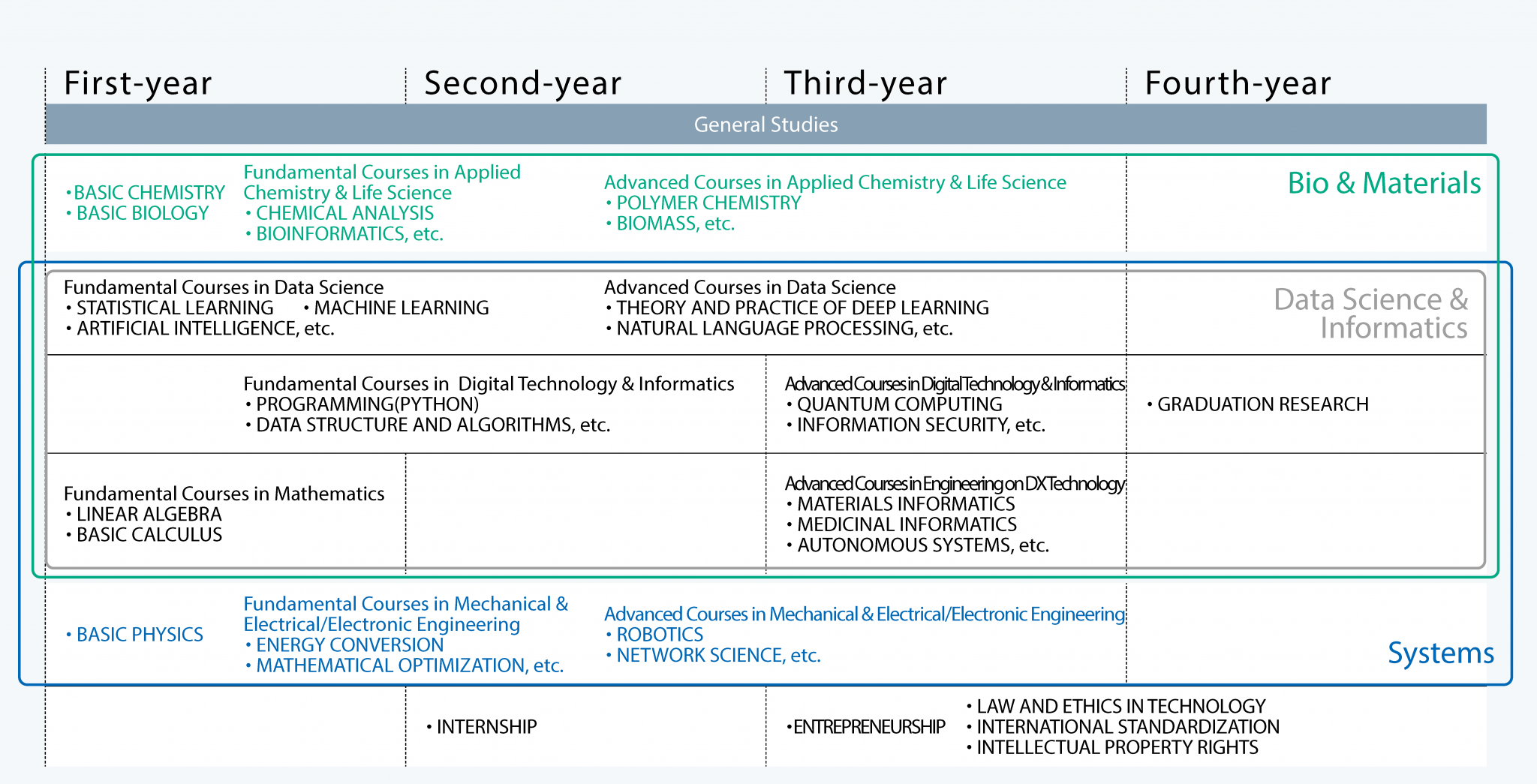
* The course list is provisional and subject to change beginning in the 2027 academic year. Please refer to the syllabus for more information on the courses.
Course Examples
- ARTIFICIAL INTELLIGENCE
Students systematically acquire knowledge from the fundamental theories of AI to its advanced applications, and develop the practical skills necessary to design and implement intelligent systems that enable a data-driven sustainable society.
- THEORY AND PRACTICE OF DEEP LEARNING
Students study deep learning from fundamental principles to advanced applications, and develop the ability to design and implement advanced AI systems that contribute to a sustainable society through hands-on experience with neural networks and image recognition.
- MEDICINAL INFORMATICS
Students learn data analysis methods that support the entire process from drug discovery to pharmaceutical development, acquiring the ability to interpret chemical, biological, and pharmacological data. Through computational approaches, they gain both fundamental knowledge and applied skills in pharmaceutical and biomedical informatics.
- ENERGY CONVERSION
Students study diverse energy conversion technologies, including the fundamentals and applications of renewable energy such as solar and wind power. Through discussions and group work, they cultivate the perspectives and knowledge necessary to contribute to a sustainable society.
- INTERNSHIP
This course, designed for second-year students, provides hands-on experience in corporate and municipal settings, enabling students to apply the knowledge acquired on campus to real-world contexts. Students enhance their problem-solving and communication skills while broadening their perspectives for future career development.
- LAW AND ETHICS INTECHNOLOGY
Students examine the relationship between science and technology, society, and the environment from an ethical perspective, and develop the mindset required for responsible research practices. Through case studies, they cultivate the judgment and ethical awareness expected of scientists and engineers.
Prospective Career Paths
Possible career paths include research and development and DX promotion in the IT and manufacturing industries, international projects in the environmental and energy sectors, and consulting, among many others. Pursuing graduate studies at universities in Japan or overseas is also an option.
Major Career Paths (for Reference): Faculty of Science and Technology English-Taught Programs (Green Science Program and Green Engineering Program)
Graduate School; UD Trucks Corporation; Amazon Japan G.K.; Mitsubishi Corporation Life Sciences Limited; Mitsubishi Electric Corporation; Shiseido Company, Limited; Sekisui Medical Co., Ltd.; Hino Motors, Ltd.