
Making the language come alive. Language Drama has been a part of our tradition since our founding.
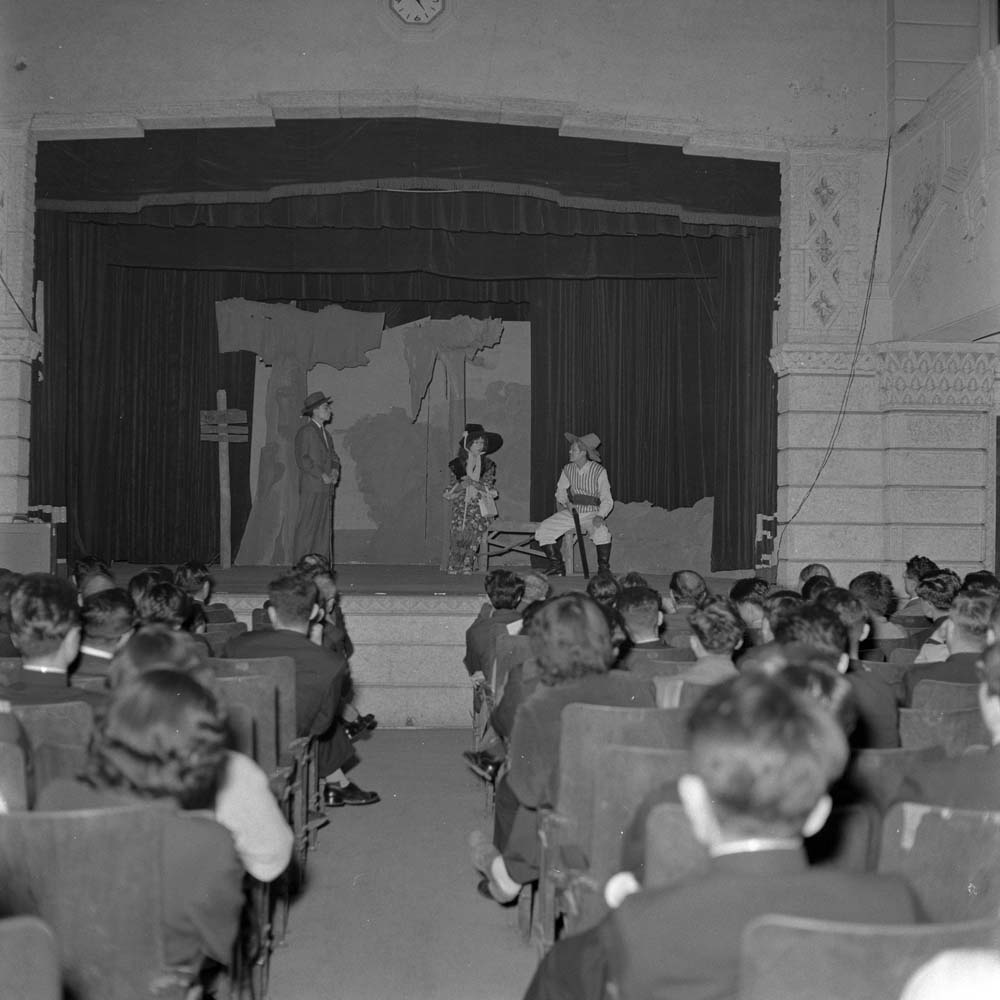



Language is more than mere knowledge; it is a living culture expressed through our voice. Sophia University provides an environment where students can learn and practice languages. With discussion-focused classes, diverse study abroad programs, and group lessons at the Language Learning Commons, multilingual activity fills the campus every day.
One highlight is the “Language Drama Festival,” which showcases the charm of language through theater. The festival aims to improve language skills, showcase the achievements of daily learning and spark interest in languages and different cultures within the university community and beyond. Students practice diligently every day with guidance from faculty members across departments, so they are ready to take the stage. Let us reflect on the history of this theatrical tradition, which began when the university was founded.
1.Language Drama as an Educational Activity
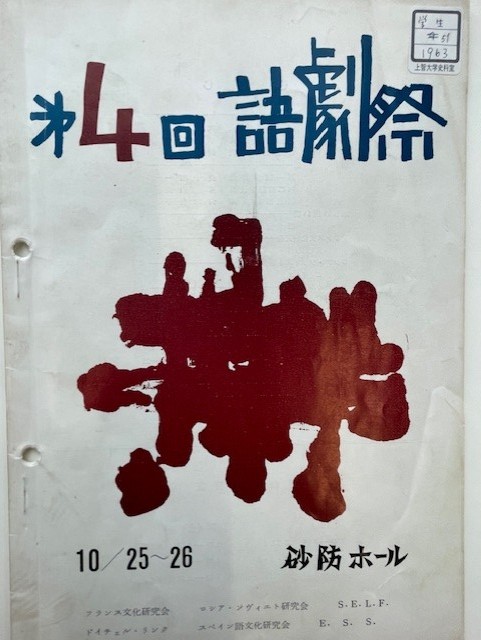
Since its founding, Sophia University has engaged in language dramas or theatrical production performed in foreign languages. This stemmed from the belief that theater was the most effective means of learning languages and literature. According to the Sophia University History Archives, Volume 2, students were able to correctly learn foreign language pronunciation, intonation, timing, and emotional expression, including gestures, under the guidance of foreign professors. In other words, Sophia’s “language drama” was a learning method—acquiring language through wholehearted, expressive activity. This approach was rooted in the Jesuit tradition of emphasizing theatrical production in youth education.
Father Henri Boucher’s diary, one of Sophia University’s founders, records that a German-language play was performed in the red-brick building’s auditorium on February 19, 1915. While the specific play remains unknown, it indicates that language-based theatrical performances for language education were conducted from the university’s founding.
On November 3 and 4, 1921, Schiller’s Wallenstein was staged under the direction of Father Victor Gettelman, an avid theater enthusiast. The performers were students, including first-year undergraduates who had diligently studied German in the preparatory course before advancing to the undergraduate program. Initially, both German- and English-language plays were staged. German productions included Schiller’s Wilhelm Tell, Hans Sachs’ ‘The Student from Paradise’, and original plays adapted from Grimm’s ‘Fairy Tales’ by theater enthusiast Father Heuvers. Meanwhile, English productions featured works such as Dickens’s ‘A Christmas Carol’.
2.The Language Drama Festival Evolves
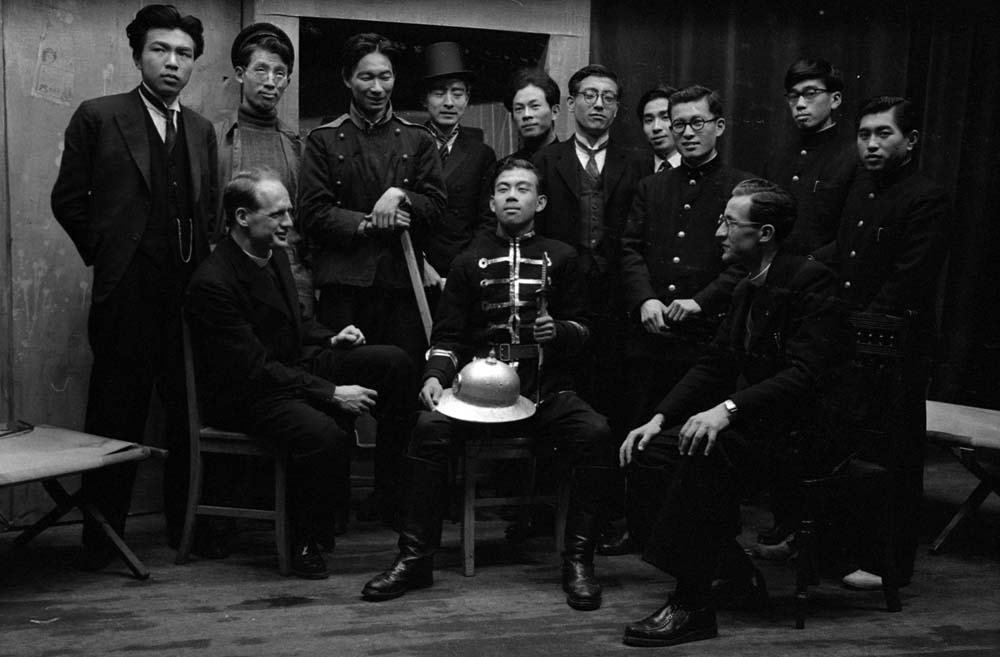
Language drama had been performed before the war but was suspended during the middle of war. Afterwards, however, performances resumed at events such as the Sofia Festival, showing gradual signs of revival. In 1960, various language drama groups came together to launch the “Language Drama Festival.”
English, German, French, Spanish, Russian, and Portuguese plays were performed at that time. The English-language drama production group became independent from the festival in 1970, and the Portuguese-language drama production group ceased its activities in 1972. Since then, the remaining four language theater groups have continued to hold the festival annually.
Regarding the importance of language drama, Mr. Kaneko Yūichi, chairman of the first Language Drama Festival, stated: “We Japanese are rather not good at studying languages. But can we truly understand people from other countries just by writing or reading English or German, or through interpretation? Can we truly grasp their customs, habits, or even the emotions they possess?” Of course, merely memorizing and reciting a script on stage is meaningless. However, if we manage to apply the language skills we’ve acquired in our daily training and successfully embody the foreign characters on stage… I believe that this has gradually become possible through the united efforts of staff and cast, repeated over time.”
Some students were not very keen in doing the plays, citing difficulty understanding and memorizing lines due to their language proficiency. However, some students viewed it as a valuable opportunity to enhance their language proficiency, resulting in a range of responses toward such an activity from students. Furthermore, the direction and rehearsals were challenging, too. For example, students spent a lot of time on pronunciation. For the performing students, however, the plays demonstrated a fundamental approach to learning a foreign language. The “language drama” can be regarded as one of the key factors how Sophia earned its reputation as a “language university.”
The plays were performed at the Sabo Kaikan in Hirakawacho from the first performance in 1960 through its 12th iteration in 1971, with the exception of 1970, when the venue was Nakano Public Hall. Subsequently, the venue shifted to the Auditorium in Building 1 and, more recently, to the Auditorium in Building 10.
3.Principal Language Drama Groups Active to Date
The history of each language drama group is outlined below. This information is drawn from “The 30-Year History of the Language Drama Festival—the History of Individual Group.” featured in ‘The 30th Language Drama Festival SPRING’ (published 1988, 1988 Language Theater Festival Executive Committee).
German Language Drama
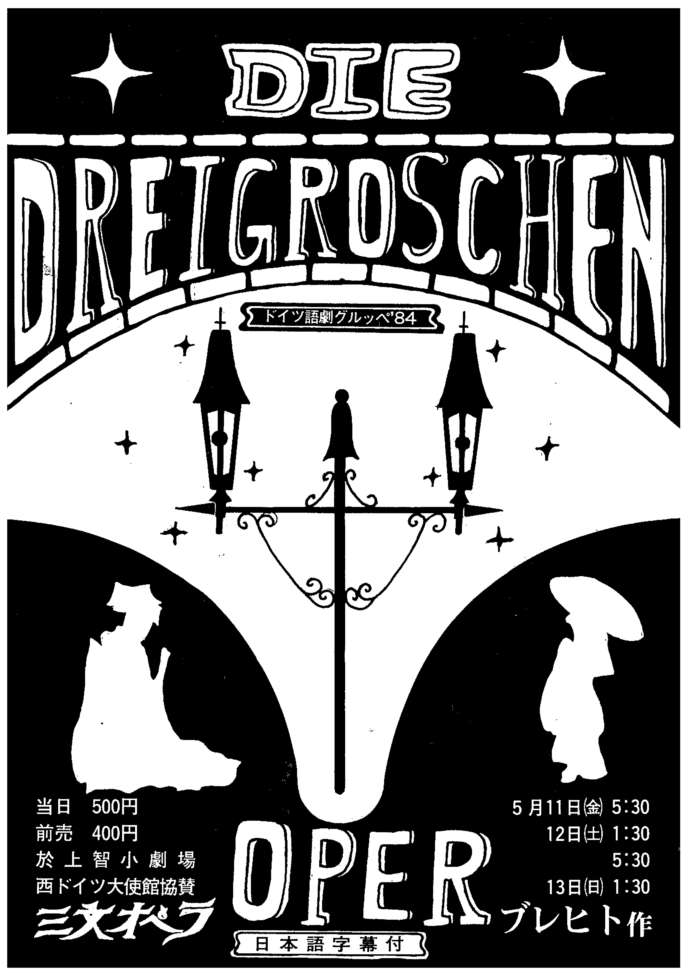
German-language drama has been performed since the university’s founding. While the Deutscher Ring (a society for comprehensive research on German culture) staged productions starting in 1950, a new “German-Language Drama Executive Committee” was established in 1973. The group was renamed “Gruppe ’76” in 1976, then “German-Language Drama Group Gruppe” in 1987, and finally “German-Language Drama Group” in 1994.
The group has staged works by renowned German playwrights, including Bertolt Brecht, Goethe, Kleist, Hofmannsthal, and Lessing. The group has also performed challenging pieces such as Peter Handke’s Kaspar, which pushed the boundaries of traditional theater. The production of Hermann Schulz’s “The Wind Returns Here Too” in 1987 featured fantastical stage design and incorporated Japanese language into the performance. This led to diverse feedback, both within and outside the university.
French Language Drama
The French Language Drama was originally organized by the Department of French Studies and the French Culture Research Society. In 1971, it became the “French Language and Literature Theater Executive Committee.” After changing its name to the “French Theater Research Society,” the committee evolved into the “French Language Drama Company” in 1979. The company is primarily composed of students from Department of French Studies. France boasts many renowned playwrights, and the troupe has staged works by Molière, Saint-Exupéry, Jean Anouilh, Sartre, and others.
Spanish Language Drama
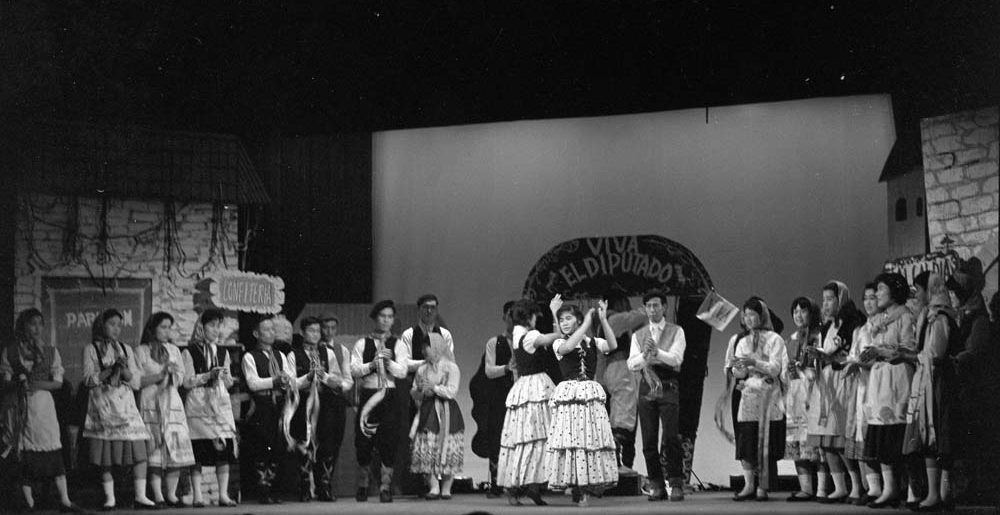
Spanish language drama originated within Department of Hispanic Studies, where they performed zarzuela, a type of operetta, prior to the founding of the Language Drama Festival in 1960. This gradually evolved into full theatrical productions staged by the Spanish Culture Research Society, and Department of Hispanic Studies. Following an interruption, the “Spanish Theater Research Society” was established in 1977, presenting works by prominent Spanish playwrights such as Víctor Luis Iriarte and Antonio Buero Vallejo.
Russian Language Drama
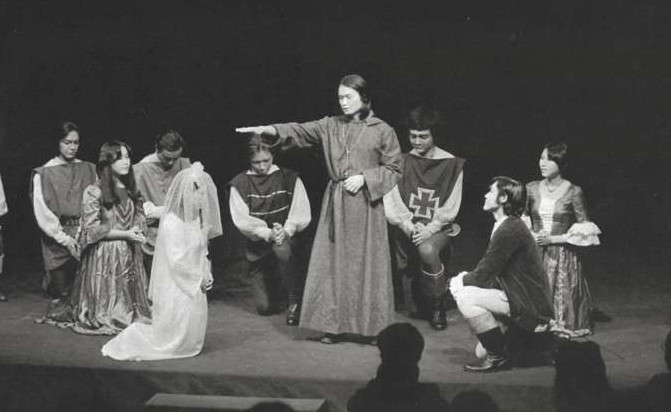
The Russian language drama production was first featured in 1960 by the “Russian-Soviet Research Society.” It evolved into a student-led “Russian Language Drama” club. In 1979, it was temporarily renamed the “Russian Language Drama Research Society,” but reverted to its original name, “Russian Language Drama,” and staged numerous works by Gorky and Chekhov. In 2000, the theater troupe “Anuta” branched off from the Russian Language Drama group, aiming to perform off campus and produce its original plays.
4.2025 Language Drama Festival Schedule
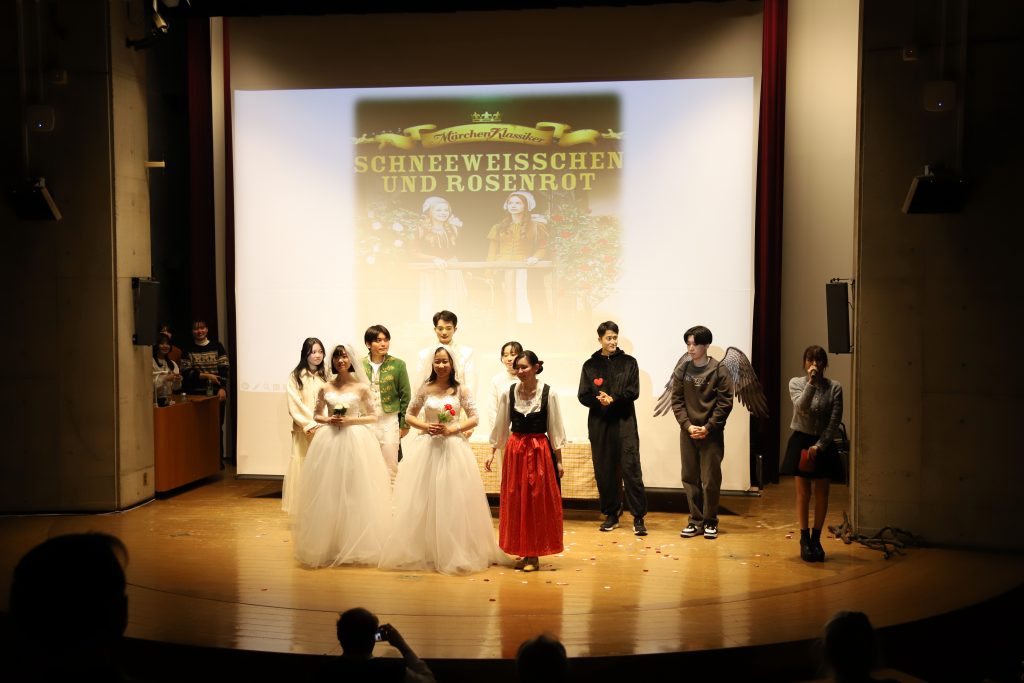
In the 2025 academic year, performances will be held from December to February across four departments. After a four-year break, the Portuguese Language Drama Group is making a comeback this year.
No reservation is required, and admission is free. The performances are designed to be accessible even without knowledge of the respective languages. This is also an opportunity to experience Sophia’s linguistic excellence firsthand, so we hope as many of you can attend.
Sunday, December 7, 2025
Building 10 Auditorium
・1:00 PM: Department of French Studies
‘The Imaginary Invalid’ (by Molière)
・2:30 PM: Department of Luso Brazilian Studies
‘João and Maria’ (Grimm’s Fairy Tale)
Monday, December 22, 2025
Building 10 Auditorium
・2:00 PM: Department of German Studies
‘Snow White’ (Grimm’s Fairy Tales)
Sunday, February 22, 2026
Building 10 Auditorium
・3:30 PM: Department of Russian Studies
‘Good Deeds’ (by Nikolai Urvantsev)
Reference Materials List:
・The 30th Language Theater Festival SPRING (Published 1988, 1988 Language Theater Festival Executive Committee)